Udvar-Hazy
Mars Pathfinder Lander and Sojourner Rover
Mars Pathfinder landed on July 4, 1997, protected by airbags that let it bounce across the surface. Its small rover, Sojourner, then explored nearby rocks and soil. The mission showed that a mobile robot could work on another planet and send its discoveries home. The hardware displayed here includes engineering prototypes and an exhibit rover model; the spacecraft that actually reached Mars remained there.
In depth
An arrival designed to survive bouncing
Landing on Mars requires losing tremendous speed in a thin atmosphere. Pathfinder combined an aeroshell, parachute, rockets, and airbags. Instead of setting down gently on landing legs, the protected craft could strike the ground, bounce, and come to rest before opening.
NASA reports that it bounced more than 15 times. Once the lander opened, its panels provided a base from which Sojourner could drive onto the surface. The mission demonstrated a landing approach that made room for uncertainty in the final contact with the ground.
A small rover with a large responsibility
Sojourner carried cameras and an instrument for analyzing the composition of rocks and soil. Its movement let investigators examine more than the single patch of ground immediately beneath a stationary spacecraft. A rock could become a destination for close inspection.
The rover did not operate like a remotely controlled toy with an instantaneous video connection. Communication delays between Earth and Mars required planning and careful sequences of activity. The lander served as a vital communications link between the rover and Earth.
A landscape becomes a place
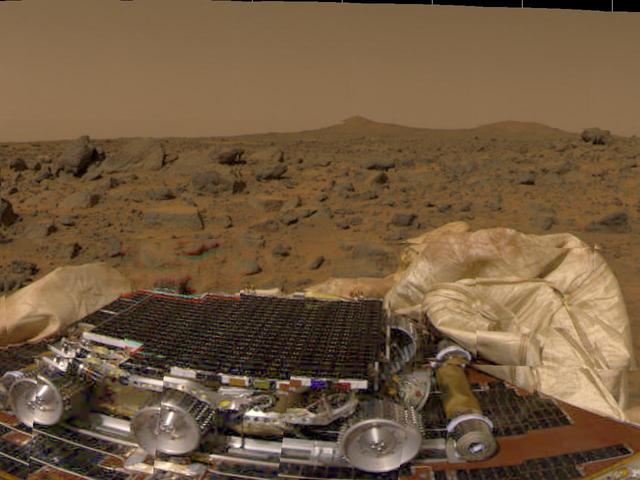
Images of rocks such as Yogi made an unfamiliar surface easier to recognize and discuss. The photographs were scientific observations, but they also gave the public a way to follow the expedition. A small machine moving between named landmarks made exploration feel immediate.
Pathfinder returned more than 16,500 lander images and hundreds of rover images, along with chemical and weather measurements. The mission’s significance rests in that combination: demonstrating technology while collecting useful information about the environment in which it operated.
Prototype, model, and flight hardware
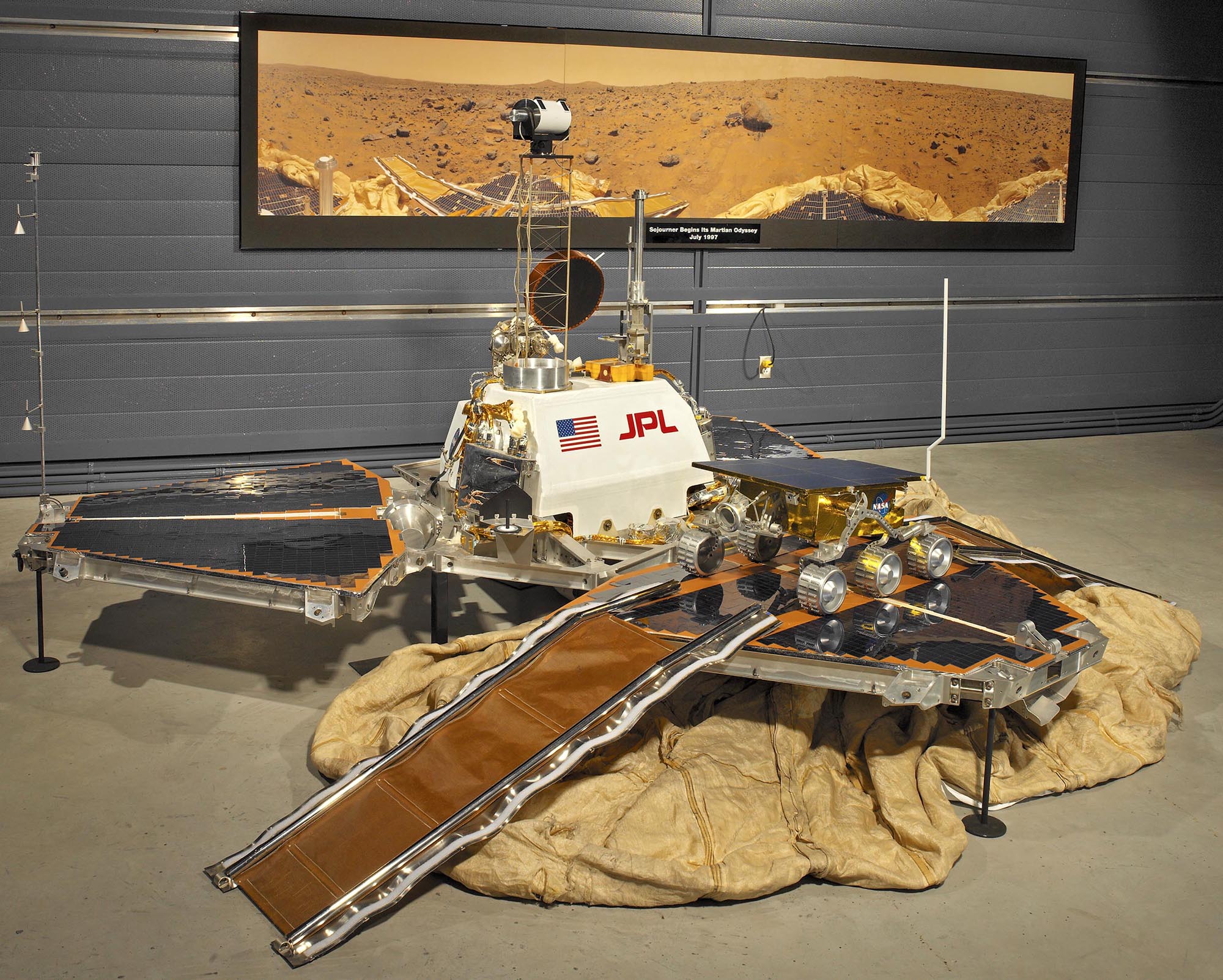
The museum’s lander and airbags are full-size engineering prototypes. Its rover is a nonfunctional exhibit model. These objects show how the mission was designed, tested, and explained; they are not vehicles recovered from Mars.
The historical surface photograph makes the distinction visible. Compare the clean geometry of the display with the deflated airbags and rocky terrain at the actual landing site. That gap between a prepared machine and an unpredictable world is where much of exploration’s hardest engineering happens.