National Mall
Searching for Goldilocks
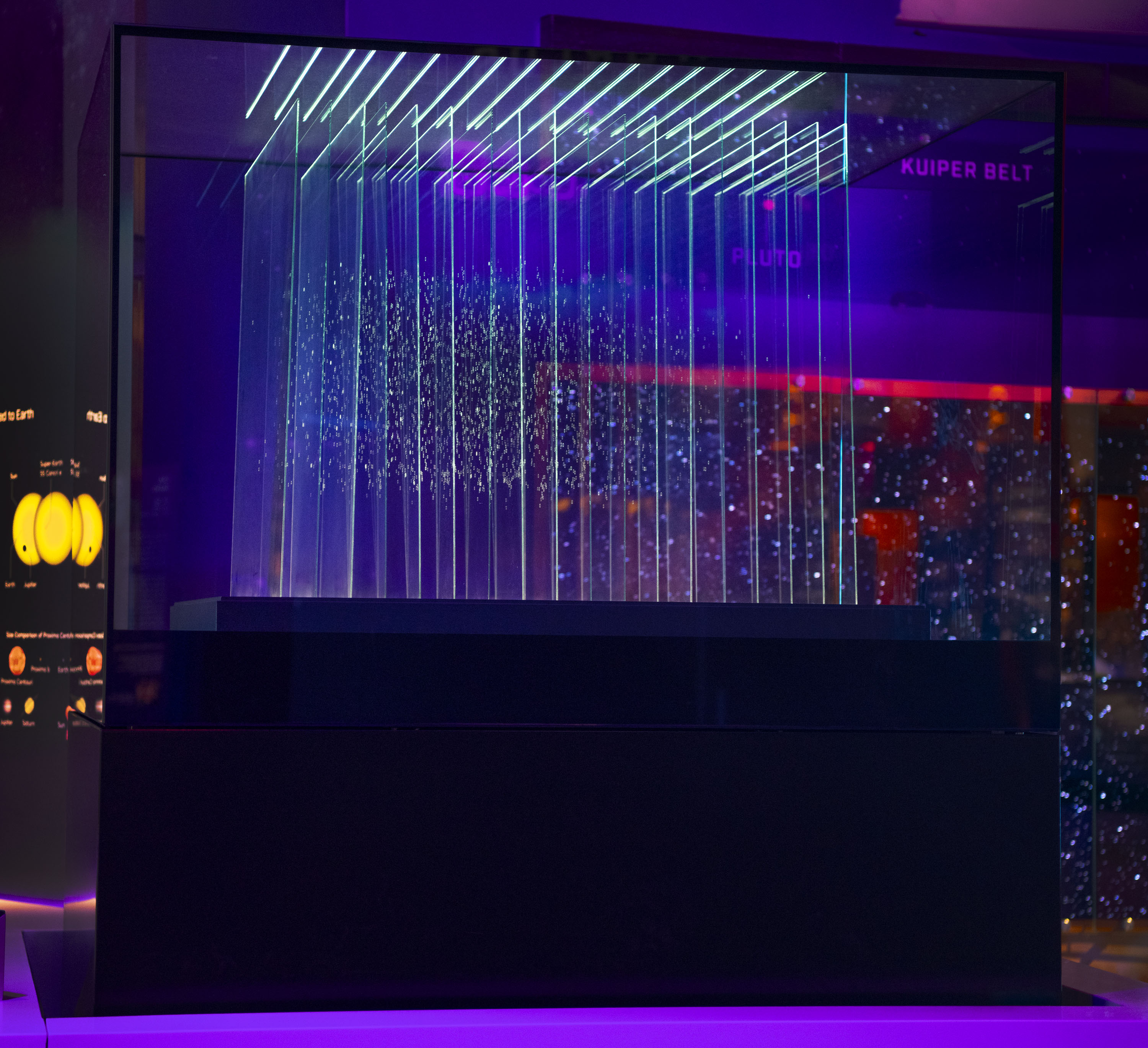
Angela Palmer’s glass sculpture turns distant planetary systems into a three-dimensional star map. The bright marks identify stars with planets orbiting in a region where liquid water might be possible. Each glass plate represents another 250 light-years of distance. The sculpture compresses a vast volume of space into a form we can compare, while the term “Goldilocks zone” describes orbital temperature conditions rather than a complete test for life.
In depth
A model makes invisible distances visible
Kepler observations made it possible to estimate the sizes and orbits of distant planets. A planet’s position in a star’s habitable zone is an initial constraint; atmosphere, stellar activity, geology, chemistry, and time also shape surface conditions.
Exploration by instruments and patient teams
A planetary spacecraft must operate in conditions its builders can test only imperfectly on Earth. Launch vibration, radiation, temperature, power, communications, and long periods without immediate intervention all affect the design. The most useful mission is not necessarily the one carrying the most instruments; it is the one whose instruments can make meaningful measurements and return them reliably.
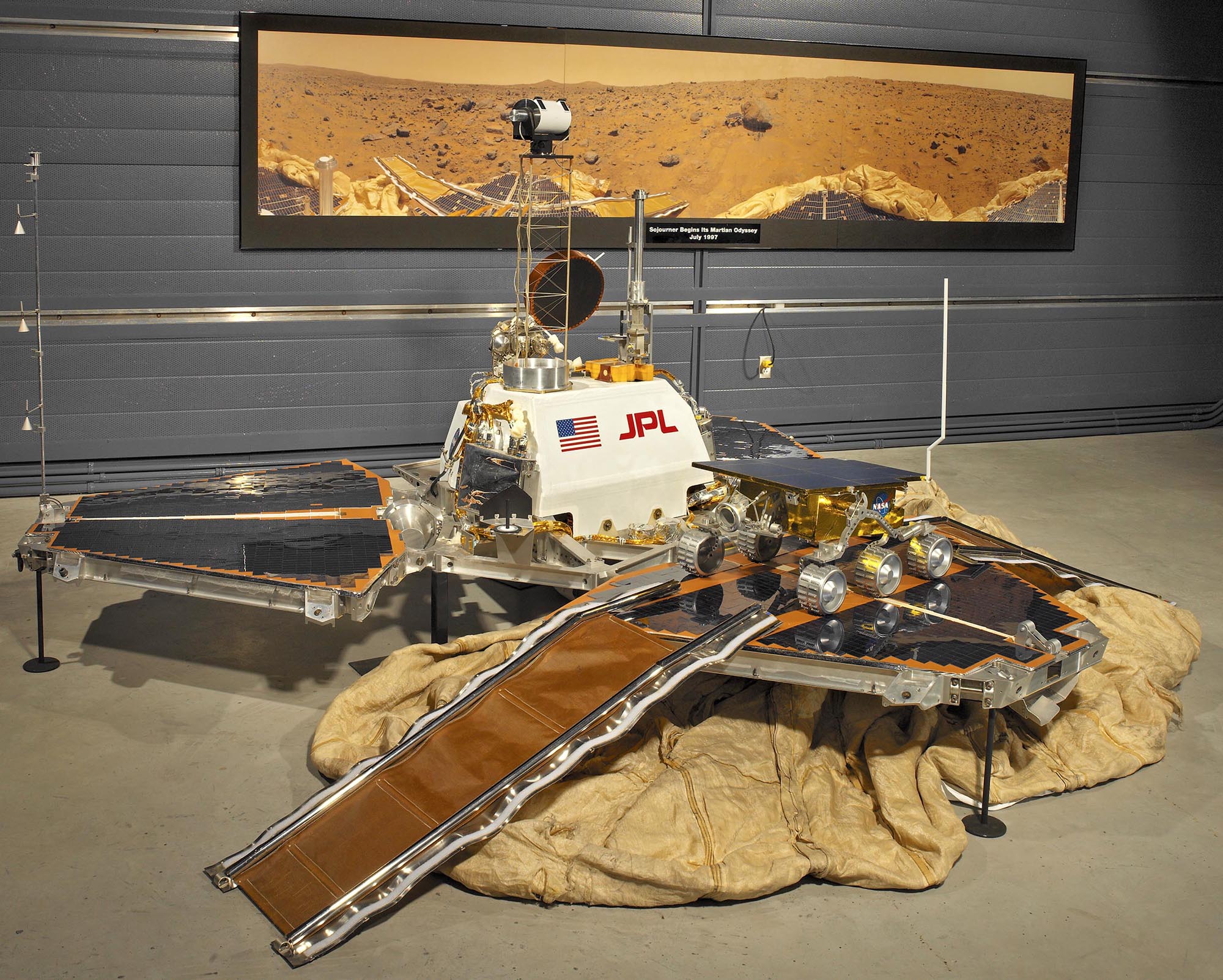
Different mission types answer different questions. A flyby provides a brief encounter and may use a planet's gravity to continue elsewhere. An orbiter can revisit the same world under changing conditions. A lander examines one location closely, while a rover trades additional mechanical complexity for the ability to move between sites. Sample-return missions add the extraordinary challenge of bringing material home for analysis with instruments too large or complex to fly.
The discoveries are collective achievements. Engineers keep the spacecraft functioning, mission planners choose observations, and scientists compare the results with existing explanations. An unexpected image or measurement can redirect years of work. The cameras, rovers, globes, and spacecraft models in these galleries show successive ways of turning a distant point of light into a world with a history. Their connections to aviation run through navigation, imaging, materials, computing, and communications. The pilot may be absent, but human judgment remains present throughout the mission.