Udvar-Hazy
Clouds In A Bag
Long before airplanes, balloons made human flight a public sensation. Crowds watched people rise above Paris in 1783, and artists recorded the wonder in prints, objects, and souvenirs. These works show how a new technology enters everyday imagination. Ballooning was an engineering achievement, but also a cultural event—something people wanted to witness, discuss, collect, and remember.

In depth
An impossible view becomes real
The first balloon flights changed what people could see and what they believed human beings could do. Rising above streets and rooftops made familiar places appear in a new relationship. The event was both a technical demonstration and a public experience.
The speed with which balloon imagery spread reveals the appetite for that experience. People who never rode in a balloon could still encounter flight through art, printed accounts, decorative objects, and conversation.
The objects preserve the audience
A preserved aircraft often directs attention toward inventors and pilots. The Kendall collection offers another perspective: the people who watched, imagined, celebrated, and collected. Evelyn Way Kendall assembled a substantial record of early flight through artworks, manuscripts, books, and objects.
These materials are not merely decoration around the technical story. They document how people interpreted a new capability and made it part of their cultural world.
The pattern continues
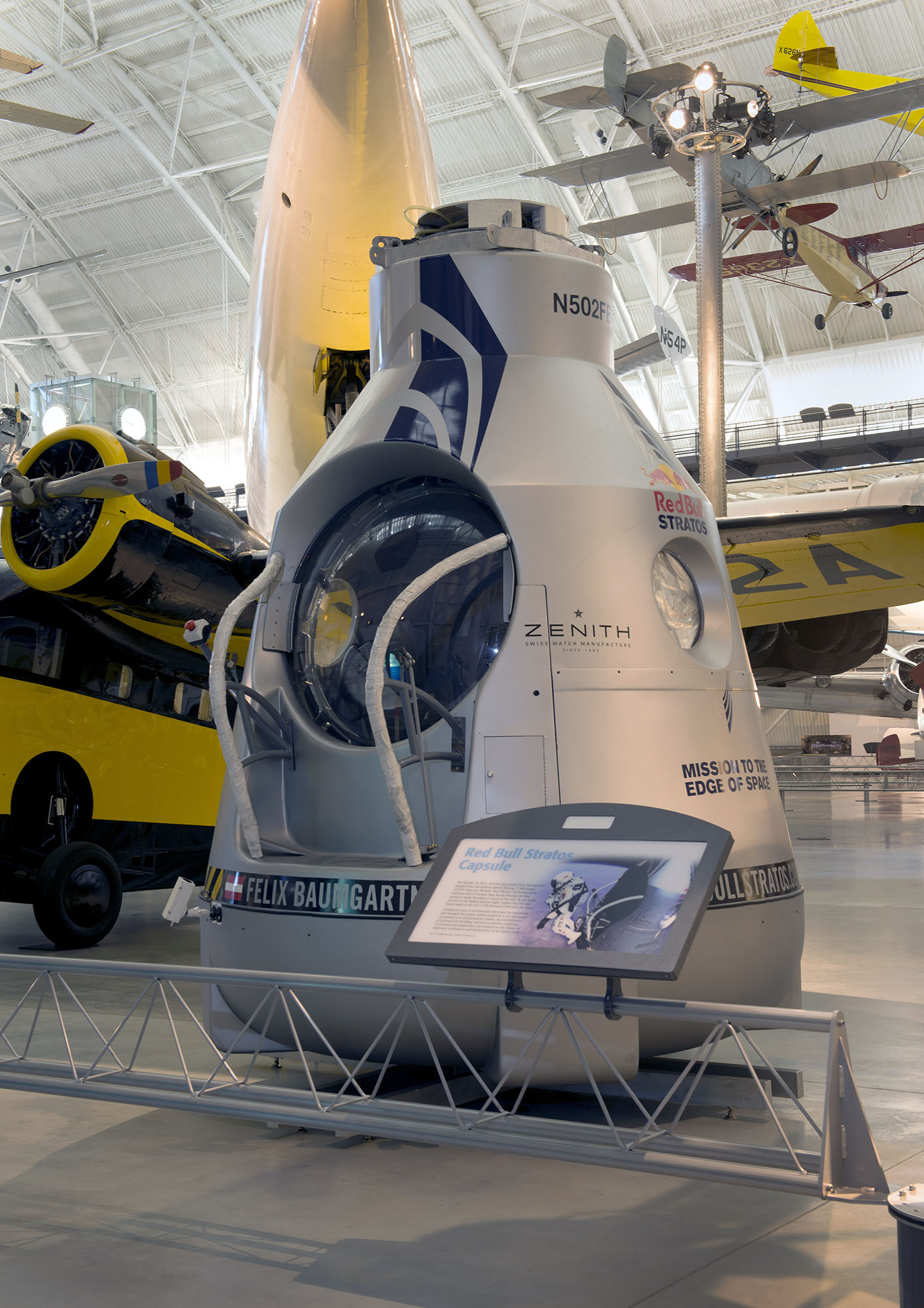
The crowds around early balloons have counterparts in the spectators who watched barnstormers, aerobatic champions, launches, and high-altitude records. Red Bull Stratos provides a modern balloon-related comparison, while the Mother Ship model shows another way flight and space enter public imagination.
Across these very different objects, a recurring relationship remains: skilled people make a new experience possible, and audiences give that experience wider meaning. The history of aviation includes both sides of that encounter.