Air Force Museum
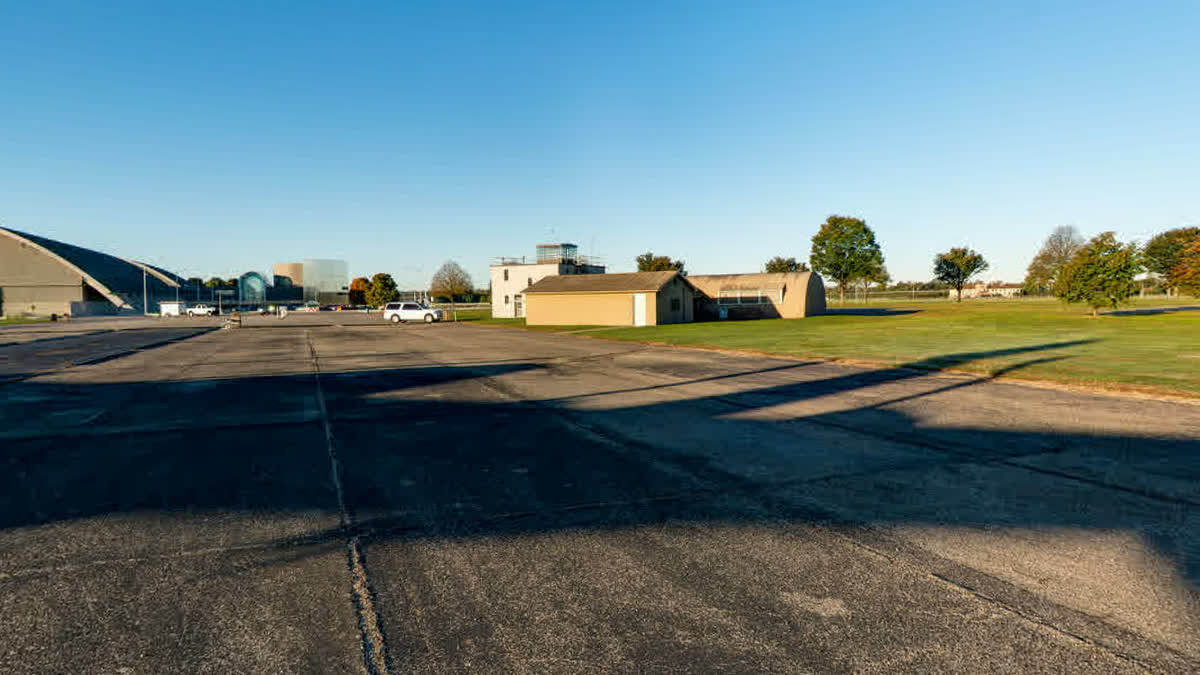
WWII 8th AF Control Tower
A control tower gave a wartime airfield one place to organize takeoffs, landings, weather reports, and aircraft movements. This reproduction follows a standard 1942 design. Weather personnel worked on the first floor, controllers watched the field from the glazed second story, and wind and visibility instruments occupied the roof. Towers like this connected pilots, ground crews, and operations staff during the rapid movement of Eighth Air Force units through Britain.
In depth
Details that tell the story
Reproduction based on a standard 1942 control-tower design · Weather observation and airfield control occupied separate levels · Represents the wartime Eighth Air Force airfield system in Britain
What survives after the mission
A museum object begins a second life when it stops performing its original job. An aircraft that once carried a crew becomes a place for public memory. A jacket, letter, medal, or small piece of equipment can preserve a much more intimate connection. The object is valuable both for what it reveals physically and for the documented story that gives it meaning.
Famous aircraft and individuals can make a complicated history approachable, but they are only part of it. Many people left no celebrated machine behind. Memorials, personal possessions, unit records, and photographs help recover the experiences of those whose service was less visible. They also preserve loss, separation, captivity, recovery, and the consequences of war for families and communities.
Preservation involves choices. Restoring an aircraft may make its design easier to understand, while retaining wear or damage may protect evidence of its use. A reproduction can explain how a machine worked, provided its identity remains clear. Linking objects across collections helps fill the gaps created when surviving material is dispersed. A uniform in one gallery, an aircraft in another, and a memorial elsewhere can illuminate the same history from different directions. The result is more than a record of machines: it is a way to keep the people, decisions, and experiences connected to them in view.