Air Force Museum
C-17 Globemaster III
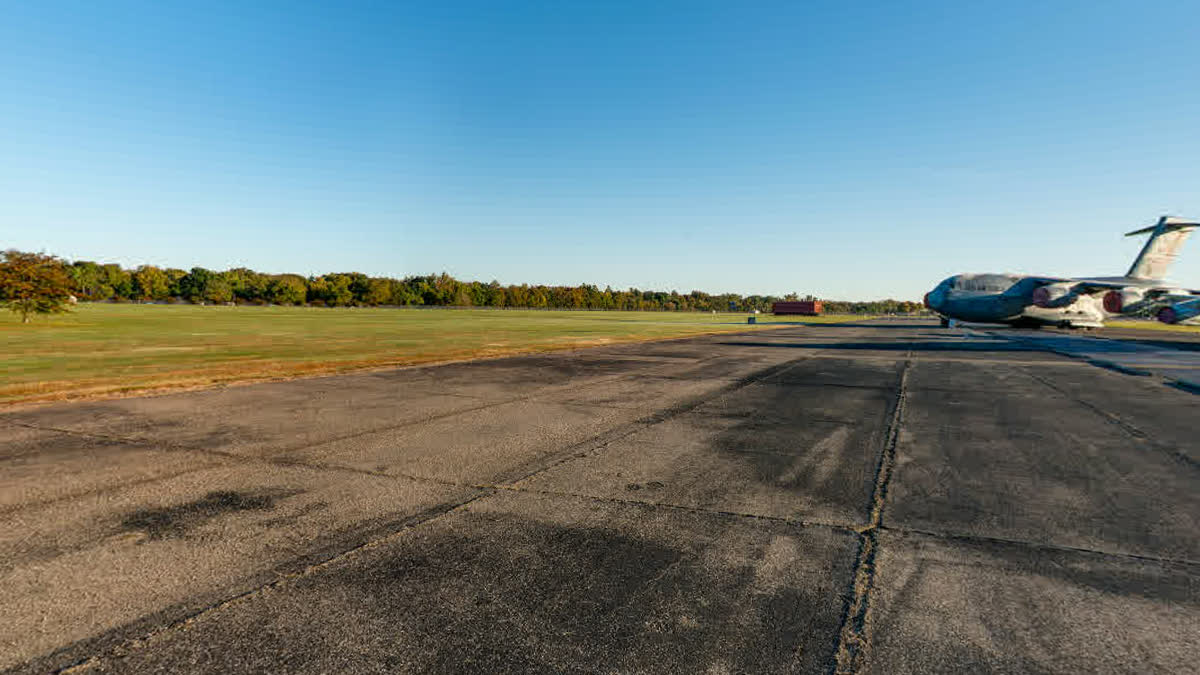
The C-17 combines intercontinental range and a large cargo compartment with the ability to operate from shorter, less-developed airfields. That combination lets crews move vehicles, troops, medical teams, and relief supplies close to the point of need instead of relying only on major transport hubs. The aircraft displayed here is T-1, serial number 87-0025, the first flight-test C-17.
In depth
The story behind the display
That combination lets crews move vehicles, troops, medical teams, and relief supplies close to the point of need instead of relying only on major transport hubs. The aircraft displayed here is T-1, serial number 87-0025, the first flight-test C-17. It made the type's first flight on September 15, 1991, and joined the museum in 2012.
History & service
Entering service in 1993, the C-17 Globemaster III is the U.S. Air Force's most versatile cargo aircraft to enter the airlift force. The C-17 is capable of rapid strategic delivery of troops and all types of cargo to main operating bases or directly to small, austere airfields. It can also perform tactical airlift and airdrop missions or transport litters and ambulatory patients during aeromedical evacuations.
A crew of three (pilot, copilot and loadmaster) operates the C-17, which can carry about 170,000 pounds of cargo. The large aft door will accommodate almost all of the U.S. Army's air-transportable vehicles and palletized cargo, including the Army's M-1 Abrams main battle tank. The C-17 can take off and land on runways as short as 3,500 feet and only 90 feet wide. Its four Pratt & Whitney F117-PW-100 engines can reverse their thrust to help slow it down on landings.
The thrust reversers direct the engine exhaust upward and forward to prevent dust and debris from being sucked into the engine intakes. These reversible engines also allow the pilot to back the plane or even turn it around on a narrow runway using a three-point star turn method.
The Globemaster III on display is the prototype C-17. Built by the Douglas Aircraft Co., which is now Boeing, it was designated T-1 (S/N 87-0025). T-1 made its first flight on Sept. 15, 1991, when it was delivered to the USAF at Edwards Air Force Base, Calif., for testing. After completing the extensive C-17 flight test program, T-1 supported many other flight and propulsion test programs for the USAF, NASA and others.
T-1 also appeared in a number of major motion pictures, including "Transformers" (2007), "Transformers: Revenge of the Fallen" (2009), "Iron Man" (2008) and "Iron Man 2" (2010).
After 20 years of wide-ranging flight tests, T-1 had reached the end of its flying career, and it was retired at Edwards AFB in 2011. T-1 was flown to the museum to begin its new career in April 2012.
Details that tell the story
The museum aircraft is the first flight-test C-17, known as T-1 · First flight took place on September 15, 1991 · Designed for strategic range and tactical airfield access
The aircraft in figures
Length: 174 ft · Wingspan: 169.9 ft (to winglet tips) · Height: 55.1 ft · Crew: Three (pilot, copilot and loadmaster) · Aeromedical Evacuation Crew: Five (two flight nurses and three medical technicians) · Engines: Four Pratt & Whitney F117-PW-100 turbofan engines of 40,440 thrust each · Load: 170,900 pounds of cargo; 102 troops/paratroops; or 36 litter and 54 ambulatory patients · Maximum speed: 570 mph (Mach .77) at 28,000 ft · Range: Global with aerial refueling
What survives after the mission
A museum object begins a second life when it stops performing its original job. An aircraft that once carried a crew becomes a place for public memory. A jacket, letter, medal, or small piece of equipment can preserve a much more intimate connection. The object is valuable both for what it reveals physically and for the documented story that gives it meaning.
Famous aircraft and individuals can make a complicated history approachable, but they are only part of it. Many people left no celebrated machine behind. Memorials, personal possessions, unit records, and photographs help recover the experiences of those whose service was less visible. They also preserve loss, separation, captivity, recovery, and the consequences of war for families and communities.
Preservation involves choices. Restoring an aircraft may make its design easier to understand, while retaining wear or damage may protect evidence of its use. A reproduction can explain how a machine worked, provided its identity remains clear. Linking objects across collections helps fill the gaps created when surviving material is dispersed. A uniform in one gallery, an aircraft in another, and a memorial elsewhere can illuminate the same history from different directions. The result is more than a record of machines: it is a way to keep the people, decisions, and experiences connected to them in view.