Air Force Museum
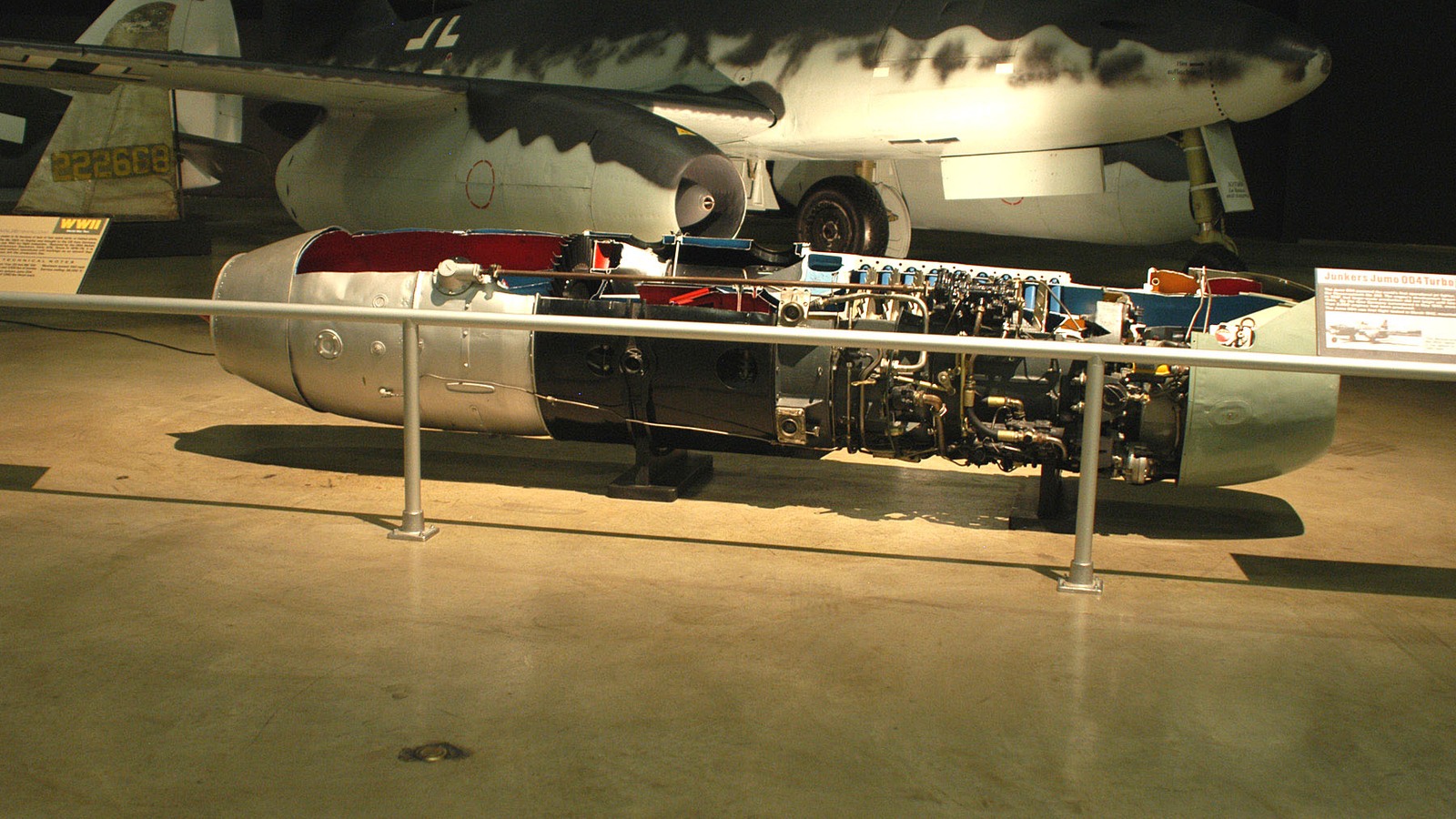
Junkers Jumo 004 Turbojet
The Jumo 004 powered the first operational jet fighters and revealed both the promise and the material limits of early turbojet technology. Air entered the engine, passed through an axial compressor, mixed with fuel in combustion chambers, and expanded through a turbine to create thrust. The design enabled speeds beyond those of most piston-engine fighters.

In depth
The story behind the display
Germany lacked sufficient quantities of high-temperature metals, so production engines had short service lives and demanded careful handling. The Jumo 004 therefore demonstrates that a breakthrough design still depends on materials, manufacturing quality, trained mechanics, fuel, and operating conditions.
History & service
The Jumo 004 powered the world's first operational jet fighter, the Messerschmitt Me 262. The engine's development began in 1937, but large-scale production did not begin until late 1944. By the time Germany surrendered in May 1945, more than 5,000 engines had been produced.
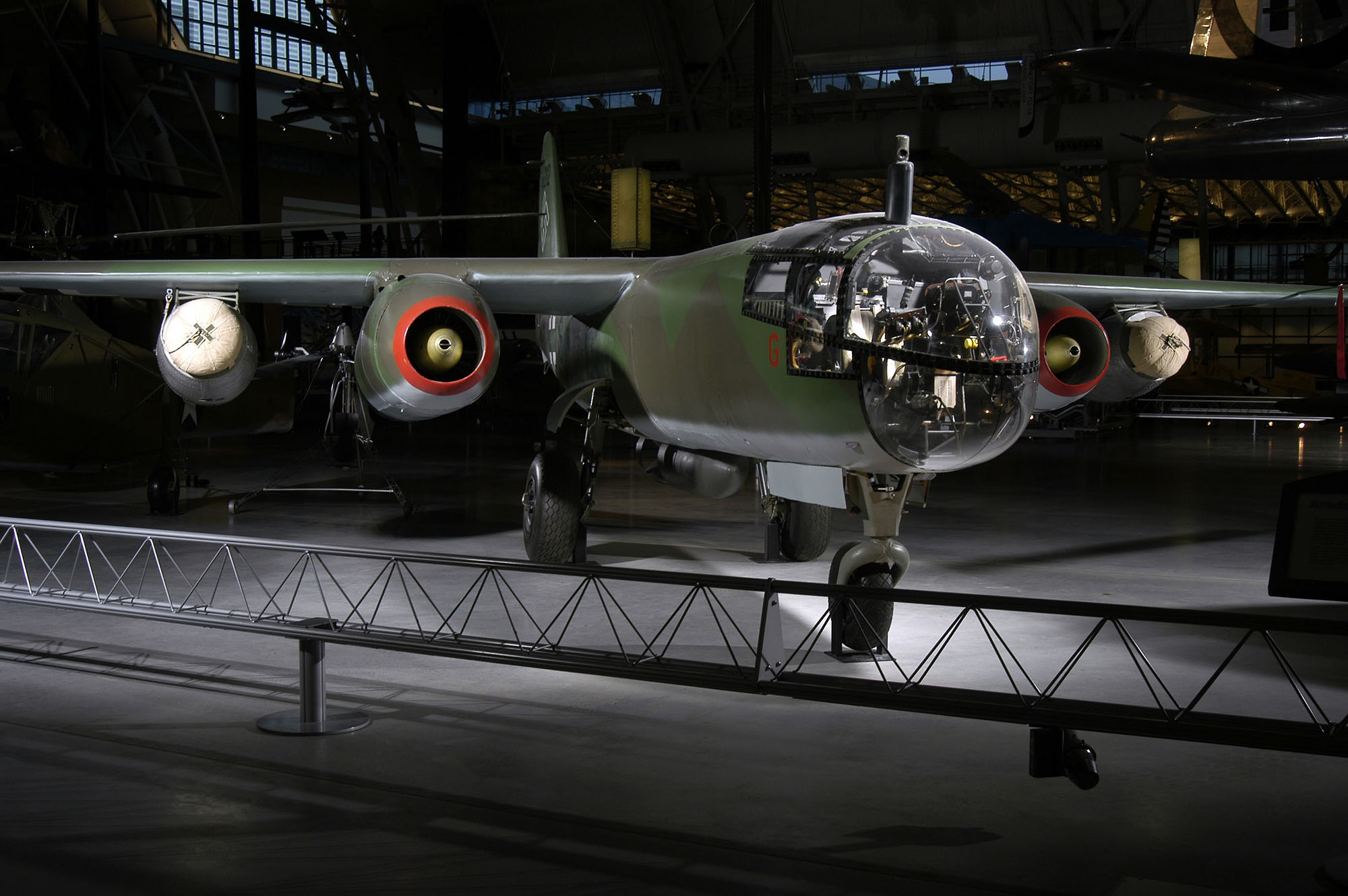
The Jumo 004 was first flight tested in March 1942, mounted on a Messerschmitt Me 110 aircraft. The engine had an eight-stage axial flow compressor, six straight-through combustion chambers and a single-stage turbine. In its final production form, it developed a thrust of 1,980 pounds. In addition to the Me 262, this engine powered the Arado Ar 234 series of bomber-reconnaissance aircraft. Both aircraft used two engines.
Details that tell the story
Axial-flow turbojet engine · Powered the Me 262 and Arado Ar 234 · Entered operational service in 1944 · Material shortages limited engine life and reliability
The revolution inside the engine
A jet engine takes in air, compresses it, adds fuel, and uses the resulting hot gas to produce thrust. A turbine extracts enough energy from that gas to keep the compressor turning. The arrangement sounds straightforward, but the machinery lives in a difficult combination of heat, centrifugal force, pressure, and vibration. Early practical jets depended on advances in materials and manufacturing as much as on the basic idea.
The first generation offered great promise at high speed, but fuel consumption, engine life, and throttle response limited what aircraft could do with it. The transition did not immediately make propellers obsolete. Piston aircraft and turboprops remained effective where low-speed efficiency, endurance, or operating cost mattered more than maximum speed. Aircraft were built around missions, and different missions rewarded different engines.
Later turbofans moved a large quantity of air around the hot core, improving efficiency and changing the economics of airline travel. Military engines often accepted different compromises for acceleration, compact size, or supersonic performance. A display of engines therefore contains several parallel histories: the race for speed, the effort to carry more people at lower cost, and the persistent search for machinery that crews could trust. Cross-gallery comparisons reveal why engines that look broadly similar can represent very different priorities.