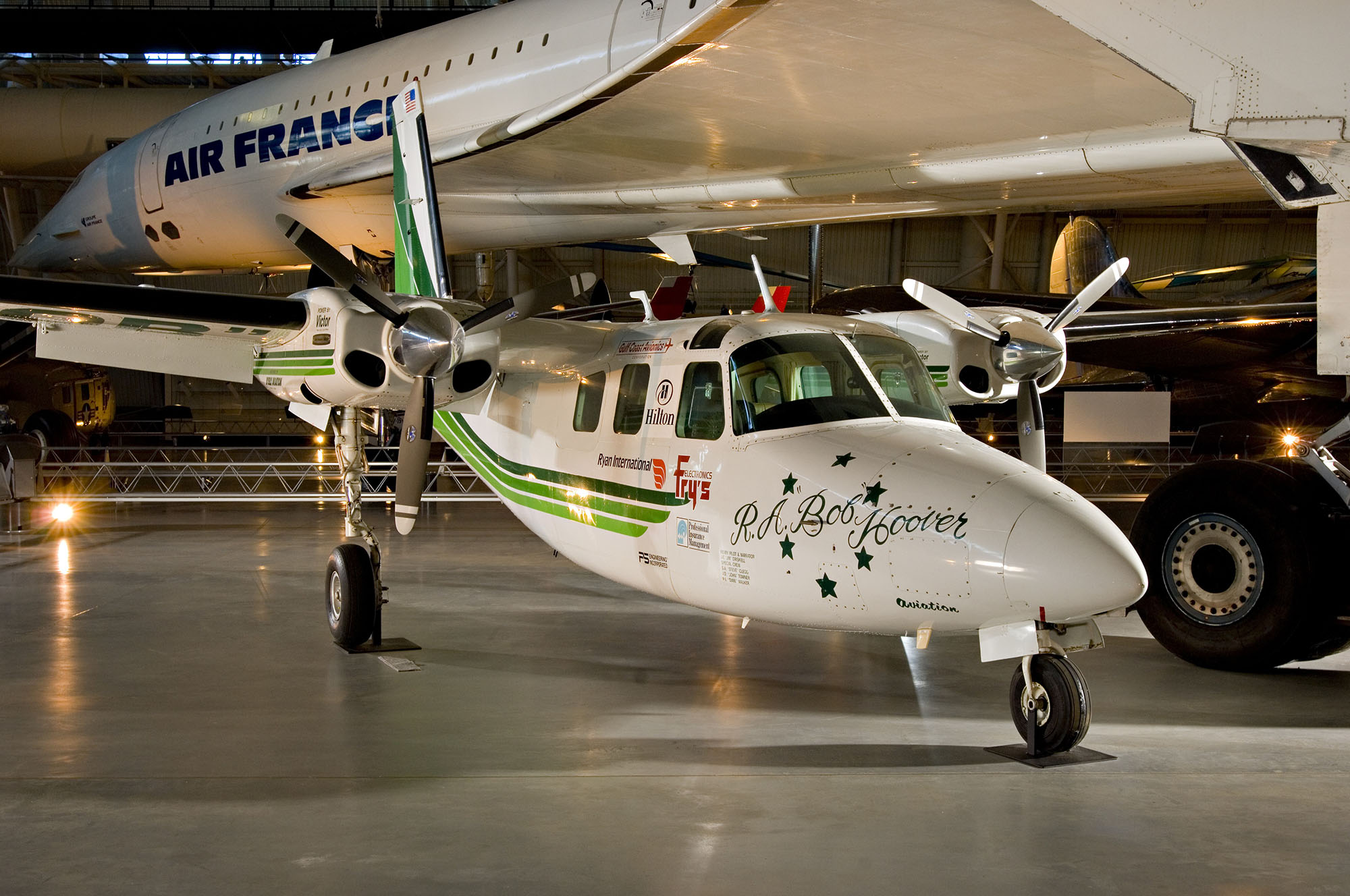
Udvar-Hazy
Dassault Falcon 20
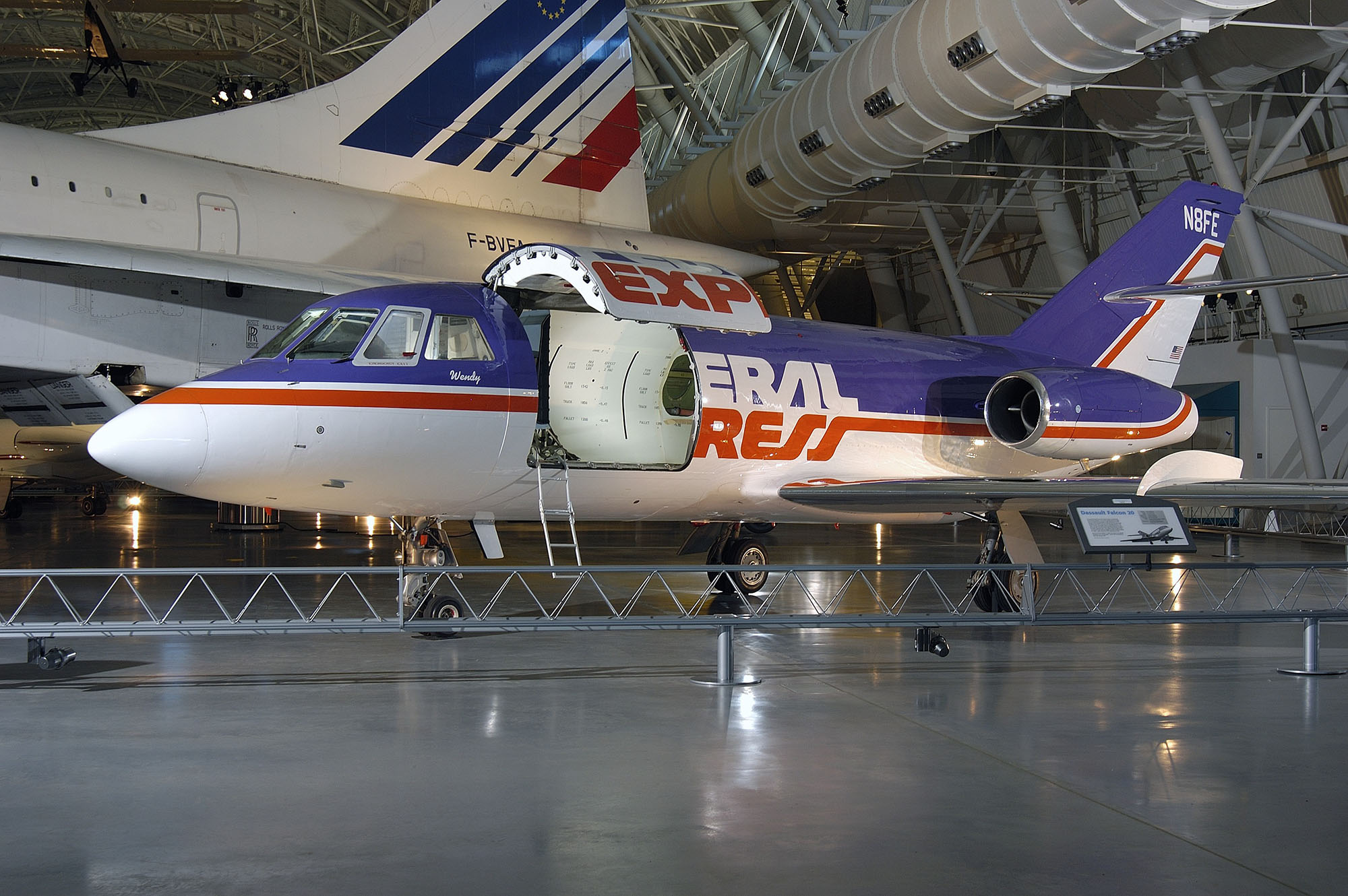
This sleek business jet helped change the way packages travel. Federal Express converted Falcon 20s with stronger floors and larger cargo doors, then used them in its overnight delivery network. This first FedEx aircraft was named Wendy, after founder Frederick Smith’s daughter. The clever part was bigger than the airplane: flights from different cities met at a central hub so packages could be sorted and sent onward overnight.
In depth
A passenger jet gets a new job
Dassault designed the Falcon 20 as a small jet transport. Federal Express recognized that its speed, payload, and operating characteristics could also suit urgent cargo. Conversions replaced the passenger-focused interior with the practical requirements of freight: a strengthened floor, space for packages, and a door large enough to load them efficiently.
The company acquired 33 Falcons for its initial fleet. The museum’s aircraft, Wendy, was its first. It connects an individual airframe with the early operations of a delivery system that began service in 1973.
The innovation was a network
Flying a package quickly between two cities was not a new idea. The more consequential step was coordinating many routes through Memphis. In a hub-and-spoke arrangement, an arriving package can connect with an outbound flight to a different destination without requiring a direct route between every pair of cities.
The aircraft made the schedule possible, but ground handling, sorting, communications, and dependable connections made the service useful. A fast jet with a missed transfer would not deliver the promise. This is aviation history in which organizational design matters alongside aerodynamics.
Time becomes the product
Urgent documents, replacement parts, and other shipments can be valuable because of when they arrive. The Falcon story shows a business built around that distinction. The customer was purchasing confidence in an arrival time as much as transportation over distance.
Look at the aircraft’s compact dimensions and compare it with the much larger airliners in the hangar. An aviation revolution does not always begin with the biggest machine. Sometimes it begins by matching an existing design to a new pattern of work, then executing that pattern reliably night after night.