Air Force Museum
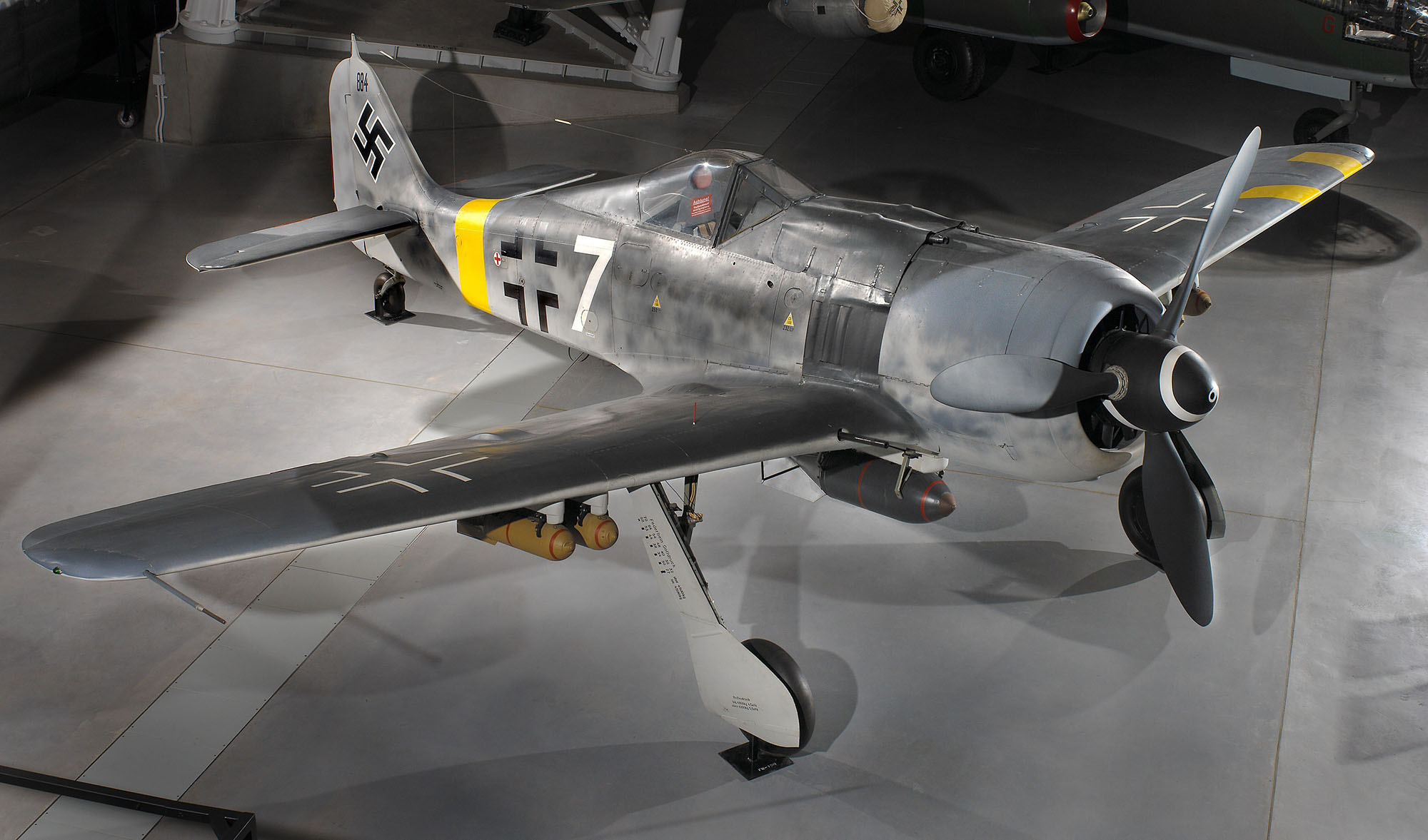
Messerschmitt Bf 109G-10
The Messerschmitt Bf 109 began as an entry by the Bayerische Flugzeugwerke in a Luftwaffe (German Air Force) fighter competition in the early 1930s. Willy Messerschmitt's creation incorporated one of the most advanced aerodynamic designs at the time, with retractable landing gear, an enclosed cockpit, automatic slats, cantilever wings and stressed skin construction. During the trials, the Bf 109 clearly outperformed the larger and heavier favorite, Heinkel's He 112.
In depth
History & service
The Messerschmitt Bf 109 began as an entry by the Bayerische Flugzeugwerke in a Luftwaffe (German Air Force) fighter competition in the early 1930s. Willy Messerschmitt's creation incorporated one of the most advanced aerodynamic designs at the time, with retractable landing gear, an enclosed cockpit, automatic slats, cantilever wings and stressed skin construction. During the trials, the Bf 109 clearly outperformed the larger and heavier favorite, Heinkel's He 112. The first production model, the Bf 109B, began coming off the lines in 1936. The redesignation of the Bayerische Flugzeugwerke AG (Aktiengesellschaft or Corporation) to the Messerschmitt AG in 1938 led many to call it the Me 109, although the official Luftwaffe designation of the aircraft remained the Bf 109 throughout the war.
The Bf 109B first entered combat with German-manned Condor Legion units during the Spanish Civil War, and they were a welcome replacement for the obsolete Heinkel He 51 biplane fighter. Intended to counter the Spitfire, the F series had an engine with increased horsepower and a more streamlined airframe and cooling system. More than half of the Luftwaffe single-engine fighter units involved in the invasion of the Soviet Union on June 22, 1941, flew the Bf 109F. The F model also enjoyed considerable superiority over the RAF Kittyhawks (P-40s) and Hurricanes it met over the skies of North Africa.
The limits of the Bf 109 design appeared with the Bf 109G series, which began production in early 1942. The Bf 109G had a higher top speed but was less maneuverable than earlier versions. Some later Gs had bulges in front of the cockpit caused by the larger 13mm MG 131 machine guns, which added further weight and drag. Pilots of the Bf 109G found it increasingly difficult to fly against more capable aircraft such as the P-51D Mustang. Despite its limitations, the G series was the most numerous of the Bf 109 types and remained in production into 1945.
The last major series was the Bf 109K, which was similar to the Bf 109G-10 series. Development problems aggravated by Allied bombing and the rapidly deteriorating war situation limited production of this type to less than 2,000.
During WWII, the Bf 109 was the backbone of the Luftwaffe fighter force, serving on all fronts and also in the air forces of its European allies. Even though the superior Fw 190 began to replace the Bf 109 in some units as early as the summer of 1941, production of the Bf 109 actually rose until the closing months of the war and it remained the most numerous Luftwaffe fighter. By war's end, Germany had built more than 30,000 Bf 109s. Production of the Bf 109 continued on after the war in Czechoslovakia until 1949 and in Spain until 1958. It remains to this day the most produced fighter in history.
The Messerschmitt Bf 109G-10 series was unusual in that it consisted of new and remanufactured airframes of earlier model Gs equipped with the more powerful Daimler Benz DB 605D series engine. As a result, there was little standardization beyond the common use of the Erla-Haube (or "Galland Hood") improved vision canopy.
Performance was only part of the contest
A fighter's speed, climb, range, visibility, and armament shaped what it could do, but those qualities did not act alone. Training, tactics, warning systems, maintenance, fuel, and the condition of the airfield influenced every encounter. The aircraft that looks best in a table might be at a disadvantage at the wrong altitude, carrying the wrong load, or arriving with too little fuel to remain in the fight.
Escort missions demonstrate the importance of purpose. A fighter defending bombers had responsibilities beyond pursuing an opponent. It needed sufficient range, a useful position, and the discipline to remain with the force it protected. Ground attack imposed different demands, including visibility, endurance near the target, and the ability to survive damage from below.
Comparing aircraft across museums is most rewarding when the mission remains in view. An early pursuit biplane, a wartime piston fighter, and a Cold War jet represent different technologies, but all were part of a larger operational system. Personal accounts reveal how pilots worked within those limits. They also show why claims of individual success need context: weather, surprise, teamwork, and opportunities created by others shaped the outcome. The aircraft provides the physical evidence; the surrounding stories explain how people used it and what that use cost.