Udvar-Hazy
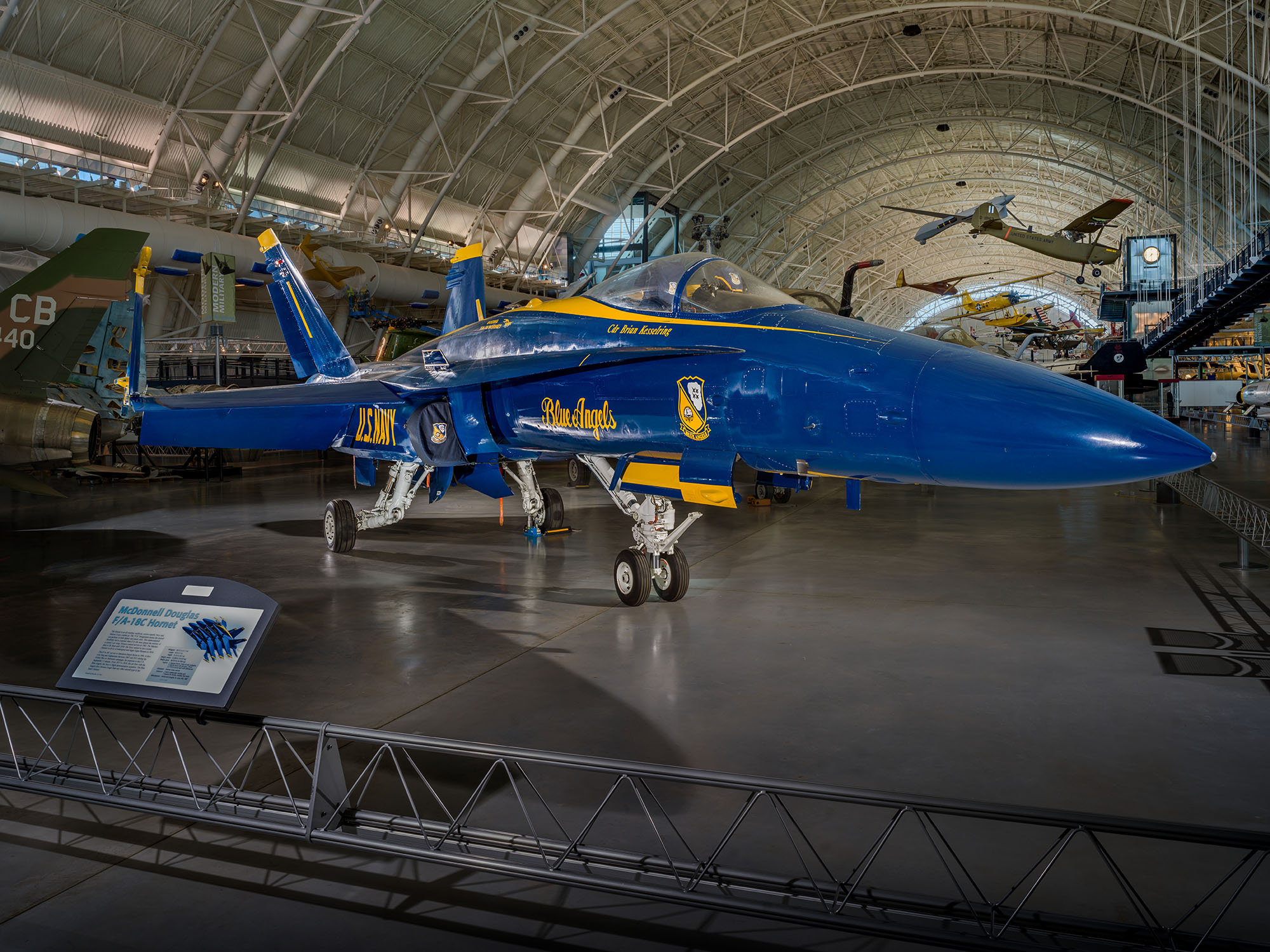
McDonnell Douglas F/A-18C Hornet
This Hornet served in combat before joining the Blue Angels. The F/A-18 was designed to perform both fighter and attack missions, combining different jobs in one carrier-capable aircraft. This particular jet flew during Desert Storm and later operations before becoming part of the Navy’s flight demonstration team from 2015 to 2020. Its familiar blue-and-gold identity is the final chapter of a much longer service history.
In depth
Two letters describe a design ambition
The F/A designation identifies fighter and attack roles. A carrier air wing benefits when one aircraft can perform different tasks, because deck space, maintenance capacity, and the number of aircraft carried are limited. Flexibility must be built into the airframe, sensors, controls, and weapons integration.
The Hornet entered service in 1983. Its twin engines and compact configuration supported demanding operations from aircraft carriers as well as land bases. The aircraft had to deliver useful performance and repeatedly return to the controlled violence of arrested landings.
The aircraft beneath the demonstration colors
This F/A-18C participated in Operation Desert Storm in 1991 and flew over Iraq and Afghanistan between 2007 and 2011. Its service with the Blue Angels came later, from 2015 through 2020.
That chronology matters. A demonstration aircraft may be associated with exceptionally polished public performances, yet the underlying machine can carry a long operational history. Paint and mission equipment change more quickly than an airframe’s identity.
Teamwork in public view
A Blue Angels performance presents discipline as spectacle. Closely coordinated flying depends on common procedures, trust, accurate timing, and the work of maintenance and support personnel. The precision visible overhead rests on a much larger organization on the ground.
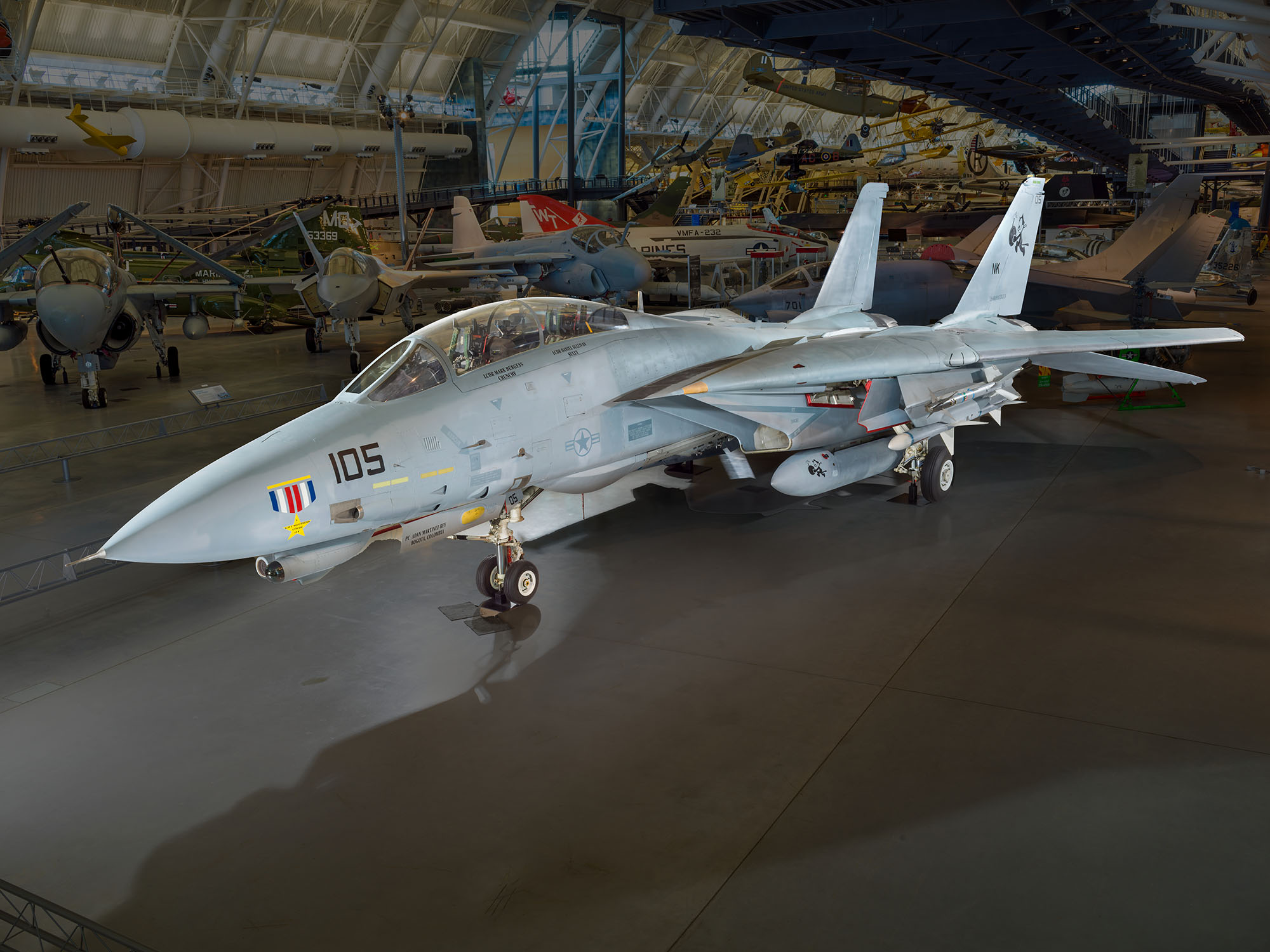
Compare this legacy Hornet with the F-14 nearby. Their different shapes and crew arrangements reflect different starting priorities, even though both served carrier aviation. Also distinguish the F/A-18C from the larger F/A-18E/F Super Hornet: similar names describe related but substantially different aircraft. The museum object preserves one particular branch of that history.