Udvar-Hazy
Grumman F-14D(R) Tomcat
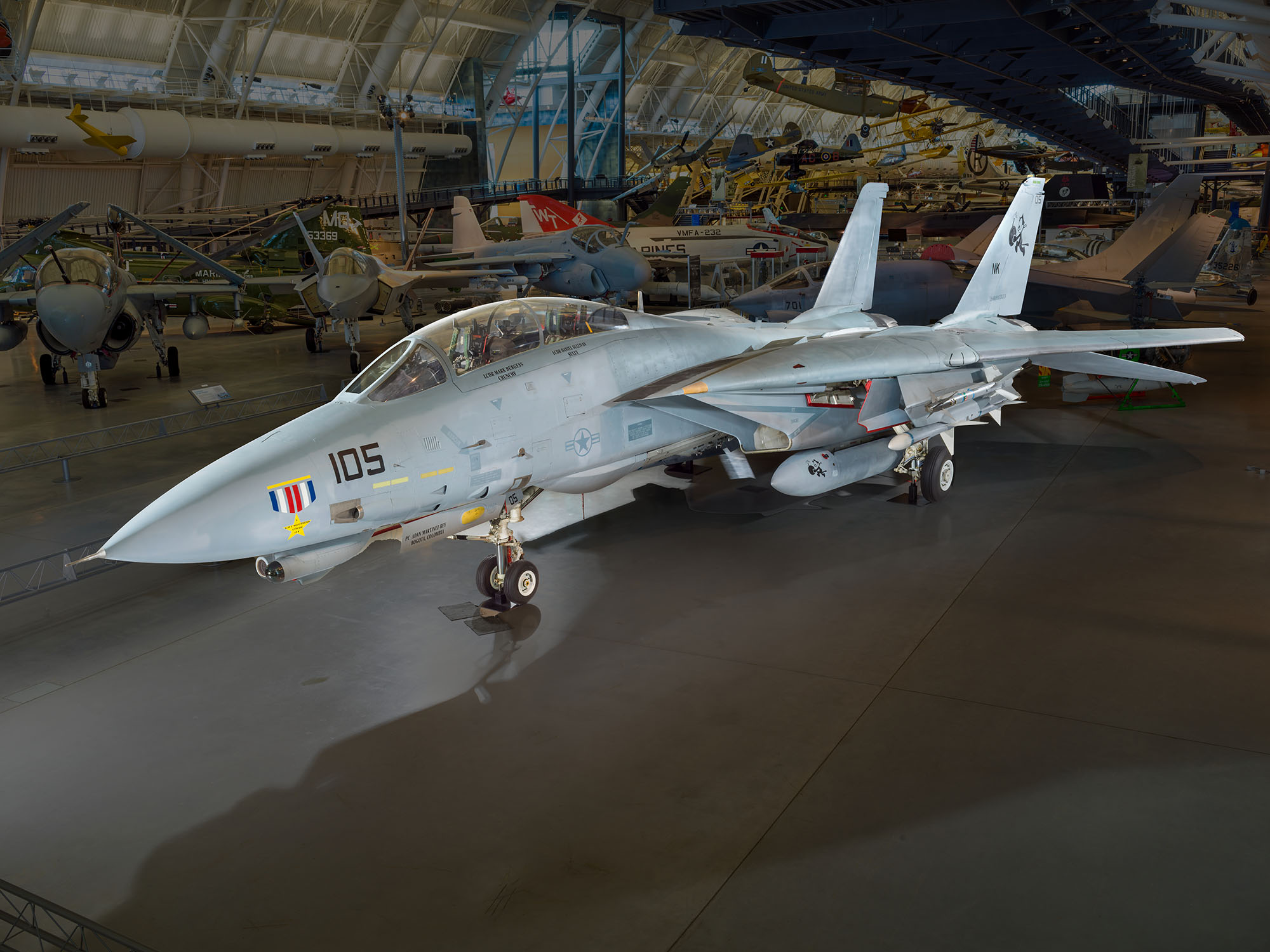
The Tomcat was built to defend a moving airfield: a U.S. Navy aircraft carrier. Its wings swept back for fast flight and spread farther forward for slower flying. A pilot and radar intercept officer shared the work of finding, identifying, and engaging threats. This aircraft later gained new equipment and missions. It is also a combat veteran, credited with shooting down a Libyan MiG during a fleet-defense mission in January 1989.
In depth
The carrier’s outer defense
An aircraft carrier brings a powerful air wing to sea, but also presents a target that must be protected. The F-14 was designed around that problem. Long-range detection, interception, and weapons employment were central to its purpose, including its original association with the AIM-54 Phoenix missile.
The two-person crew divided a demanding workload. The pilot flew the aircraft while the radar intercept officer managed major parts of the sensor and tactical picture. Their effectiveness depended on coordination with each other and with the wider carrier force. The Tomcat was one element in a network of ships, aircraft, and communications.
Wings that change the compromise
At lower speeds, a more extended wing helps support the aircraft during approach and landing. At high speed, greater sweep reduces some of the aerodynamic penalties associated with a broad wing. Variable geometry lets an aircraft change that compromise in flight.
The ability comes at a price. Moving wings need strong pivots, actuators, and structures able to transmit large loads. The Tomcat’s imposing center section is part of that engineering story. What appears to spectators as a dramatic transformation is also a substantial mechanical system that maintainers had to keep dependable at sea.
One airframe across several eras
Built in the 1970s as an F-14A, this aircraft was later rebuilt as an F-14D(R). Its January 4, 1989, combat credit belongs to its earlier configuration. Over its career, the Tomcat family expanded beyond fleet defense into reconnaissance and precision attack.
The museum aircraft’s final assigned unit was VF-31, whose technicians helped preserve it. That work is a useful reminder that the jet’s public image rests on a much larger community: deck crews, mechanics, controllers, ordnance personnel, and others whose skill made each launch and recovery possible.
See the aircraft beyond the silhouette
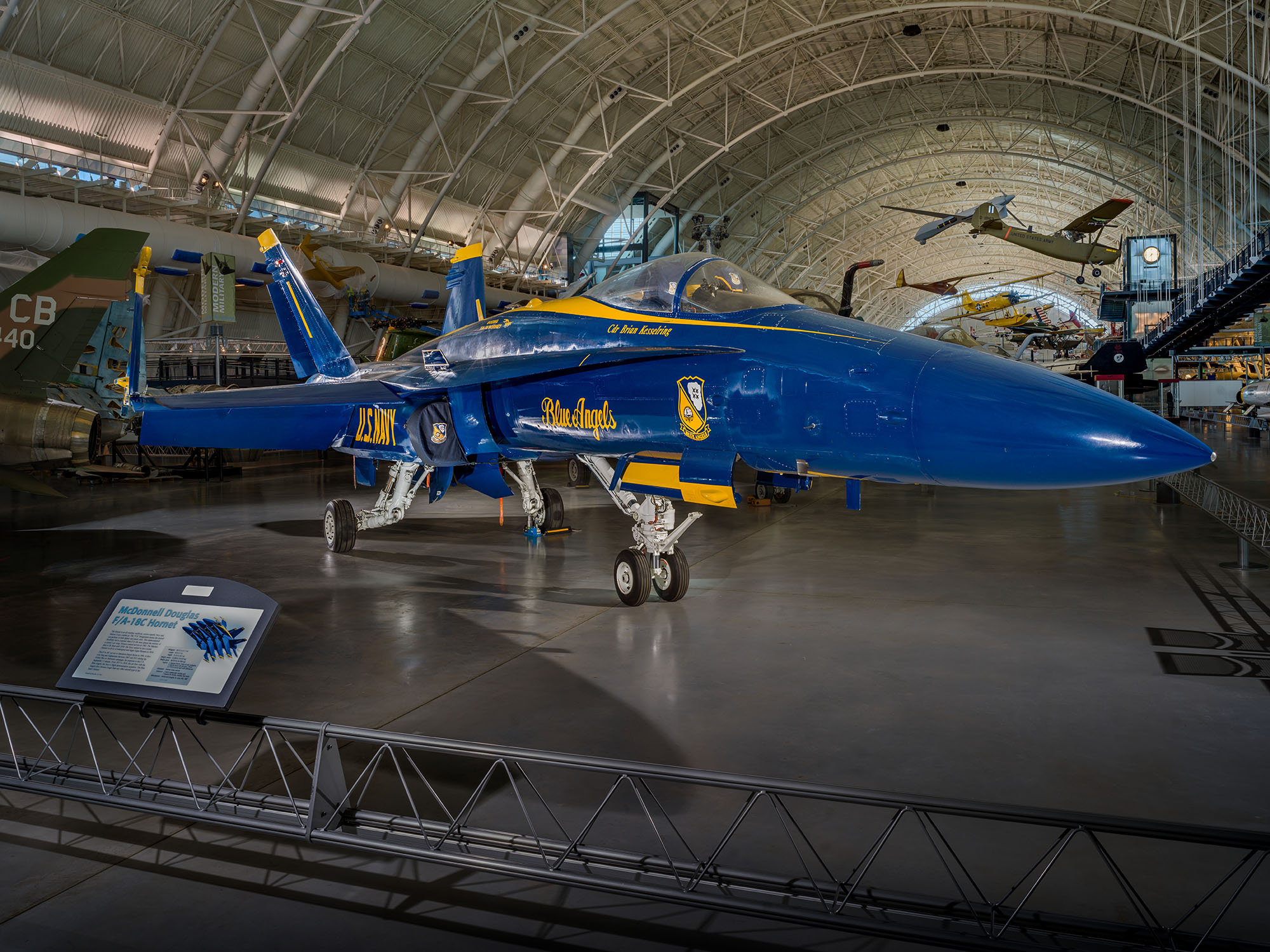
Compare the Tomcat’s wings and two-seat cockpit with the Hornet’s more compact arrangement. Both operated from carriers, but balanced range, workload, mission flexibility, and aerodynamic design differently. The F-14’s appeal is more than its unmistakable outline. It embodies a demanding effort to bring high-performance aviation back to a small, moving deck at the end of every flight.