Visual Construction · Immersive learning laboratory
Don’t read about the evidence. Enter it.
Museum panoramas become investigations. Objects become evidence. A student can move sideways through a collection, then drill down as far as curiosity carries them—into engineering, history, ecology, design, ethics, or a question no lesson plan predicted.
Enter the place→Inspect the evidence→Build an explanation
500+explorable viewpoints
1,200+navigation and object hotspots
3 modesexplore · listen · investigate
Open pathslearner choice with curricular purpose
A working public model
The collection is already rich. The learning layer makes it alive.
These experiences began as commissioned visitor tools and digital records. This independent rebuild connects the preserved work to questions, close observation, narration, source records, educator guidance, and cross-collection pathways.
It is designed for students and families today—and as a production model for museums, school systems, agencies, foundations, and public leaders deciding what the next generation of educational content should feel like.
Choose a path / follow a question
A learning drawer with more than one way in.
Move horizontally across subjects. Open a stop, listen to the narration, look closer, try the inquiry, or switch to the educator layer. The same component can be placed inside every preserved tour.
7 learning stops shown
Air & Space
Grades 5–12 · Engineering · Materials · Design
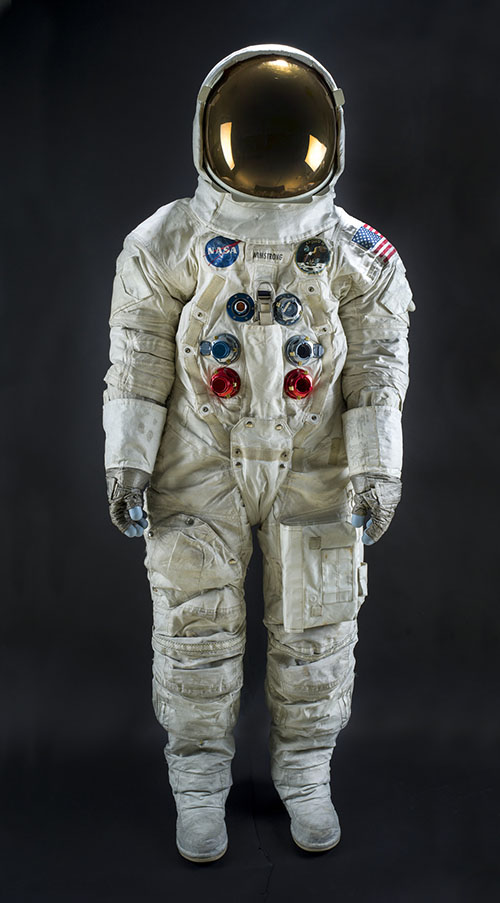
Armstrong’s lunar spacesuit
A spacecraft tailored to one human body
Neil Armstrong wore this A-7L pressure suit on the Moon in 1969. It supplied oxygen, protected him from temperature extremes and micrometeoroids, supported communication, and still had to let him bend, work, and walk.
Learning connections
NGSS: engineering design; structure and function
CCSS literacy: cite evidence from visual and technical sources
The next museum is one click away when an object, technology, event, or question continues somewhere else.
Path 01 / material to mission
Wright Flyer fabric → Apollo 11 spacesuit
Follow flight from wood and fabric to a pressure garment that functions as a personal spacecraft. Compare materials, constraints, testing, and the evolution of engineered systems.
Move between two aircraft held by different national museums, then expand the inquiry through primary sources, historical perspectives, technical evidence, and human consequences.
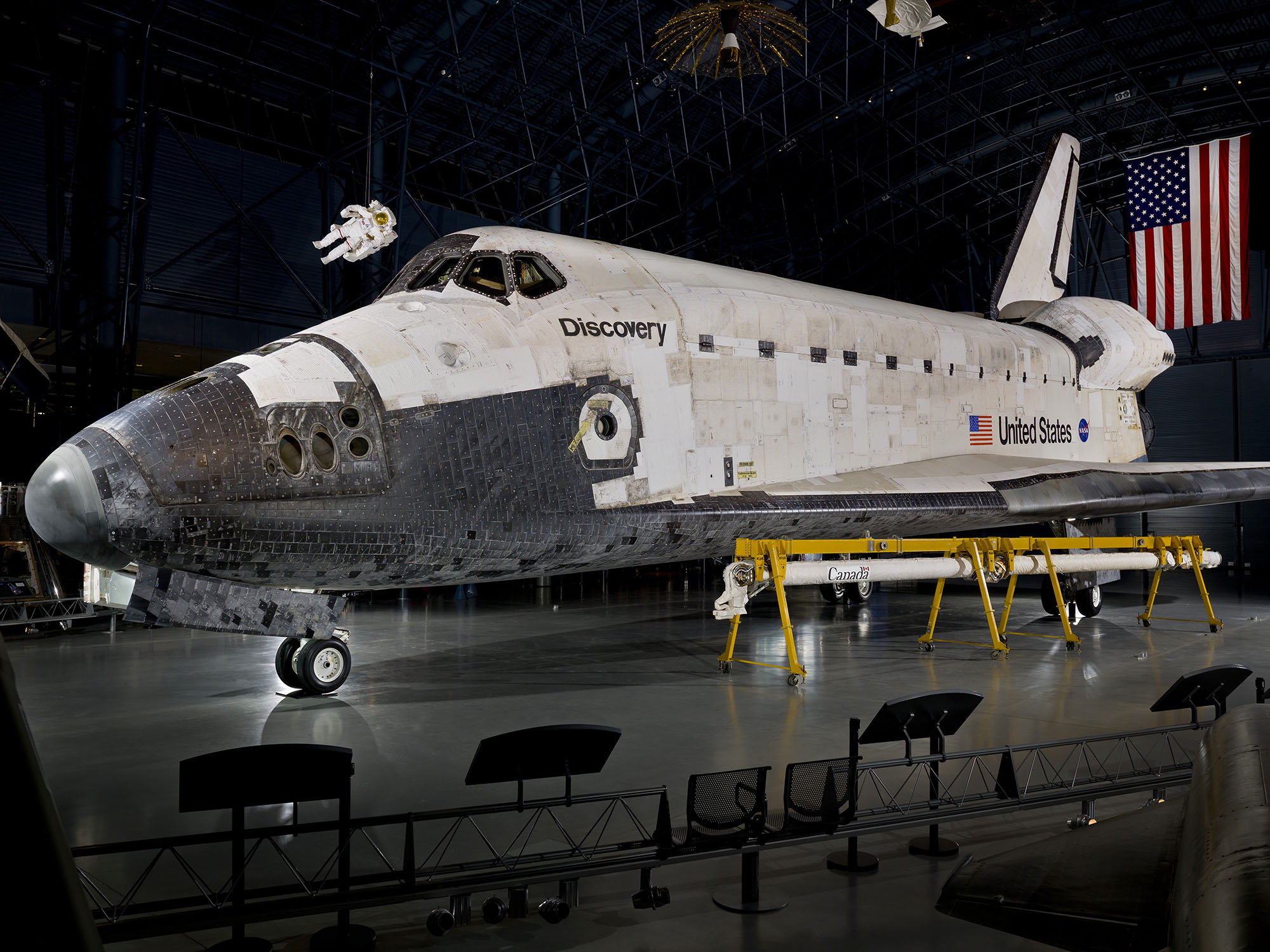
Examine the complete orbiter at Udvar-Hazy, then enter the crew-compartment trainer in Dayton. Revise a system model as the learner gains access to another scale and point of view.
Curiosity is the route. Evidence is the discipline.
Science
Three-dimensional learning
Learners use science and engineering practices, crosscutting concepts, and disciplinary core ideas together to explain a phenomenon or design a solution.
Panoramas, diagrams, objects, captions, technical records, audio, and primary sources become a connected text set for close reading, evidence-based writing, speaking, and listening.
Commission a working unit, not another abstract innovation plan.
Start with one place, one essential question, and one group of learners. Visual Construction can capture or reuse the space, build the learning architecture, create accessible text and audio layers, align the experience to local curriculum, measure engagement, and leave the organization with a repeatable production system.
 Air & Space