Udvar-Hazy
Tracking and Data Relay Satellite
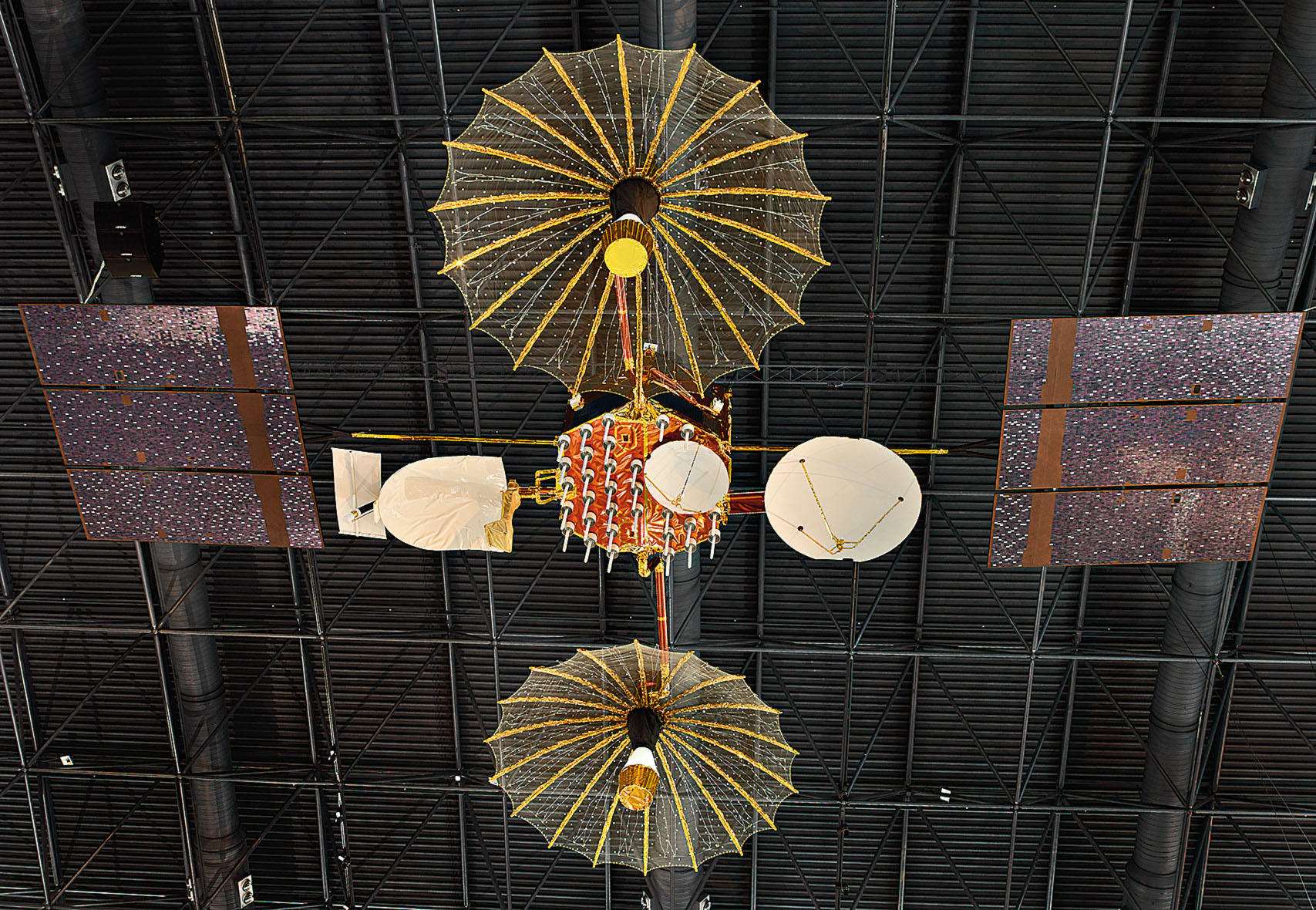
This model represents NASA’s Tracking and Data Relay Satellite system, which helped spacecraft stay in touch with Earth. Instead of waiting to pass over a ground station, a low-orbiting spacecraft could send information through a relay satellite much higher above Earth. That improved contact was important for shuttle crews, scientific instruments, and later space-station operations. The large antennas are a visible part of an otherwise mostly invisible space infrastructure.
In depth
A gap in the conversation
Early spacecraft communicated through networks of ground stations. As a vehicle orbited Earth, it repeatedly moved into and out of a station’s view. Contact depended on geography as well as the spacecraft’s equipment.
Relay satellites changed that arrangement. A spacecraft in low Earth orbit could communicate with a satellite in geosynchronous orbit, which then passed the signal toward the ground. With appropriately placed relay spacecraft, far more of an orbit could remain connected.
The first satellite needed rescuing
Challenger deployed the first TDRS in April 1983. A problem with the upper stage left it in an incorrect orbit. Engineers used the satellite’s own propulsion through a carefully planned recovery effort, bringing it to the required orbit in June.
That episode gives the system a more interesting beginning than a diagram alone would suggest. The satellite’s intended task was to support other missions, but first its own mission needed sustained ground-team ingenuity. Space infrastructure can have dramatic histories even when it lacks a cockpit.
Antennas make the network visible
The model’s large dishes and supporting structures show the importance of communicating across long distances. Different links have different requirements for pointing, data rate, and coverage. The geometry of the spacecraft is shaped partly by the need to keep those links working.
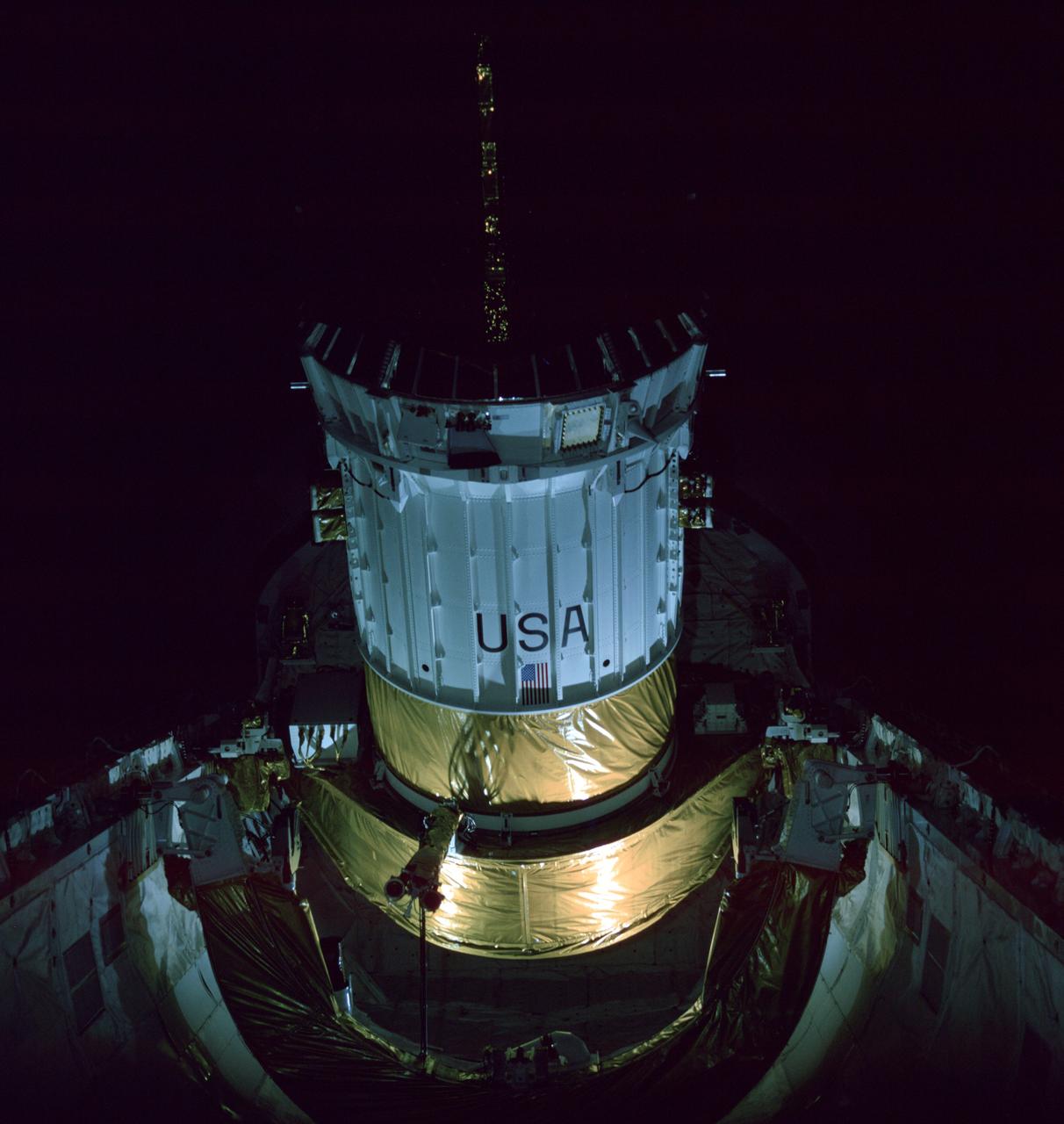
The artifact is a high-fidelity model made under the direction of TRW, the manufacturer of the early TDRS spacecraft. It was not launched. The accompanying deployment photograph shows actual flight hardware leaving a shuttle, restoring the scale and operating context represented by the model.
Exploration depends on getting information home
A telescope image, a rover measurement, or a conversation with an astronaut becomes useful on Earth only when the information arrives. TDRS belongs to that essential middle layer between a mission and the people following it.
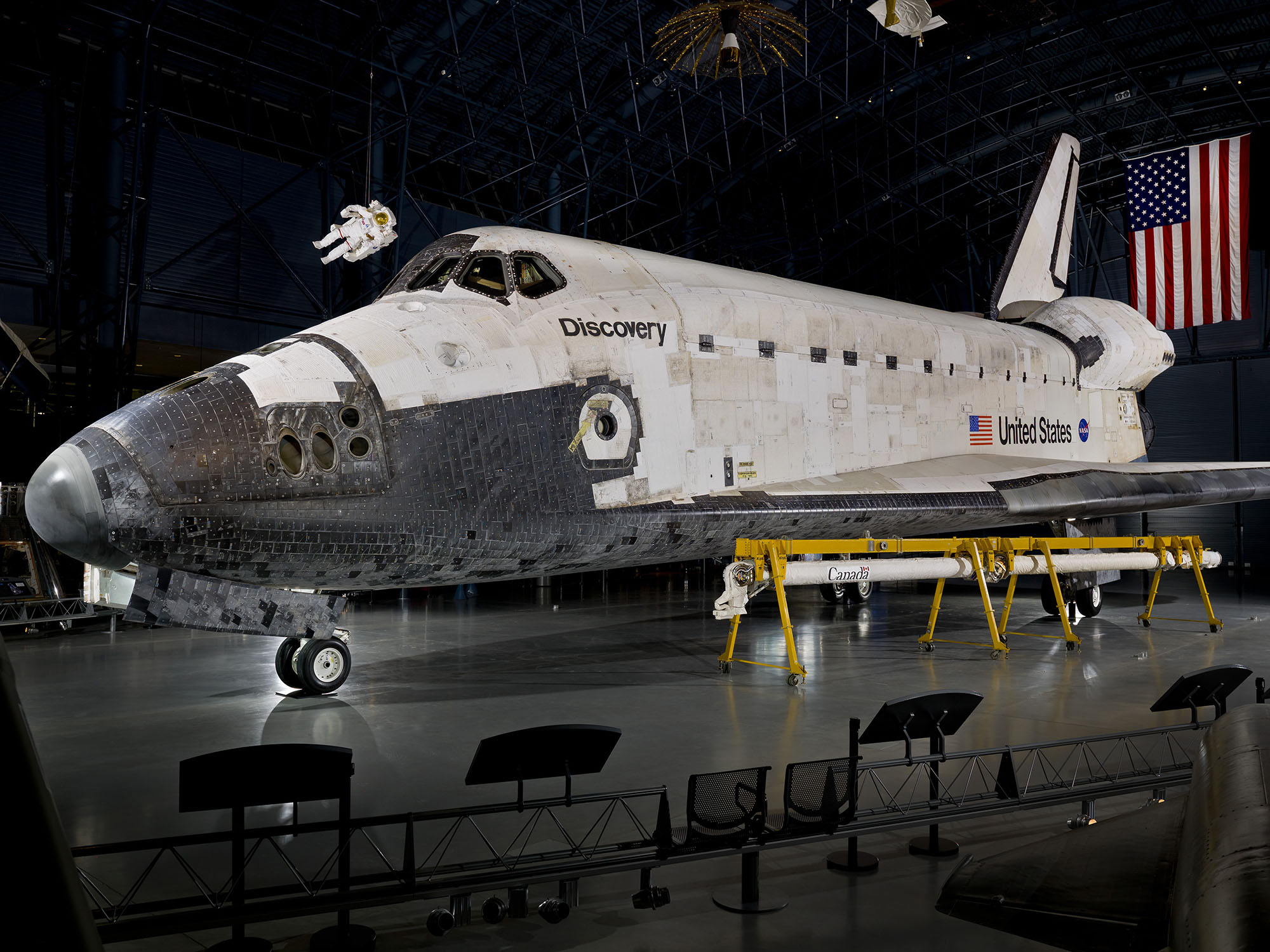
Compare it with Discovery, Canadarm, and Spacelab. Their visible work depended on communications that could support operations and carry results. The relay satellite’s contribution was to make distant activity feel more continuous, coordinated, and reachable.