Udvar-Hazy
Lockheed Martin X-35B Joint Strike Fighter
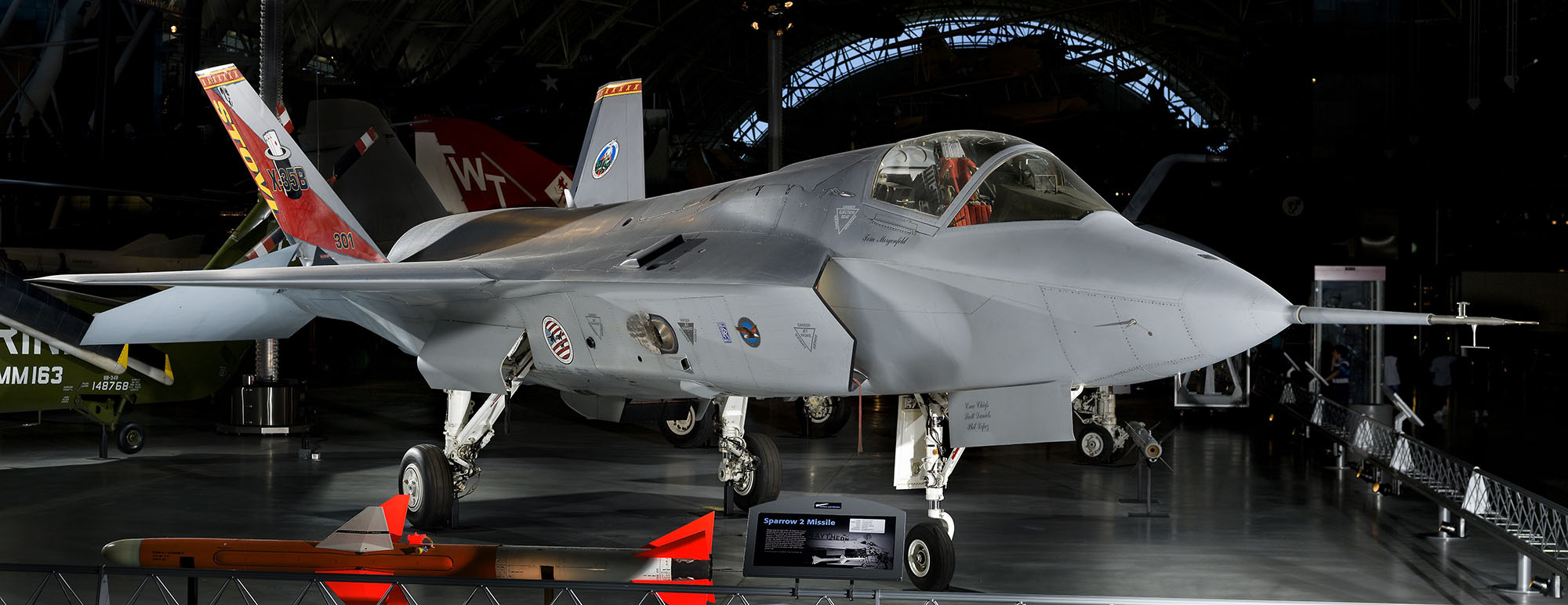
The X-35B demonstrated an extraordinary combination: a short takeoff, a supersonic dash, and a vertical landing in one flight. A fan behind the cockpit and a swiveling exhaust helped support the aircraft when it was moving too slowly for its wings to do the job. This is an experimental demonstrator from the competition that led to the F-35, rather than a production fighter. Its story is about proving that a difficult idea could work in the air.
In depth
Three demands in one aircraft
An aircraft designed for fast forward flight usually depends on air moving over its wings. A vertical landing demands another source of lift. Combining those conditions in one supersonic machine creates a difficult packaging problem: equipment useful in a hover becomes weight and volume carried during ordinary flight.
The X-35B used a shaft-driven lift fan behind the cockpit, together with downward-directed engine exhaust and control outlets. The system distributed lifting forces around the aircraft so it could balance as well as rise. Managing those forces through the transition between wing-supported and powered lift was central to the demonstration.
Mission X
On July 20, 2001, test pilot Arthur “Turbo” Tomassetti completed the flight remembered as Mission X. The X-35B took off in roughly 450 feet, accelerated beyond the speed of sound in level flight, and returned for a vertical landing.
The importance lay in completing the sequence with one aircraft on one flight. Separate demonstrations might establish individual capabilities without showing that the entire transition could be managed as an integrated operation. Mission X provided a particularly persuasive answer to that challenge.
A demonstrator is a question made physical
The museum aircraft began as the first X-35 and was modified for the lift-fan work. The later production F-35B developed the concept into an operational aircraft, with substantial differences beyond the demonstrator’s original configuration.
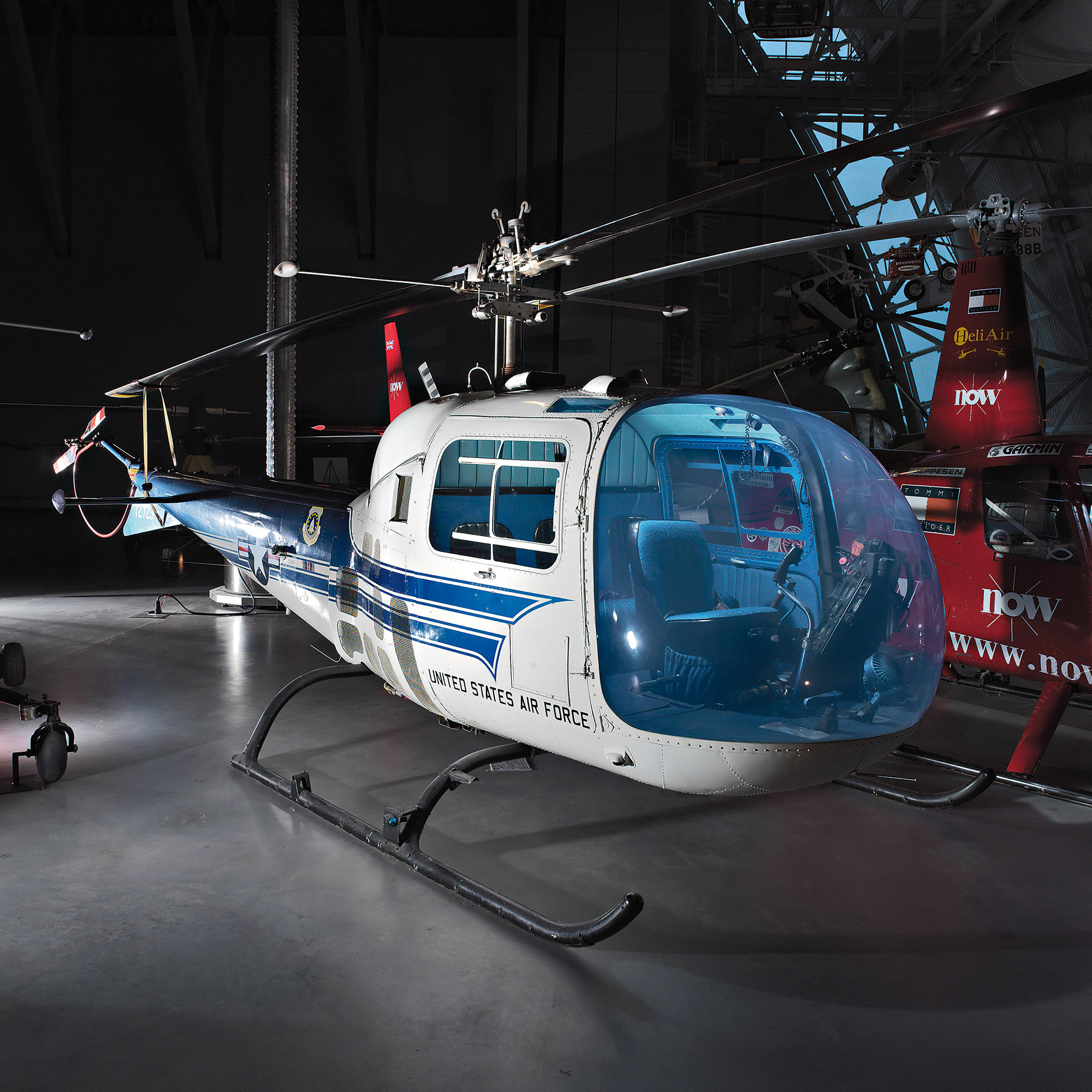
Look behind the cockpit for the area occupied by the fan. Compare the aircraft with the H-13J and Huey: all can support vertical flight, but their solutions arise from very different expectations about speed, range, and mission. The X-35B’s achievement came from making two seemingly incompatible flight regimes coexist within one design.