Udvar-Hazy
Aichi M6A1 Seiran
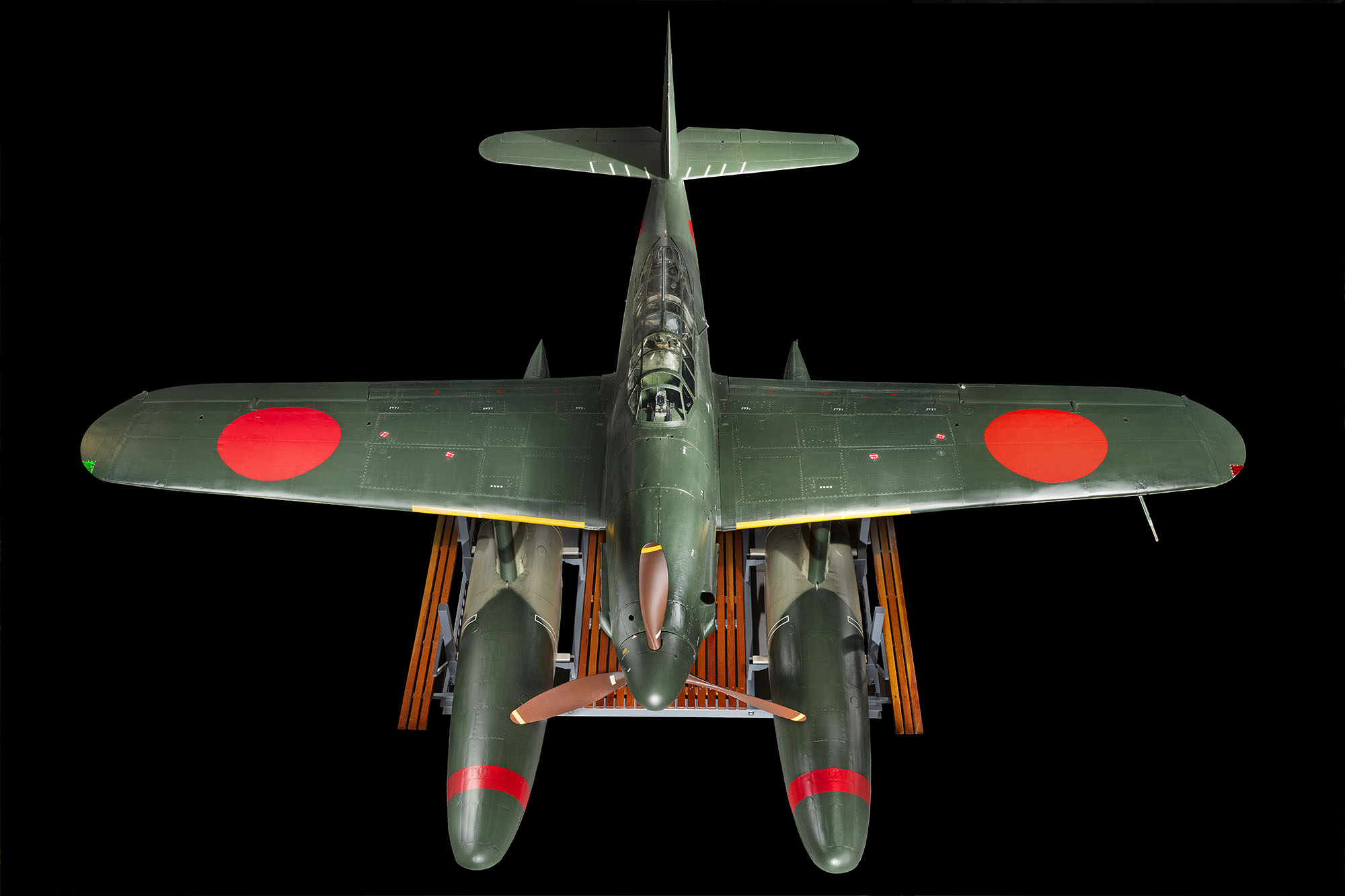
An airplane inside a submarine sounds like an adventure story. Japan actually built one. The Seiran’s wings and tail folded so it could fit into a watertight hangar, then be brought out and launched at sea. It was intended to strike faraway targets during World War II, but the war ended before it flew a combat mission. This is the only surviving Seiran: a remarkable example of engineers designing an aircraft around a very unusual job.
In depth
A hangar beneath the sea
For Aichi engineer Toshio Ozaki, the submarine was as much a design constraint as the sky. A conventional airplane could be judged by speed, range, and payload. The Seiran also had to fit through a hangar opening, survive life aboard a naval vessel, and be prepared for launch on a moving deck. Folding surfaces were essential parts of the aircraft’s operating system.
The strategic idea was to let a submarine carry air power across an ocean without an aircraft carrier. Targets considered by Japanese planners included the American mainland and the Panama Canal, whose locks were critical to moving ships between the Atlantic and Pacific. The aircraft and its carrier therefore had to work as one weapon system.
The cost of a clever solution
Every folding joint added hardware, maintenance, and work for the launch crew. Floats permitted operation on water but added drag and weight. These are the compromises that make the Seiran fascinating: solving the storage problem created new problems in performance and handling. Preparing aircraft on the surface also interrupted a submarine’s greatest protection, its ability to remain hidden.
The concept reached hardware, but never combat. Its engineering ingenuity should not be confused with proven operational effectiveness. An unusual machine can work mechanically and still arrive too late to influence a war.
The survivor’s journey
The museum’s Seiran was the final airframe built. Lieutenant Kazuo Akatsuka flew it from Fukuyama to Yokosuka and surrendered it to American occupation personnel. Its survival allows a project once developed for secrecy to be examined closely.
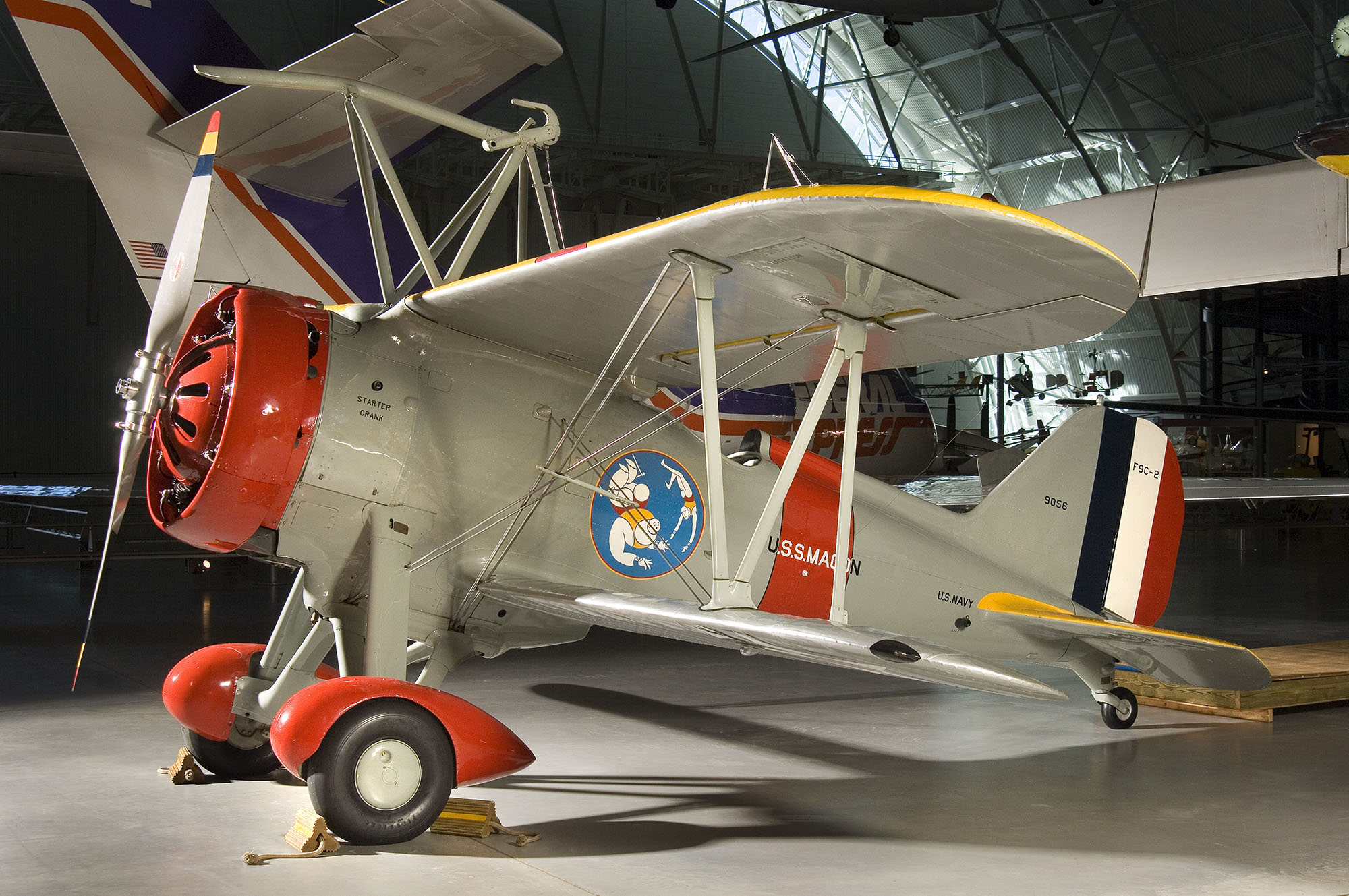
In the panorama, follow the relationship between the compact fuselage, wings, and floats. Compare it with the nearby Sparrowhawk: one aircraft emerged from a submarine, the other from an airship. Both pushed designers to treat a larger vehicle as a flying machine’s mobile home.