Udvar-Hazy
Space Science
Space science sends instruments where people cannot easily go and where Earth’s atmosphere cannot block the view. Landers examine other worlds, telescopes observe distant objects, and experiments study how materials and living systems behave in orbit. The machines here show the practical side of discovery: sensors, power, communications, protective structures, and careful plans for turning measurements into useful knowledge.

In depth
The instrument shapes the mission
A spacecraft is often built around the needs of the observations it must make. Cameras need a useful view. Other instruments need contact with a sample or protection from heat, vibration, or contamination. Power and communications must support the work and return the results.
The visible vehicle can therefore be understood as a support system for a particular kind of measurement.
A robot moves the point of view
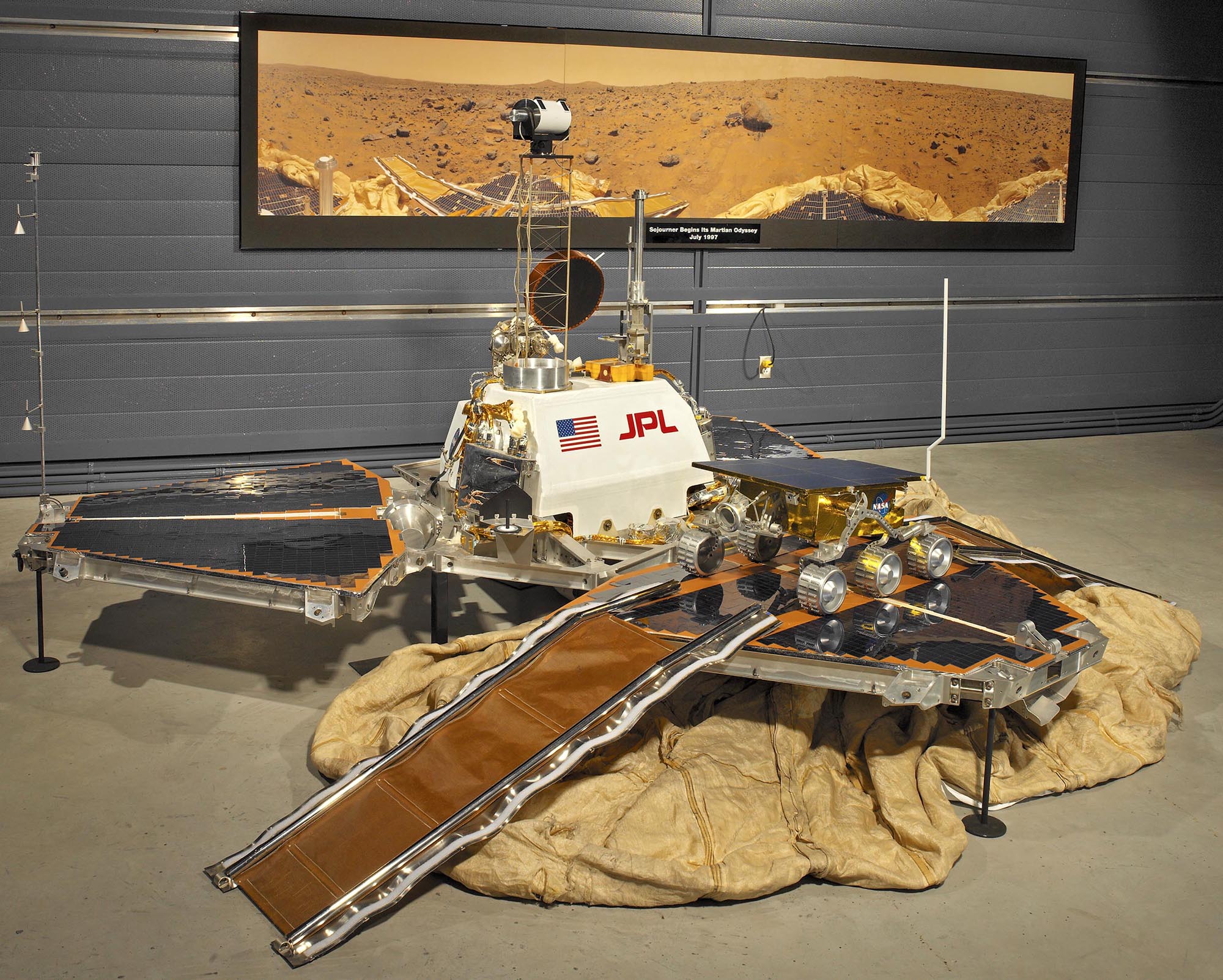
Pathfinder and Sojourner demonstrated how a small rover could examine multiple locations on Mars. Mobility changed the relationship between the instrument and the landscape. Investigators could choose a rock for closer attention rather than accept only what lay beside a stationary lander.
The communication delay required planned activity instead of instantaneous driving from Earth. Exploration combined local machine capabilities with decisions made by a distant team.
People and instruments extend each other
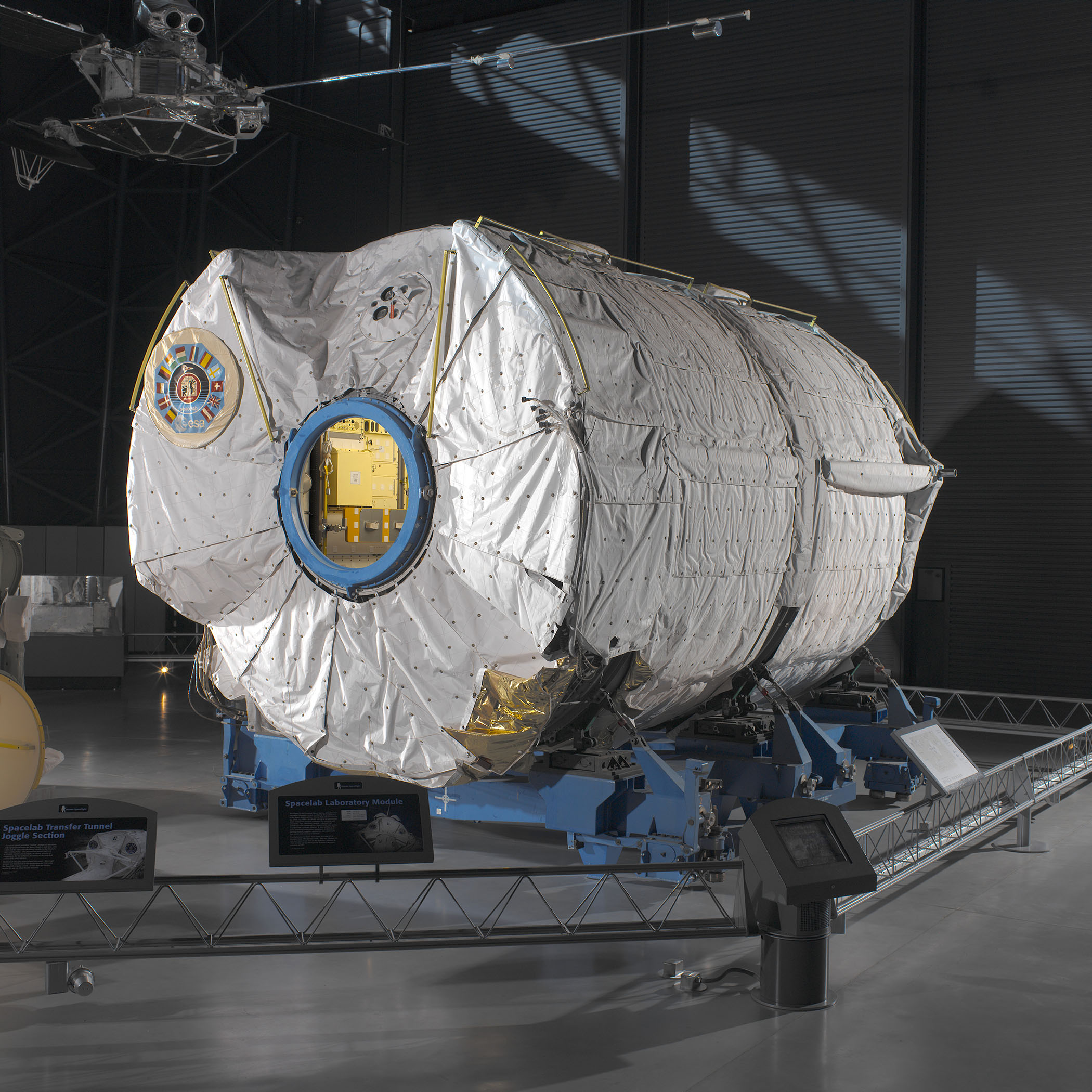
Spacelab allowed researchers to operate experiments in orbit, while Discovery’s Hubble missions connected astronauts with the deployment and servicing of an observatory. These are different ways of supporting science beyond Earth.
The museum’s prototypes and models also belong to the story. They helped teams test, prepare, or explain missions before and after flight. Distinguishing them from flown hardware makes their contribution clearer, rather than diminishing their value.