Udvar-Hazy
Commercial Aviation
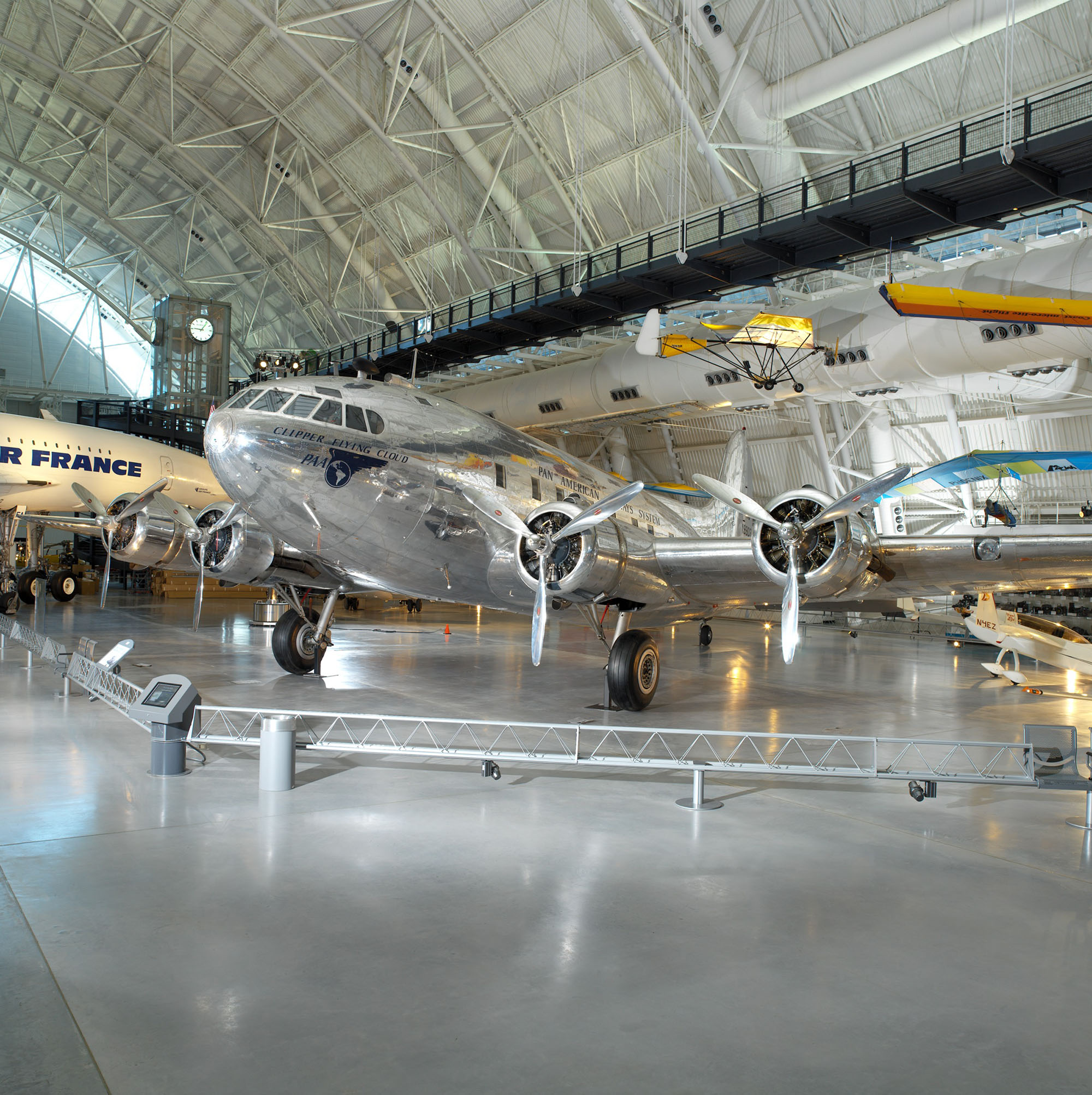
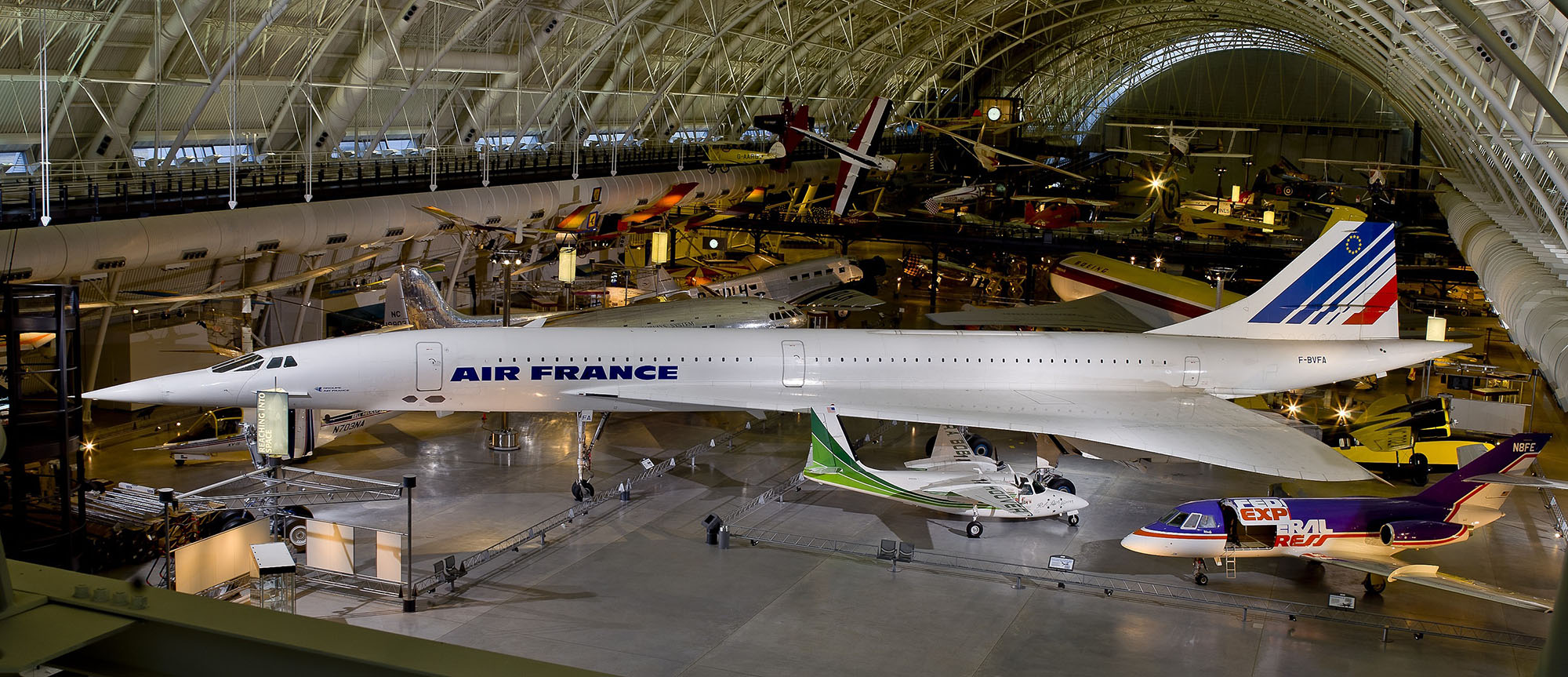
Passenger and cargo aviation changed distance into something measured in hours. That transformation required more than faster airplanes: cabins, engines, airports, maintenance, schedules, and public confidence all had to develop together. The Stratoliner, Super Constellation, Dash 80, and Concorde trace several different ambitions—greater comfort, longer journeys, widespread jet travel, and extraordinary speed.

In depth
Comfort had to be engineered
Pressurization helped passengers travel at useful cruising altitudes without experiencing the full conditions outside. The Boeing 307 made the cabin environment an integral part of the aircraft’s design. Later transports expanded capacity and range while continuing to improve what a long journey felt like from a seat.
Passenger expectations grew with the machinery. A service had to be dependable and understandable as well as technically possible.
Jet travel becomes a network
The Dash 80 helped demonstrate the transport technology that led to the 707, while also supporting military tanker development. Its legacy spread through aircraft families and the airlines that used them. The revolution involved schedules, airports, maintenance organizations, and the economics of carrying people repeatedly across long distances.
The Falcon 20 offers a cargo counterpart. Federal Express’s early fleet helped make overnight connections into a coordinated service rather than a collection of separate fast flights.
Speed was one possible future
Concorde showed that scheduled supersonic passenger travel could work. It also showed that technical success does not automatically create a large market. Costs, noise, route limitations, and passenger demand shaped the result.
Seen together, these aircraft reveal several definitions of progress. A quicker crossing, a more comfortable cabin, a dependable arrival, and a lower-cost journey are related ambitions, but they do not always lead to the same airplane.