National Mall
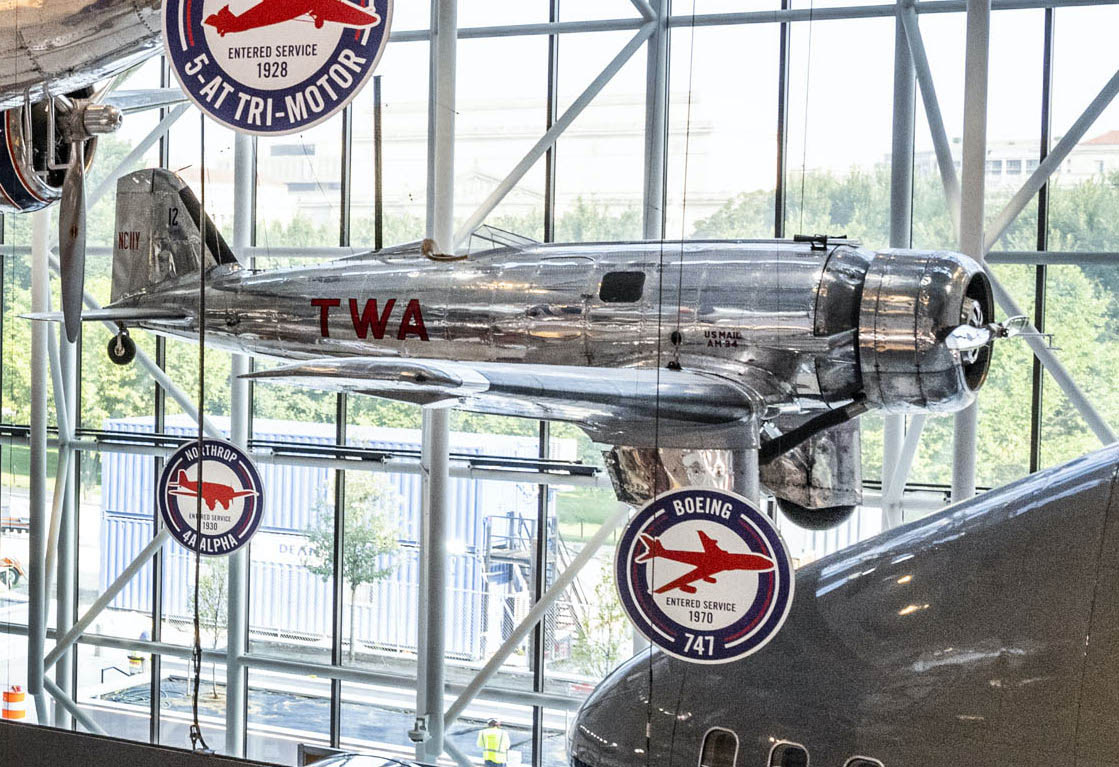
Northrop Alpha
The Alpha had a streamlined metal body and advanced wing, but it kept fixed landing gear, one engine, and an open cockpit. It captures a moment when airplanes were changing quickly. John Northrop's multi-cellular wing and all-metal construction improved strength and efficiency. Passenger service soon demanded twin engines and enclosed flight decks, but Alpha ideas influenced later transports.
In depth
A transitional design tests what comes next
The Alpha demonstrates incremental system change rather than a single clean revolution. Structural methods migrated into the DC-2 and DC-3 even as the aircraft's own market shifted from passengers to express cargo.
Making distance ordinary
An airliner is only the most visible part of an airline. A scheduled journey also depends on weather reports, navigation, trained crews, maintenance, passenger handling, and an airport at each end. Early commercial aircraft had to prove that this whole arrangement could work often enough for people and businesses to rely on it. Carrying mail helped sustain routes while passenger service developed.
Cabin design and operating economics shaped one another. More seats could spread costs across more passengers, but the aircraft still needed enough range and performance for its routes. Enclosed cabins, better engines, improved navigation, and later pressurization made travel more comfortable and more predictable. The move to jets and then wide-body aircraft expanded what airlines could offer, while also requiring larger airports and more extensive support systems.
The aircraft in these galleries preserve that growth at different scales. Small utility transports served places that a large airliner could not reach. The DC-3 connected commercial practicality with a design that also became a military workhorse. Later aircraft carried far more people across oceans and continents. Following those connections avoids treating airline history as a contest to build the biggest machine. Its deeper achievement was to make an exceptional experience into an ordinary expectation: depart at a published time, reach a distant city, and return home.