Udvar-Hazy
Korea and Vietnam
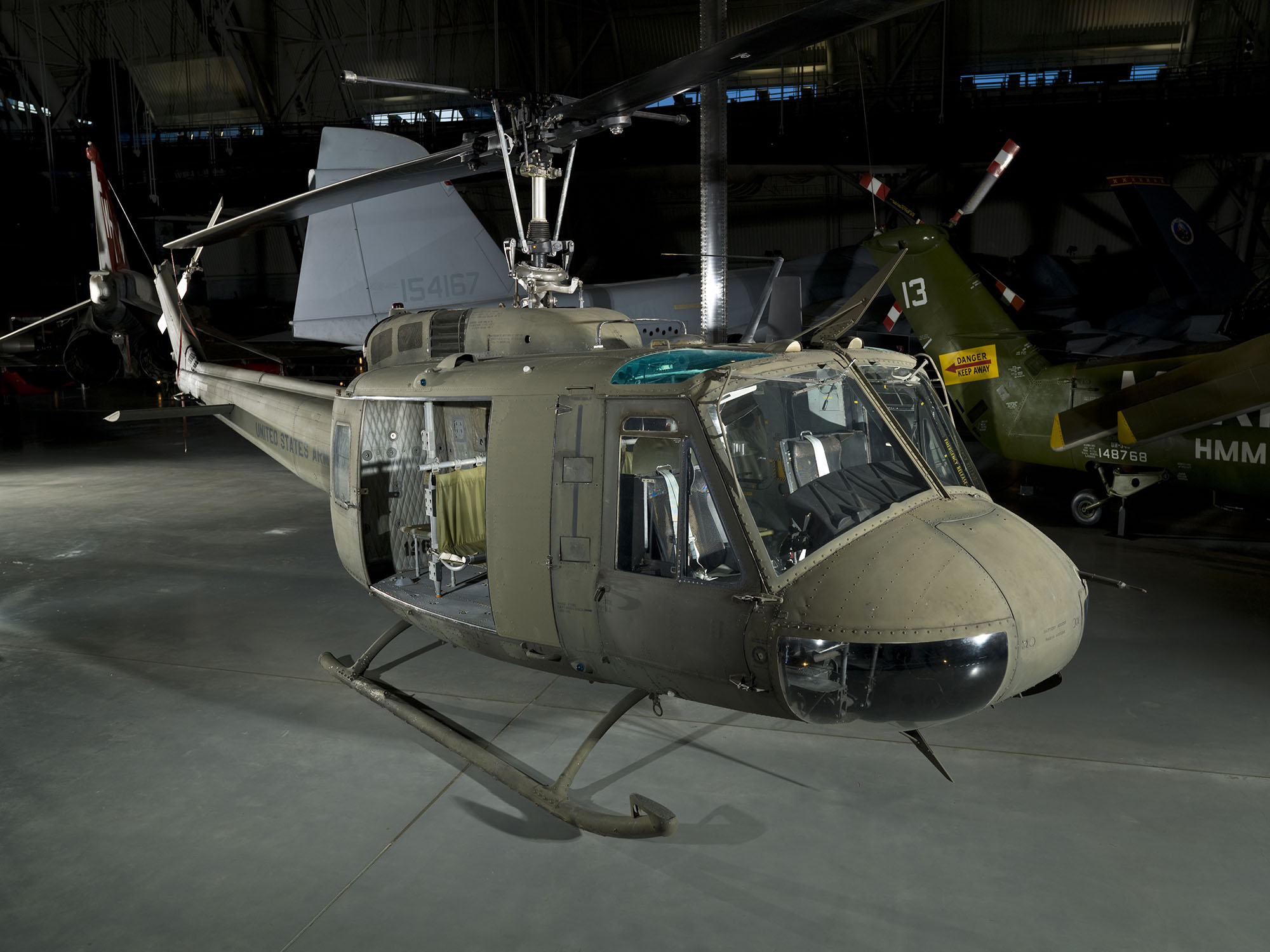
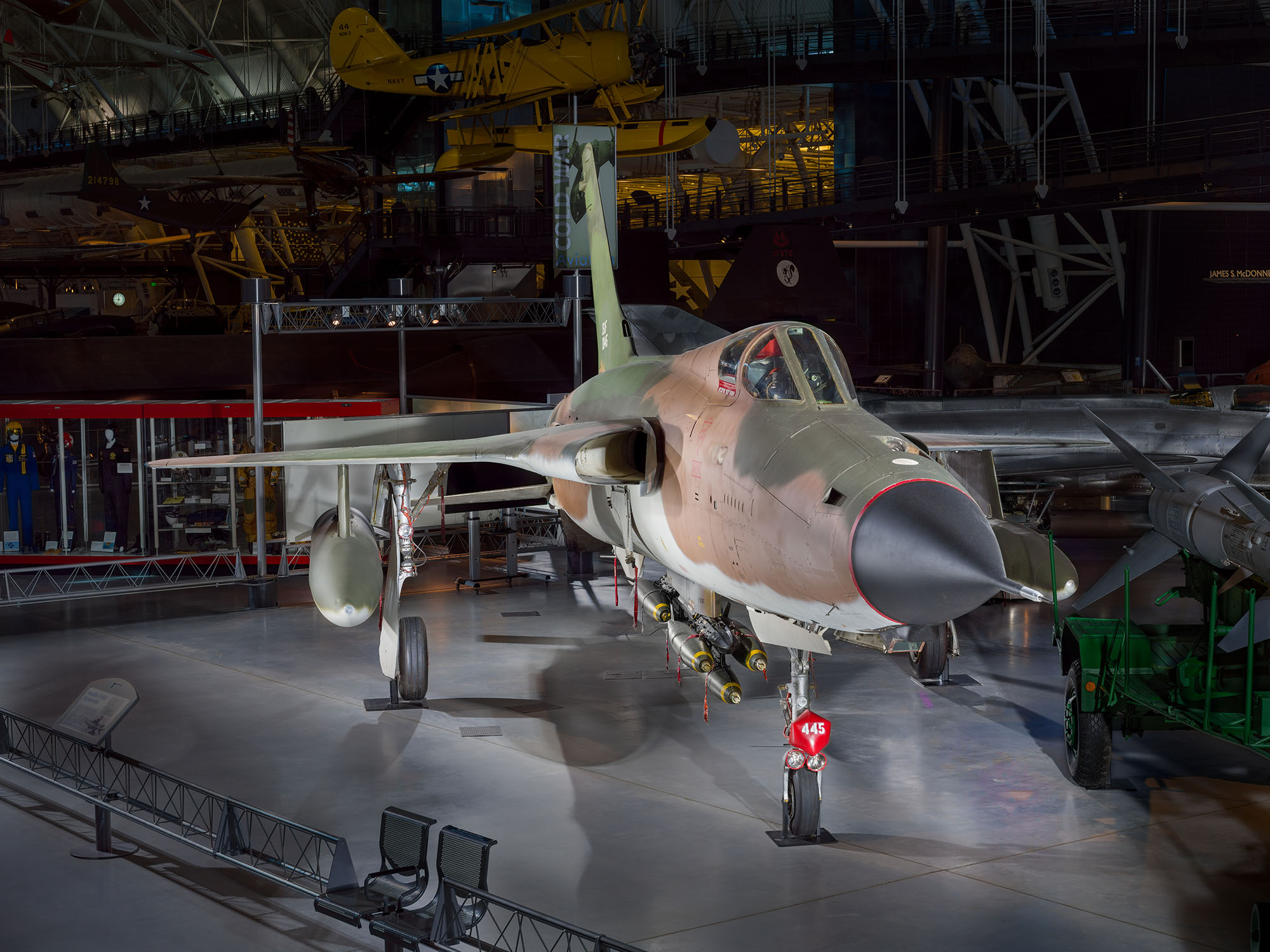
The Korean and Vietnam wars brought jets and helicopters into demanding everyday service. Aircraft carried supplies, attacked targets, supported troops, and rescued wounded people. High performance did not remove the dangers of terrain, weather, enemy defenses, or uncertain information. The Huey and Thunderchief tell very different parts of this history, connected by the crews and support teams who kept returning to difficult work.

In depth
New aircraft, persistent problems
Jet propulsion expanded speed and performance, but combat still depended on finding the right place, identifying targets, coordinating with other forces, and returning home. Better machines operated within political and military constraints that technology alone could not resolve.
The Korean and Vietnam wars differed in geography, opponents, strategy, and duration. Their aircraft should not be used to flatten those differences into a single generic jet-age conflict.
The helicopter changes access
Vertical flight made it possible to move people and supplies without waiting for a conventional airfield. Medical evacuation became one of the helicopter’s most consequential roles. In Vietnam, air mobility expanded dramatically, placing transport and assault helicopters close to the fighting.
Smokey III preserves a specialized part of that story through its smoke-laying work and repaired battle damage. The individual airframe records service that a general description of the Huey family can only outline.
The burden of repeated strike missions
The F-105 connects the gallery to high-speed attacks from bases in Thailand. Its crews faced layered defenses, while maintainers prepared damaged and heavily used aircraft for further operations. The veterans who helped preserve this Thunderchief made a specific choice to keep that experience visible. Its story invites attention to skill and endurance alongside loss, captivity, rescue, and the war’s wider effects.