National Mall
Kepler Technology Demonstrator
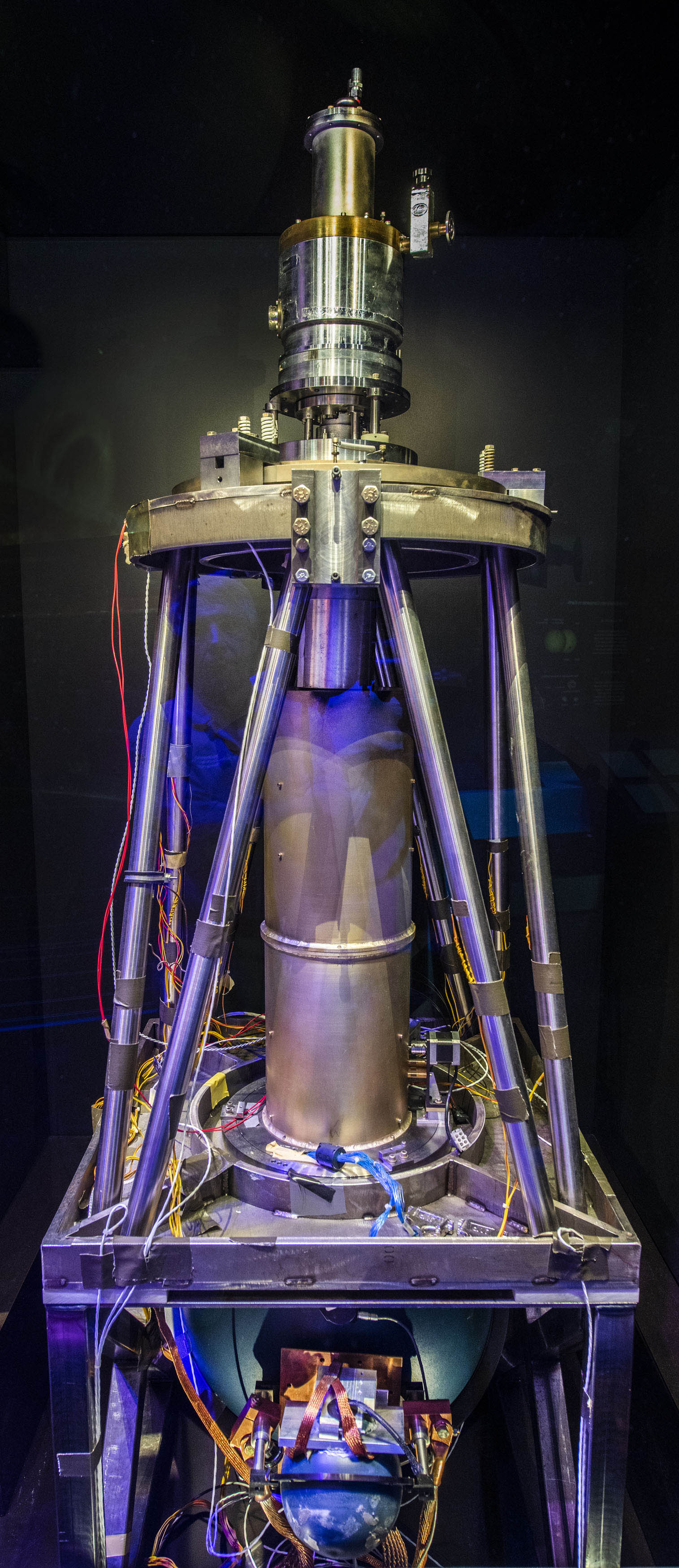
Kepler searched for tiny, repeated dips in starlight when a planet crossed in front of its star. This apparatus helped prove that the detector could measure changes that small from space. A transit may dim a star by only a tiny fraction. Kepler needed stable pointing, sensitive detectors, repeated observations, and methods for rejecting changes caused by the star or the instrument itself.
In depth
The signal is small, so the test must be exact
The demonstrator addressed whether detector technology could sustain the photometric precision needed to monitor more than 100,000 stars. Mission success depended on calibration, noise characterization, cadence, and statistical confirmation as much as optical sensitivity.
Exploration by instruments and patient teams
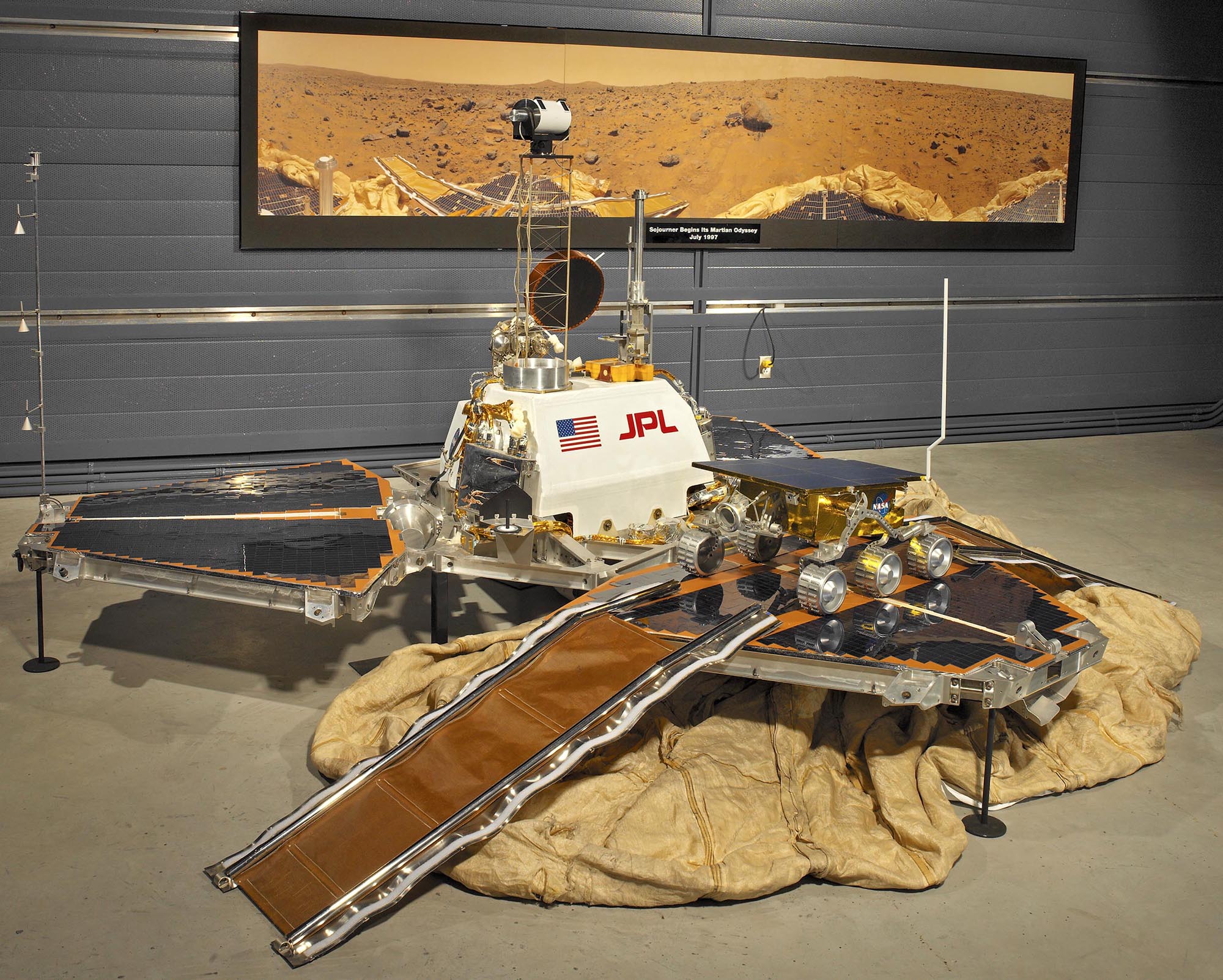
A planetary spacecraft must operate in conditions its builders can test only imperfectly on Earth. Launch vibration, radiation, temperature, power, communications, and long periods without immediate intervention all affect the design. The most useful mission is not necessarily the one carrying the most instruments; it is the one whose instruments can make meaningful measurements and return them reliably.
Different mission types answer different questions. A flyby provides a brief encounter and may use a planet's gravity to continue elsewhere. An orbiter can revisit the same world under changing conditions. A lander examines one location closely, while a rover trades additional mechanical complexity for the ability to move between sites. Sample-return missions add the extraordinary challenge of bringing material home for analysis with instruments too large or complex to fly.
The discoveries are collective achievements. Engineers keep the spacecraft functioning, mission planners choose observations, and scientists compare the results with existing explanations. An unexpected image or measurement can redirect years of work. The cameras, rovers, globes, and spacecraft models in these galleries show successive ways of turning a distant point of light into a world with a history. Their connections to aviation run through navigation, imaging, materials, computing, and communications. The pilot may be absent, but human judgment remains present throughout the mission.