Air Force Museum
B-58 Escape Capsule
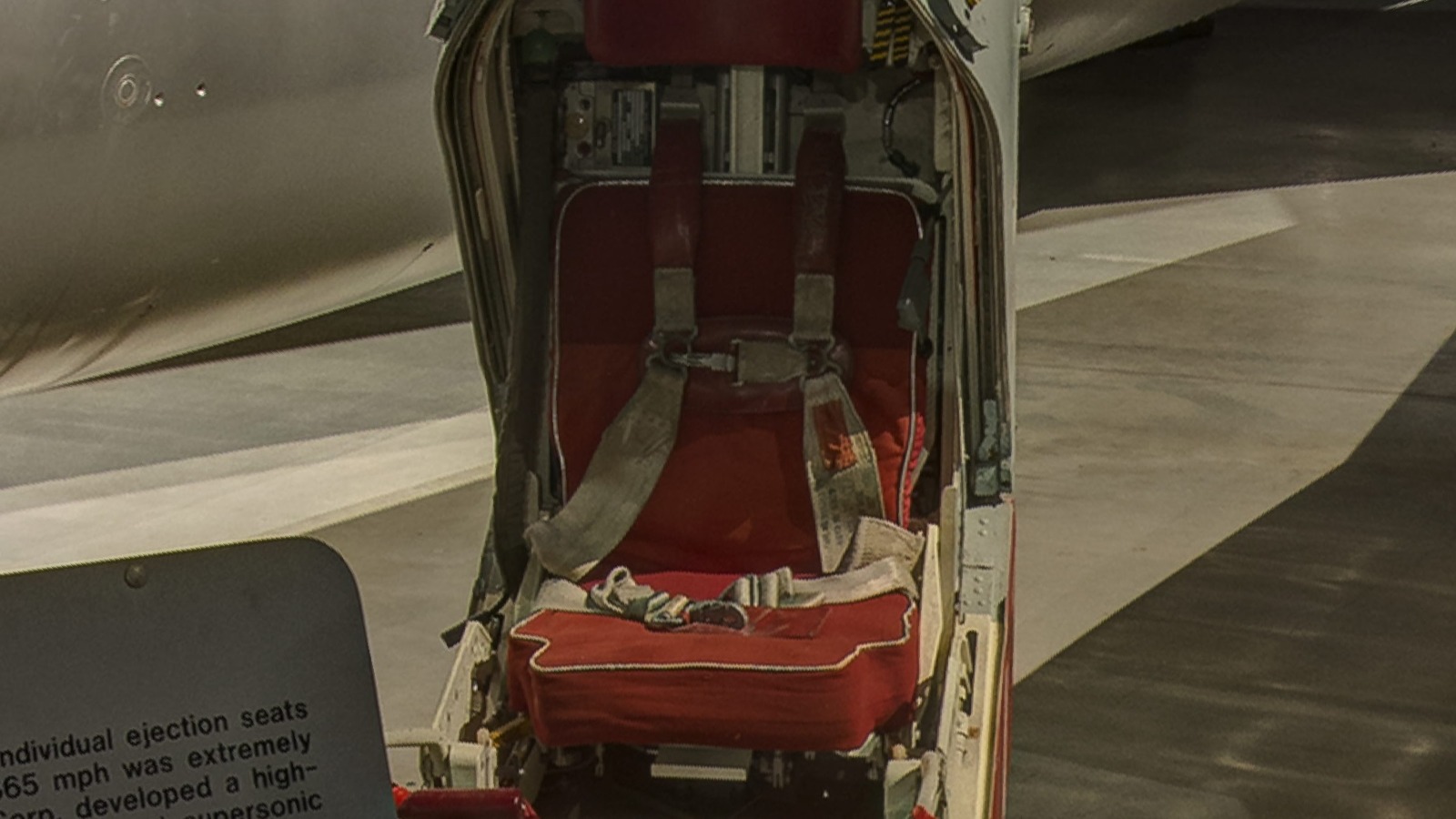
The B-58’s encapsulated ejection seat was designed to protect crewmembers during escape at very high speed and altitude. At supersonic speed, simply exposing a person to the airflow could be fatal. The capsule closed around the occupant, provided oxygen and protection, and then separated from the aircraft—an engineering response to the new hazards created by performance.
In depth
History & service
When the B-58 Hustler entered service in 1961, the three crew members had typical ejection seats, but ejection from the Hustler at very high speed proved extremely dangerous. To improve aircrew survivability, the Stanley Aircraft Corp. developed an ejection capsule which was retrofitted into the aircraft in late 1962. It allowed aircrew to eject safely at twice the speed of sound and from as high as 70,000 feet.
The capsule sealed the aircrew inside airtight clamshell doors, and air for the pressurized capsule came from the independent oxygen supply system. When activated, a harness system secured the occupant, and the clamshell doors closed. The occupant could either continue the ejection by firing the rocket motor or remain secure in the capsule until a lower altitude where he no longer needed a pressurized cabin.
The pilot's capsule also had the control stick and other controls needed to fly the aircraft to a lower altitude. After ejection, a parachute lowered the entire capsule to the ground, and shock absorbers eased the impact. If the capsule landed in water, manually operated flotation cells turned it into a life raft and provided stability.
Details that tell the story
Protected a crewmember during high-speed ejection · Included oxygen and survival provisions · Developed for the B-58’s extreme flight envelope
The mission was to bring someone home
Rescue and medical evacuation changed the meaning of aviation's reach. Speed could shorten the time between an injury and treatment. Aircraft could cross terrain that made a ground journey slow or impossible. But the ability to reach a person did not guarantee the ability to recover them. Weather, enemy fire, limited landing space, weight, and the patient's condition shaped every decision.
Rescue depended on a chain of people and equipment. Someone had to locate the survivor, communicate the position, assess the danger, provide protection where necessary, and bring a recovery aircraft to the right place. Medical personnel then worked in an environment that could be noisy, cramped, and poorly suited to care. The aircraft's range and payload mattered, but so did preparation, coordination, and judgment.
The personal equipment in these galleries makes that work concrete. A radio could turn a search into a precise approach. Protective clothing could keep a survivor alive long enough to be found. A helicopter could lift someone from a place with no runway. A transport could carry casualties toward a hospital. These connections span civil and military aviation and link the museums through a shared purpose. Heroism here often means accepting risk in order to reduce another person's danger, while relying on a carefully organized team to make the attempt possible.