Air Force Museum
Prisoners of War
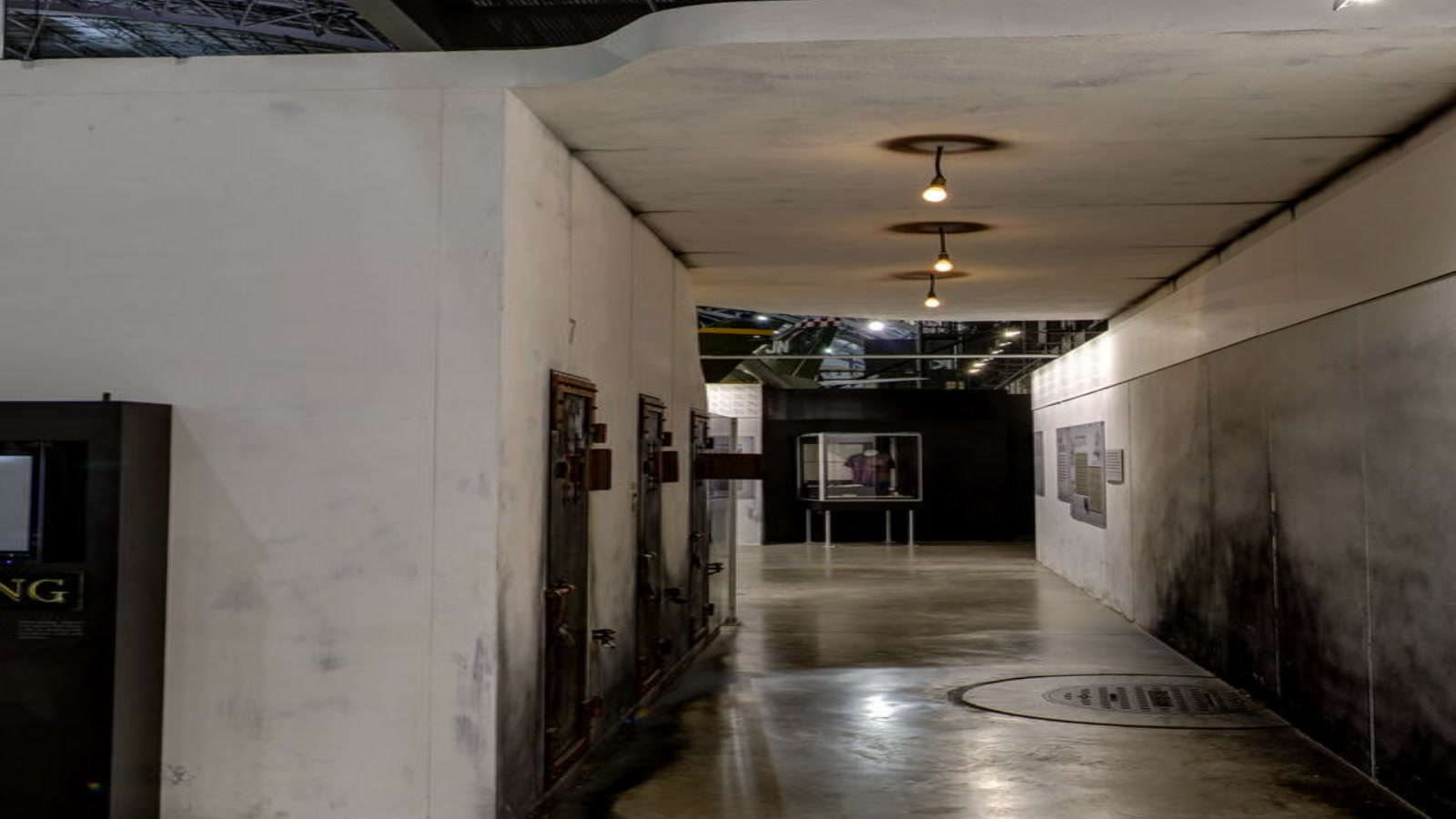
Captured service members endured interrogation, confinement, deprivation, coercion, and uncertainty that often continued long after release. Aircrews operating over enemy territory faced the possibility that surviving a damaged aircraft would begin another ordeal. Prisoners used discipline, communication, mutual support, and resistance while captors attempted to gain information or propaganda value.
In depth
The story behind the display
Their accounts require careful interpretation: memories differ, records can be incomplete, and individual experiences varied. Together they broaden the history beyond aircraft and missions.
History & service
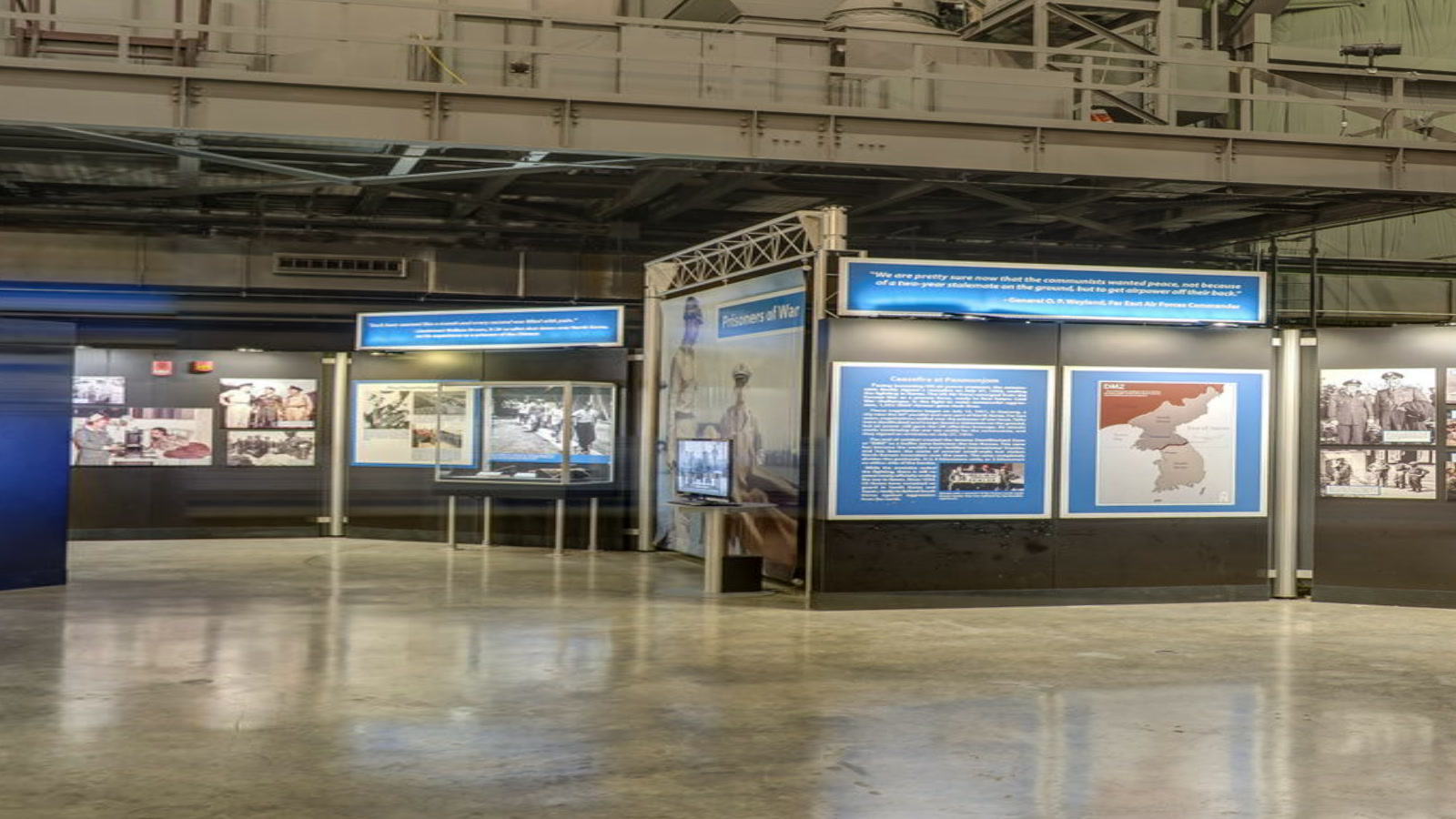
Air Force prisoners of war held by communist forces endured horrible conditions during their imprisonment. In the face of constant brutality, American Airmen held prisoner during the Korean War acted with great courage.
The majority of the 235 airmen captured during the Korean War were held in solitary confinement for a large part of their captivity. Prisoners suffered from bitter cold and inadequate food, clothing, and medical care. Airmen, especially pilots, were considered potential sources of intelligence and were subjected to frequent psychological and physical torture.
Debate over how to return prisoners of war on both sides began with the start of armistice talks in late 1951. The UN demanded that no prisoner be returned to communist control against his will. The communists immediately refused. When the UN revealed that more than half of the UN-held POWs did not want to return, tensions increased.
The communists tried to sway world opinion against the UN by forcing "confessions" of atrocities against North Korea from American POWs. They also provoked riots inside UN-run POW camps to cause worldwide outcry against UN treatment of "helpless" communist prisoners.
The communist stance concerning POWs changed abruptly with the death of Josef Stalin in March 1953. Weary of fighting, both sides soon agreed to exchange sick and wounded prisoners. Between April 20 and May 3, 1953, Operation Little Switch exchanged a total of 6,670 Chinese and North Korean prisoners and 669 UN personnel. The main prisoner exchange took place after the armistice was signed three months later.
Operation Big Switch returned 75,823 POWs to the communists and 12,773 prisoners to the UN, including 3,598 Americans. By Feb. 1, 1954, all former prisoners choosing not to return to communist rule were released as free civilians.
The hat, shirt, and pants were worn by A2C Eugene Evers while he was a prisoner of war for more than a year. Evers was a reconnaissance camera repairman stationed in Japan. To check out a camera that had been malfunctioning in flight, he went on a mission with an RB-29 flight crew of the 91st Strategic Reconnaissance Squadron in July 1952.
The plane was shot down northwest of Pyongyang, North Korea, and Evers was taken prisoner. His captors did not believe that Evers--an extra man in a crew of twelve--was a repairman, and beat him severely. He was kept in solitary confinement in a hole outside a house, and eventually taken into China for interrogation and tried as a "war criminal." Evers was not released until September 1953.
He was given a single uniform that he wore for over a year, then given the new clothing on display and a shower right before his release. This uniform was only worn briefly, for one or two days.
Details that tell the story
Aircrew were vulnerable to capture far from friendly forces · Prisoners faced interrogation and propaganda pressure · Communication and mutual support aided resistance · Captivity could produce lasting physical and psychological effects
Air power in a limited war
The Korean War brought early jet combat into the same theater as piston fighters, large bombers, helicopters, and transports. Different technologies served different needs. Fast fighters contested the air, while other aircraft attacked supply routes, supported troops, carried equipment, gathered information, and evacuated casualties. The mountainous terrain and severe weather made those tasks especially demanding.
The conflict also exposed the limits of air power used within a larger political and military struggle. Aircraft could damage bridges and transportation networks, but opposing forces adapted, repaired, dispersed, and moved under cover. Supporting troops required communications and coordination close to the ground. Maintaining operations depended on suitable bases and an extensive flow of supplies.
The surviving artifacts show why a gallery cannot be understood through jet fighters alone. A tent, vehicle, radio, flight nurse's equipment, or rescue helicopter belongs to the same operational history. The stories of individual airmen are compelling because they took place within that complicated setting. Cross-links to the Second World War and later Cold War galleries reveal both continuity and change: familiar aircraft found new roles, jet performance expanded, and rescue systems developed further. The war ended in an armistice, making its history one of service and sacrifice within an unresolved division as well as one of technological change.