Air Force Museum
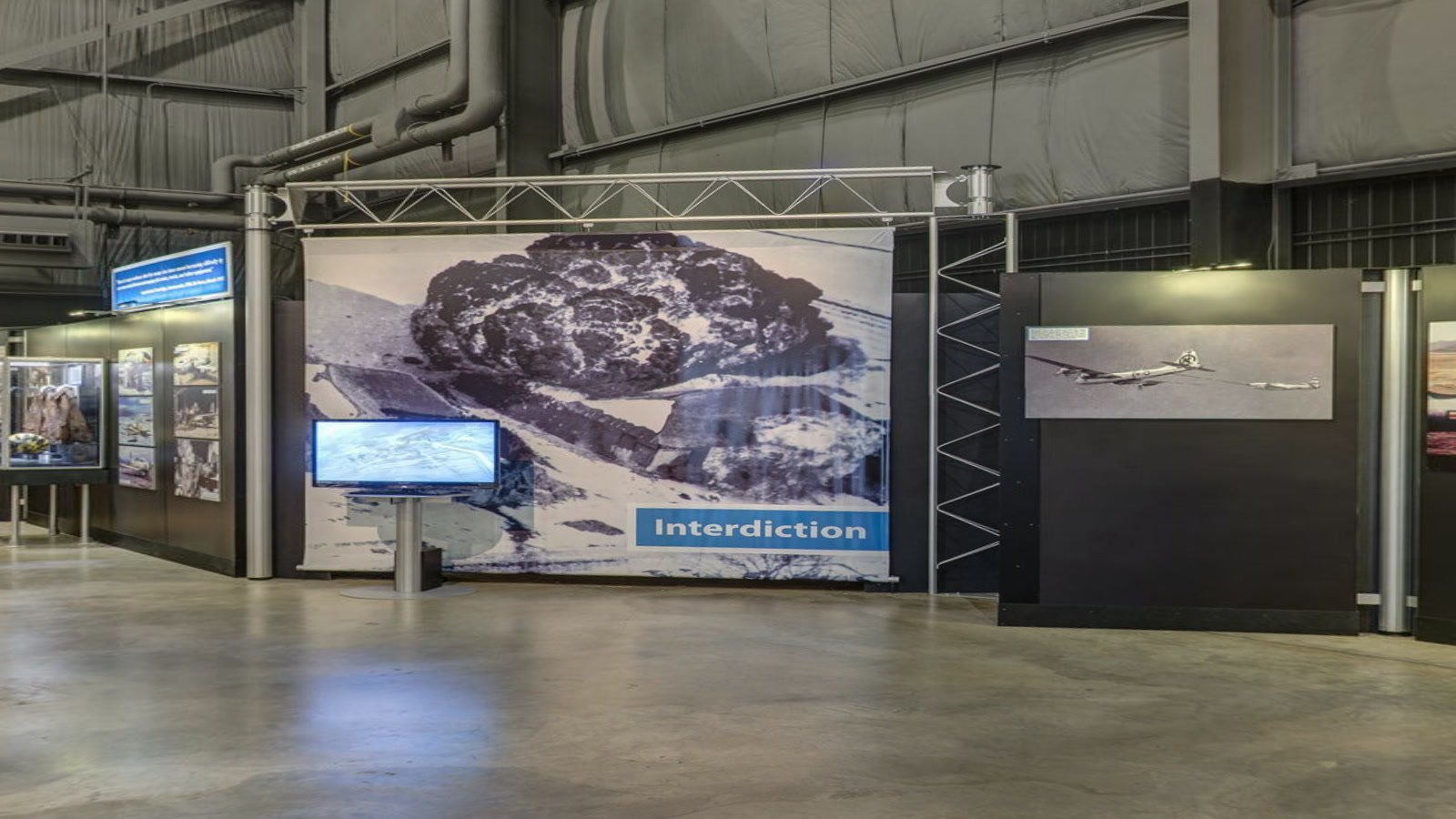
Interdiction: Tightening the Noose
Interdiction sought to reduce the flow of troops and supplies before they reached the battlefield. Aircraft attacked rail lines, bridges, roads, vehicles, tunnels, depots, and transfer points. The goal was not simply to destroy an object but to impose delay, force detours, consume repair resources, and make movement more costly.
In depth
The story behind the display
The opposing logistics system adapted. Supplies moved at night, vehicles dispersed, bridges were repaired, alternate crossings appeared, and camouflage hid activity. The campaign became a contest between observation and concealment, destruction and recovery.
History & service
Interdiction destroys an enemy's transportation system and materiel en route. Interdiction missions accounted for nearly half of U.S. Air Force combat missions in Korea. USAF interdiction efforts, using new technology and tactics, destroyed large amounts of enemy materiel and limited communist build-ups for large-scale offensives.
During the first year of the Korean War, USAF interdiction destroyed trains, bridges, roads and trucks in an effort to slow or halt North Korean transportation. The communists were vulnerable to this kind of attack because of their higher supply needs while attacking and retreating, and they lost large amounts of war material.
Large-scale interdiction campaigns in 1951 and 1952 enjoyed some success, although the static enemy did not need as much supply as during previous major operations and was quick to rebuild railways and bridges.
Interdiction tactics changed constantly as the communists adjusted their movements. Enemy trains and trucks moved by night and remained hidden by day. In the last year of the war, new tactics involving the combined efforts of fighter-bombers by day and light bombers by night proved successful.
Interdiction continued in the strategic "air pressure" campaign from 1952 until the signing of the armistice in 1953. The air pressure campaign was targeted to produce costly economic damage to the communists and reduced their will to continue fighting (many communist prisoners complained of inadequate supply as the biggest cause of poor morale).
Perhaps more importantly, interdiction efforts during the last two years of the war prevented the enemy from starting major offensives by limiting his ability to transport material.
Details that tell the story
Focused on transportation and supply systems · Included rail, road, bridge, vehicle, and depot targets · Night movement and concealment reduced vulnerability · Effectiveness depended on delay as well as destruction
Air power in a limited war
The Korean War brought early jet combat into the same theater as piston fighters, large bombers, helicopters, and transports. Different technologies served different needs. Fast fighters contested the air, while other aircraft attacked supply routes, supported troops, carried equipment, gathered information, and evacuated casualties. The mountainous terrain and severe weather made those tasks especially demanding.
The conflict also exposed the limits of air power used within a larger political and military struggle. Aircraft could damage bridges and transportation networks, but opposing forces adapted, repaired, dispersed, and moved under cover. Supporting troops required communications and coordination close to the ground. Maintaining operations depended on suitable bases and an extensive flow of supplies.
The surviving artifacts show why a gallery cannot be understood through jet fighters alone. A tent, vehicle, radio, flight nurse's equipment, or rescue helicopter belongs to the same operational history. The stories of individual airmen are compelling because they took place within that complicated setting. Cross-links to the Second World War and later Cold War galleries reveal both continuity and change: familiar aircraft found new roles, jet performance expanded, and rescue systems developed further. The war ended in an armistice, making its history one of service and sacrifice within an unresolved division as well as one of technological change.
