Air Force Museum
Flight to Freedom
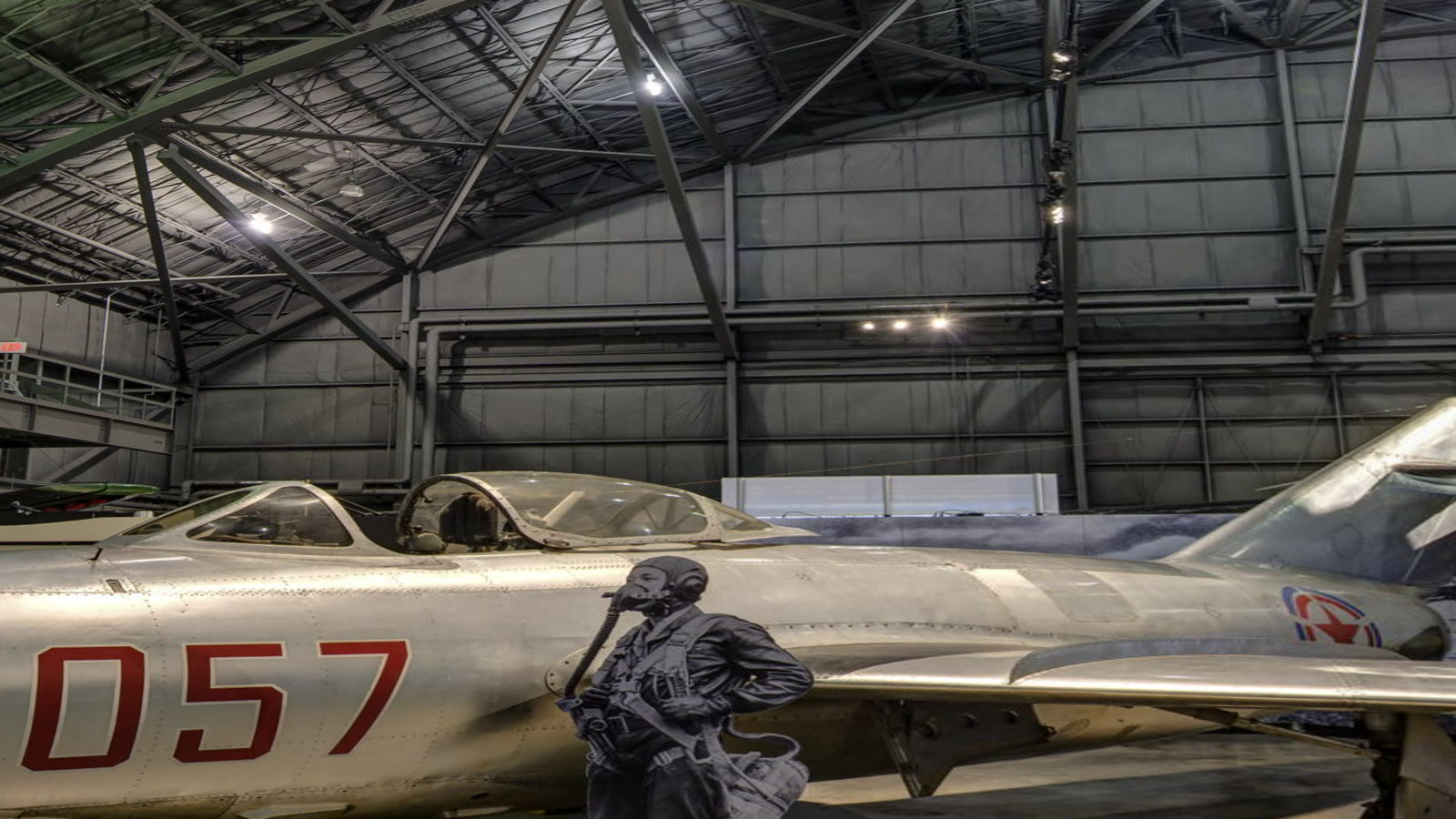
North Korean pilot No Kum Sok flew a MiG-15 to Kimpo after the armistice, giving the United States an unexpected opportunity to examine the aircraft. No Kum Sok landed at Kimpo Air Base near Seoul without advance notice. He sought a new life outside North Korea and later adopted the name Kenneth Rowe in the United States.
In depth
The story behind the display
No Kum Sok landed at Kimpo Air Base near Seoul without advance notice. He sought a new life outside North Korea and later adopted the name Kenneth Rowe in the United States. The aircraft was secured, inspected, and test-flown by American pilots.
The episode mixed personal decision with Cold War intelligence. Engineers could compare the MiG's real construction and performance with combat reports, while No's own account revealed motives more complex than the reward offered under the American Operation Moolah program, which he said he had not known about.
Details that tell the story
MiG-15 landed at Kimpo on September 21, 1953 · Pilot No Kum Sok later used the name Kenneth Rowe · The aircraft was evaluated by U.S. test pilots · No stated that he had not known of the Operation Moolah reward
Air power in a limited war
The Korean War brought early jet combat into the same theater as piston fighters, large bombers, helicopters, and transports. Different technologies served different needs. Fast fighters contested the air, while other aircraft attacked supply routes, supported troops, carried equipment, gathered information, and evacuated casualties. The mountainous terrain and severe weather made those tasks especially demanding.
The conflict also exposed the limits of air power used within a larger political and military struggle. Aircraft could damage bridges and transportation networks, but opposing forces adapted, repaired, dispersed, and moved under cover. Supporting troops required communications and coordination close to the ground. Maintaining operations depended on suitable bases and an extensive flow of supplies.
The surviving artifacts show why a gallery cannot be understood through jet fighters alone. A tent, vehicle, radio, flight nurse's equipment, or rescue helicopter belongs to the same operational history. The stories of individual airmen are compelling because they took place within that complicated setting. Cross-links to the Second World War and later Cold War galleries reveal both continuity and change: familiar aircraft found new roles, jet performance expanded, and rescue systems developed further. The war ended in an armistice, making its history one of service and sacrifice within an unresolved division as well as one of technological change.
