Air Force Museum
Memphis Belle Crew
The Memphis Belle and its crew became public symbols of the danger faced by heavy-bomber units over Europe. Assigned to the 91st Bomb Group in England, the Memphis Belle completed twenty-five missions during the early American daylight bombing campaign. At that stage of the war, the chance that an aircraft and crew would finish a complete combat tour was small.
In depth
The story behind the display
The crew returned to the United States for a war-bond tour, and William Wyler's combat documentary made the aircraft widely known. Behind the public symbol were maintenance crews, replacements, wounded airmen, lost aircraft, and the much larger experience of the Eighth Air Force.
History & service
The young men assigned to the Memphis Belle represented a typical Eighth Air Force heavy bomber crew. They ranged in age from 19 to 26 and came from states across the US, including Washington, Indiana, Texas, and Connecticut. Like their Eighth Air Force counterparts—and contrary to a popular myth—they flew most, but not all, of their missions together.
During the course of the combat tour, the Memphis Belle crew had three different top turret gunner/engineers (Leviticus “Levi” Dillon, Eugene Adkins, and Harold Loch) and three waist gunners (Harold Loch, who later moved to the top turret position, Bill Winchell, and E. Scott Miller). Several different copilots also flew with the Memphis Belle’s normal crew.
Image Memphis Belle crew early in the combat tour: (top, l to r) Robert Hanson (radio operator), Vince Evans (bombardier), Robert Morgan (pilot), James Verinis (copilot), Charles Leighton (navigator); (bottom, l to r) Cecil Scott (ball turret), Eugene Adkins (top turret), Harold Loch (waist gun), John Quinlan (tail turret), and Bill Winchell (waist gun).
Image SSgt E. Scott Miller joined the Memphis Belle crew in February 1943, flying 16 missions as a waist gunner. Miller had to stay in England to finish his 25 missions—SSgt Casimer “Tony” Nastal took his place on the war bond tour.
Image The original copilot, James Verinis, flew five missions with the Memphis Belle crew then commanded his own aircraft. He is pictured here (standing, 1^{st} from left) with the crew of his B-17, Connecticut Yankee. Verinis rejoined the Memphis Belle crew for the war bond tour.
Captain Robert “Bob” Morgan led the Memphis Belle crew. After the war bond tour, he volunteered for additional combat duty and flew B-29s against Japan. Morgan was promoted to major at a ceremony at Patterson Field (now Wright-Patterson AFB) in July 1943.
Morgan (left) flew with Maj Gen Emmett O’Donnell (center) on the first raid on Japan by B-29s based in the Marianas. Capt Vince Evans (right), Memphis Belle bombardier, flew with Morgan in the Pacific Theater.
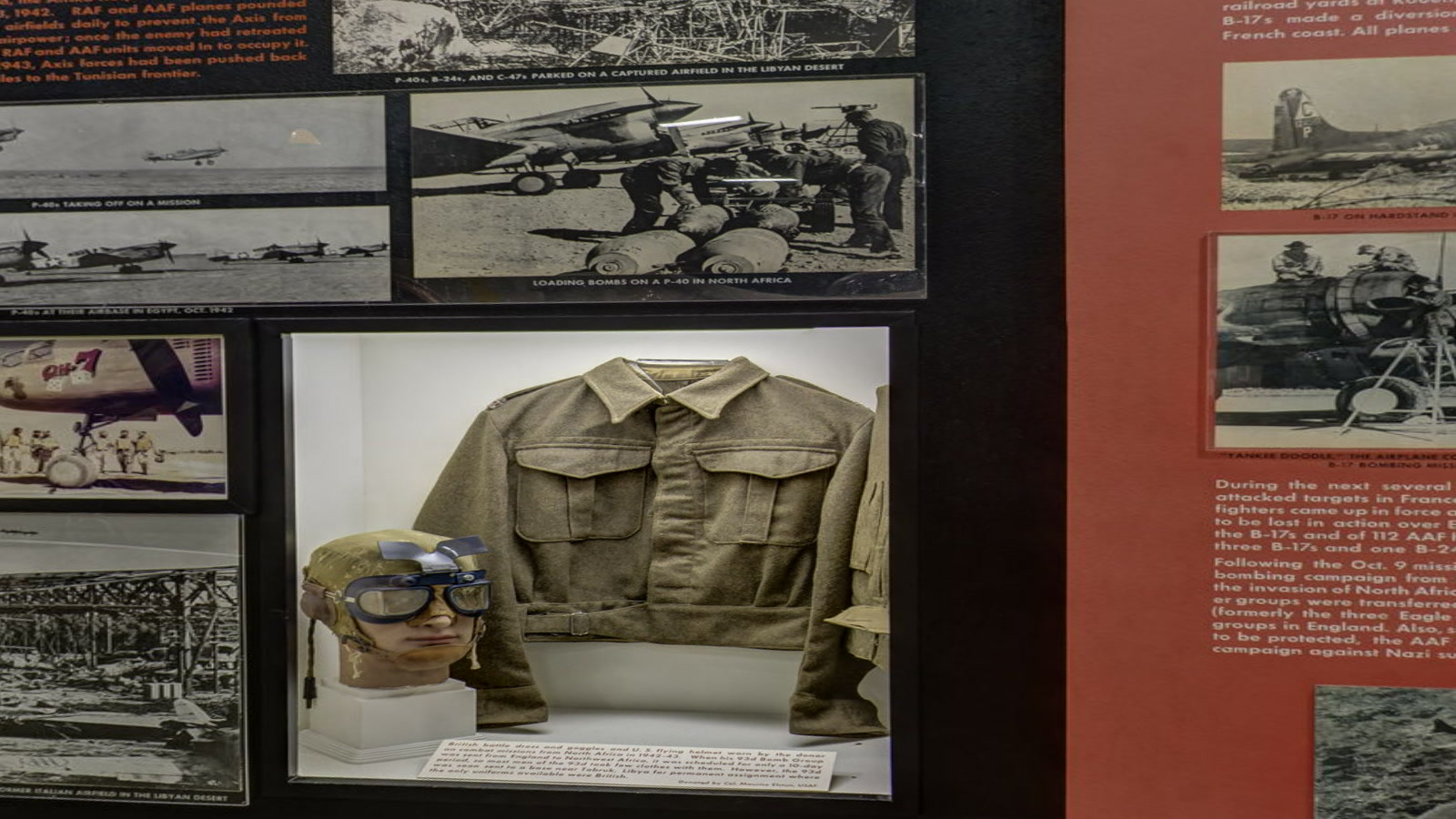
Captain Vincent “Vince” Evans’ uniform jacket worn during his second combat tour flying with pilot Robert Morgan in B-29s in the Pacific Theater.
Capt James “Jim” Verinis flew five missions on the Memphis Belle before taking command of another B-17 called the “Connecticut Yankee.”
Details that tell the story
Completed its twenty-fifth mission on May 17, 1943 · Assigned to the 324th Bomb Squadron, 91st Bomb Group · Flew missions against targets in Germany, France, and Belgium · Returned to the United States for a morale and war-bond tour
Aircraft change the battlefield
In the First World War, aircraft became valuable because they could see beyond the front line. Reconnaissance and artillery observation affected decisions on the ground. Once that information mattered, opposing forces had reason to attack the aircraft gathering it. Fighters, defensive armament, and increasingly specialized missions developed around this contest over observation and freedom of movement.
The aircraft were fragile by later standards, but their crews worked inside a rapidly expanding military system. Training, maintenance, replacement aircraft, photography, communications, and weather reporting supported each sortie. Improvements in engines and armament changed tactics, while the pressures of combat exposed weaknesses that might have taken much longer to discover in peacetime.
Personal stories should be read alongside those systems. A uniform or a named aircraft connects the war to an individual, but the individual depended on many others and operated under constraints that skill could not eliminate. Aircraft from opposing sides show how designers answered similar problems in different ways. The later military collections in Dayton and at Udvar-Hazy reveal what endured: the need to gather information, protect friendly forces, move people and supplies, and coordinate action across distance. The scale changed enormously; the relationship between an aircraft's design and the job it had to perform remained fundamental.