Air Force Museum
Doolittle Raid Crews
Sixteen volunteer crews carried the Doolittle Raid from an aircraft carrier toward Japan, then faced long flights and uncertain landings across China. The raid required Army aircrews to master a launch from USS Hornet in B-25 bombers modified for extra range. Discovery by a Japanese patrol vessel forced the aircraft to take off earlier than planned, increasing the distance to intended landing areas in China.
In depth
The story behind the display
Most crews bailed out or crash-landed after dark and in poor weather. Chinese civilians and soldiers helped many raiders evade capture, often at enormous cost when Japanese forces retaliated. The crews' story therefore extends beyond the carrier launch to survival, international cooperation, captivity, and civilian sacrifice.
Details that tell the story
Eighty airmen flew in sixteen B-25s · The mission launched earlier than planned · Fifteen aircraft continued toward China · Chinese assistance saved many surviving crew members
A bomber was a workplace under pressure
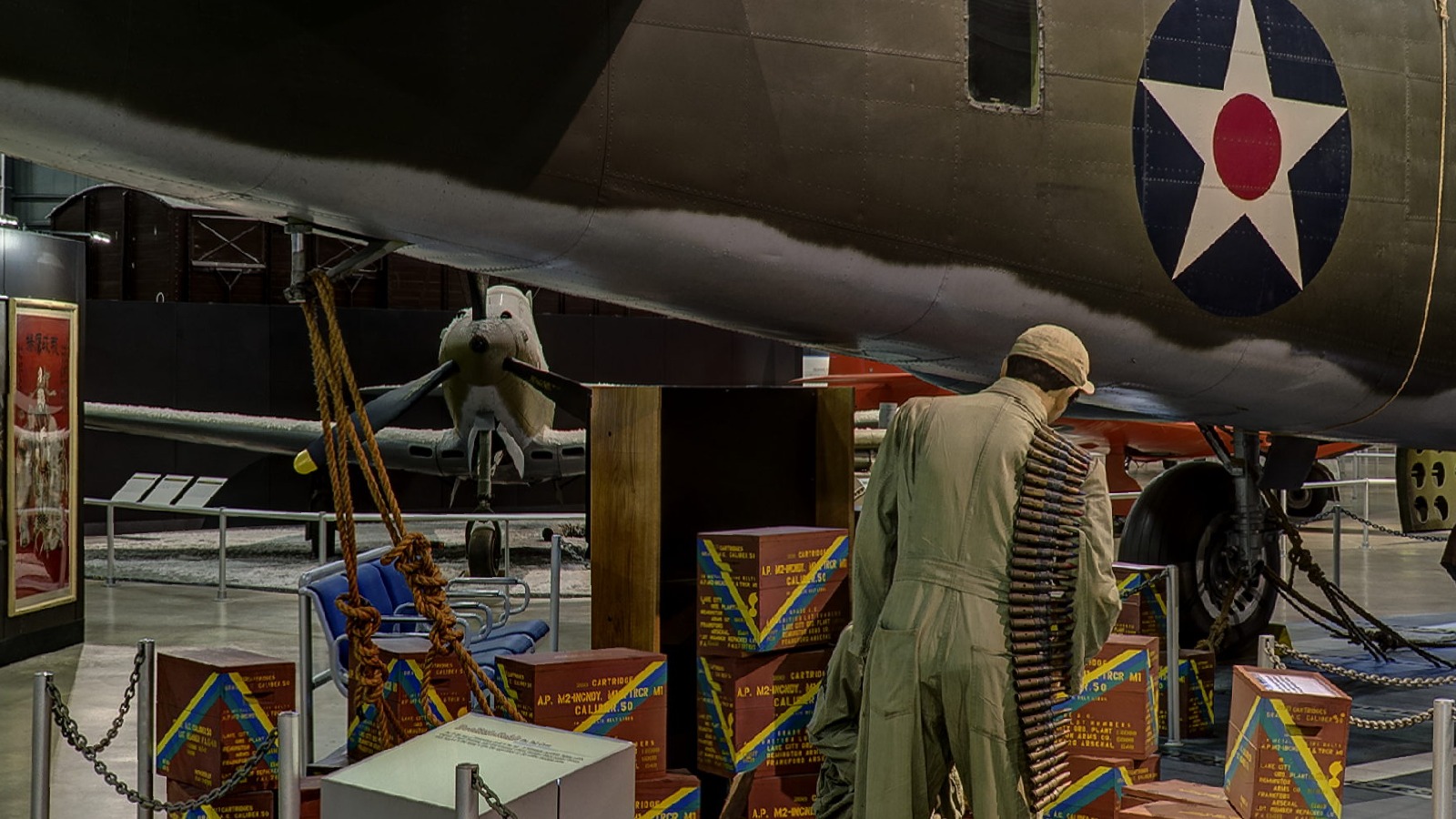
A multi-engine bomber carried a crew whose members performed different jobs in a confined, noisy, and often very cold environment. Pilots, navigators, bombardiers, radio operators, engineers, and gunners depended on one another. Oxygen, communications, heating, and the movement of equipment mattered to survival as well as to the mission. Damage could turn an ordinary procedure into a difficult act of improvisation.
Formation flying added another layer of dependence. Bombers attempted to combine navigation, concentrated bombing, and defensive fire while holding position through changing weather and enemy attacks. Long-range fighter escort altered the balance, but it did not remove antiaircraft fire, mechanical failure, or the consequences of fatigue. Mission reports and surviving equipment reveal both the power of the force and the vulnerability of the people inside it.
Named aircraft and famous crews offer an entry into this history without representing every experience. Nose art and personal possessions made an industrial machine feel like a shared home, yet many crews and aircraft left little material trace. The museums preserve fragments of that wider world: a turret, a flight jacket, an engine, a decorated aircraft, a story of escape. Linking them across galleries allows the technical history of bombing to be read alongside courage, loss, civilian consequences, and the work required to bring a damaged aircraft and its crew back.