Air Force Museum
Zeamer and the 'Eager Beavers'
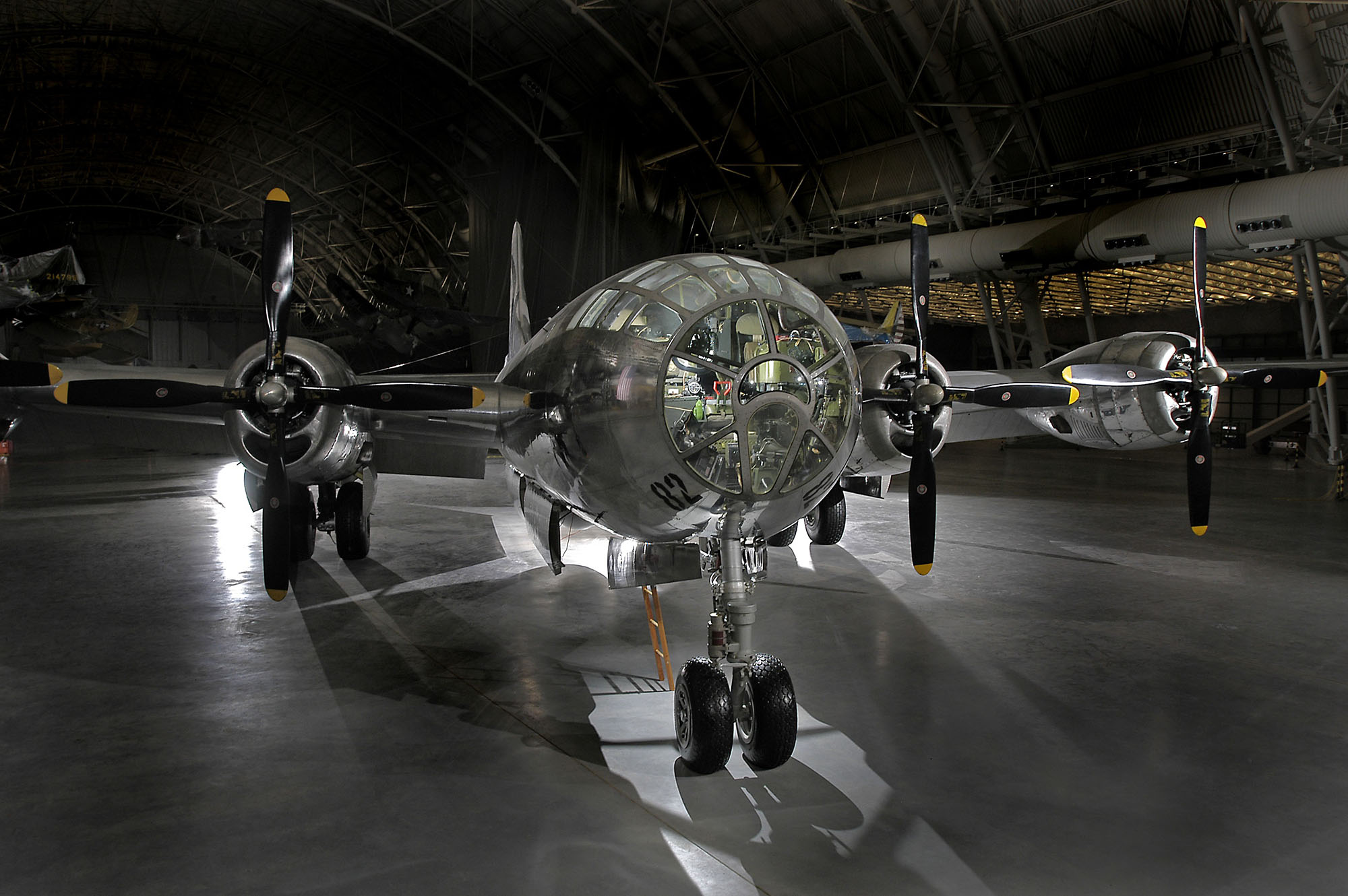
Jay Zeamer and the crew nicknamed the Eager Beavers turned a worn B-17 into a formidable reconnaissance bomber in the Southwest Pacific. Captain Jay Zeamer assembled a volunteer crew around a B-17E that other units considered unfit for regular combat. The crew repaired and modified the bomber, adding guns and improving its ability to survive long photographic-reconnaissance missions over territory where fighter escort was often unavailable.
In depth
The story behind the display
During a mapping mission over Bougainville on June 16, 1943, Japanese fighters attacked the aircraft for an extended period. Zeamer and bombardier Joseph Sarnoski received the Medal of Honor; Sarnoski was killed and Zeamer was gravely wounded. The mission illustrates how reconnaissance, crew initiative, and accurate maps shaped later operations.
History & service
Capt. Jay Zeamer's remarkable crew was the most highly-decorated aircrew in history. Zeamer and the bombardier, 2nd Lt. Joseph Sarnoski, received the Medal of Honor, while seven other members of the crew were awarded the Distinguished Service Cross, the Nation's second highest honor. Nearly all received the Purple Heart for wounds sustained in combat.
In the spring of 1943, a 43rd Bomb Group crew headed by Zeamer salvaged a wrecked and bullet-ridden B-17E and fitted it with extra machine guns -- 19 in all. Nicknamed the "Eager Beavers," they regularly volunteered to take their B-17E Old 666 on the most dangerous missions, including a seemingly impossible one on June 16, 1943.
In preparation for a planned major amphibious landing, they flew 600 miles unescorted over open sea to photograph Buka and Bougainville islands. While passing over Buka, about 20 Japanese fighters took off to intercept the lone aircraft. Rather than break off the mission, however, Zeamer continued on. As the crew finished the photo run down the coast of Bougainville, the first of several vicious, coordinated attacks began.
Zeamer and his crew desperately fought against overwhelming odds to bring back their B-17 and its precious reconnaissance film.
During the first attack, the bombardier, Sarnoski, shot down a Japanese fighter, but he was knocked back by cannon fire. Although mortally wounded, he crawled back to his gun position and shot down another Japanese fighter before collapsing. He had been scheduled to go home just a few days later.
Zeamer maneuvered the B-17 to shoot down a fighter with a fixed gun in the B-17's nose, but cannon fire shattered his left knee, paralyzed his legs, and caused profuse bleeding. Enemy fire also shot the rudder pedals away, started a fire, and disabled the hydraulic, oxygen, and interphone systems. Zeamer refused medical attention, and continued to forcefully maneuver the aircraft while the crew, many of whom were also wounded, fought back.
Finally, after 45 minutes of continuous combat, several Japanese aircraft had been shot down, and the attacks ceased. For the rest of the flight, Zeamer passed in and out of consciousness from blood loss. The B-17 had received nearly 200 machine gun and five cannon hits. The flaps and brakes were inoperable, but Zeamer managed to land the aircraft at Dobodura without further injury. With about 120 metal fragments in his body, Zeamer's life hung in the balance for several days, but in the end, he survived.
Details that tell the story
Operated with the 43rd Bomb Group · Used a modified B-17E for reconnaissance · Mapped Bougainville before planned Allied operations · Zeamer and Sarnoski received the Medal of Honor
A bomber was a workplace under pressure
A multi-engine bomber carried a crew whose members performed different jobs in a confined, noisy, and often very cold environment. Pilots, navigators, bombardiers, radio operators, engineers, and gunners depended on one another. Oxygen, communications, heating, and the movement of equipment mattered to survival as well as to the mission. Damage could turn an ordinary procedure into a difficult act of improvisation.
Formation flying added another layer of dependence. Bombers attempted to combine navigation, concentrated bombing, and defensive fire while holding position through changing weather and enemy attacks. Long-range fighter escort altered the balance, but it did not remove antiaircraft fire, mechanical failure, or the consequences of fatigue. Mission reports and surviving equipment reveal both the power of the force and the vulnerability of the people inside it.
Named aircraft and famous crews offer an entry into this history without representing every experience. Nose art and personal possessions made an industrial machine feel like a shared home, yet many crews and aircraft left little material trace. The museums preserve fragments of that wider world: a turret, a flight jacket, an engine, a decorated aircraft, a story of escape. Linking them across galleries allows the technical history of bombing to be read alongside courage, loss, civilian consequences, and the work required to bring a damaged aircraft and its crew back.