Air Force Museum
Day of Infamy: The Pearl Harbor Attack
The attack on Pearl Harbor brought the United States directly into World War II and turned a distant conflict into an immediate national emergency. Japanese carrier aircraft attacked military installations across Oahu in two waves. Battleships in the harbor became the most visible targets, but airfields were struck as well to prevent American aircraft from interfering with the attack.
In depth
The story behind the display
The human loss, damaged fleet, destroyed aircraft, and shock of surprise drove a rapid transition from peacetime preparation to global mobilization. The air war that followed would demand new aircraft, enormous production, trained crews, worldwide logistics, and difficult strategic choices.
History & service
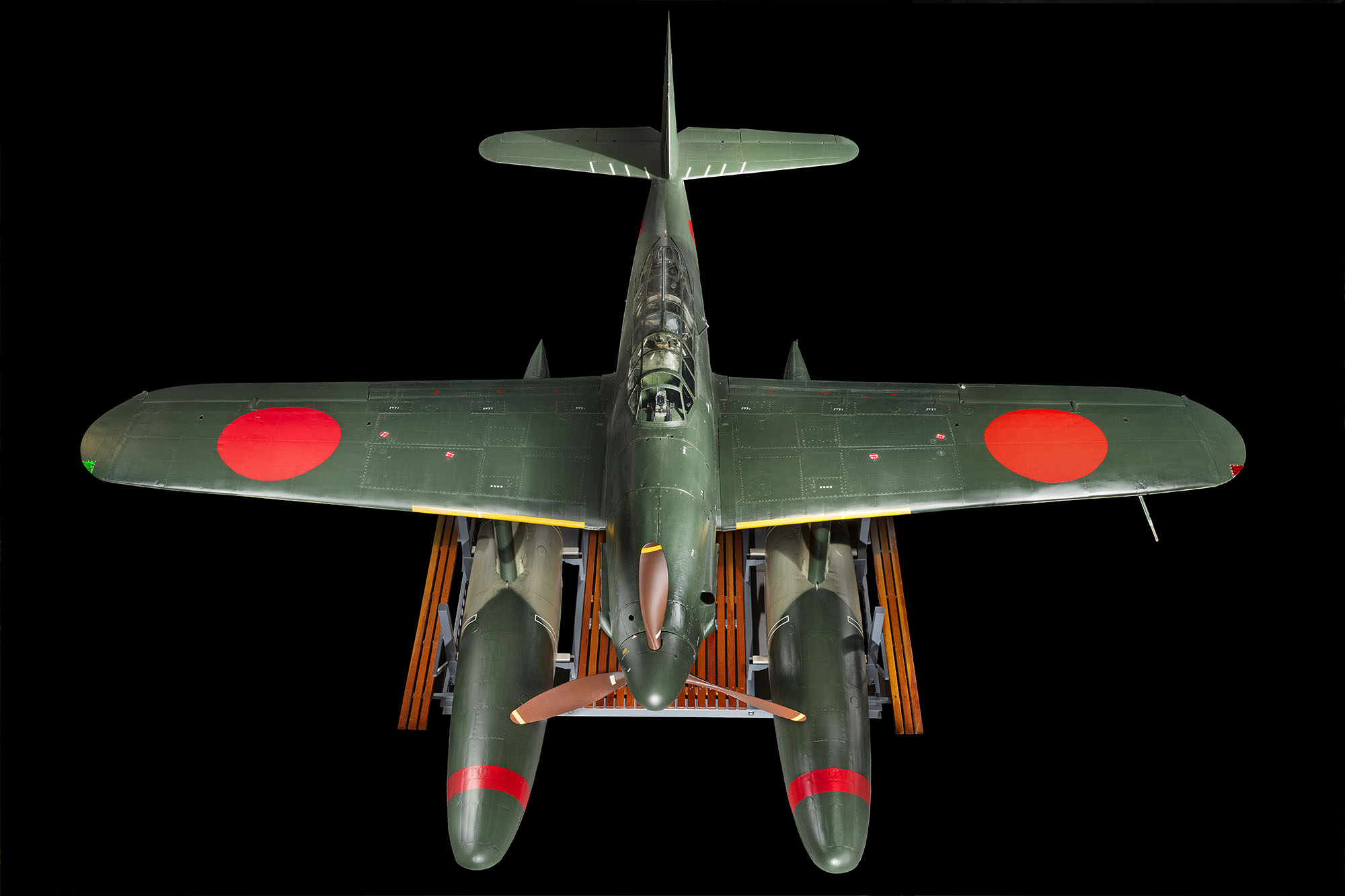
At 7:55 a.m. on Sunday, Dec. 7, 1941, a Japanese force of 183 airplanes attacked U.S. military and naval facilities on Oahu in the Hawaiian Islands without warning. For 30 minutes, dive bombers, level bombers and torpedo planes struck airfields and naval vessels.
After a 15-minute lull, a second wave of 170 planes launched another attack at 8:40 a.m. that lasted an hour. Casualties to U.S. service personnel were 2,343 killed, 960 missing and 1,272 wounded; Japanese aircraft destroyed 151 U.S. planes on the ground and sank or damaged all eight U.S. battleships at anchor in Pearl Harbor. At a cost of only 28 airplanes shot down, the Japanese had dealt the United States a staggering blow.
On Dec. 8, the United States declared war on Japan. Germany and Italy in turn declared war on the United States on Dec. 11. The United States then declared war on those two Axis partners of Japan.
This flag flew on the USS St. Louis at Pearl Harbor during the Japanese attack on December 7, 1941. While in the harbor, gunners downed three torpedo planes before the ship headed out to the open sea in search of the Japanese fleet. During the following days, the USS St. Louis escorted transport ships carrying casualties to San Francisco and troops to Hawaii.
During the formal surrender ceremony in Tokyo Bay on September 2, 1945, the flag flew on the USS Iowa alongside other occupation force ships. The USS Iowa remained in Tokyo Bay as part of the occupying force until later that month when it transported troops and liberated prisoners of war to the US. The flag serves as a reminder of the beginning and end of the deadliest world war ever fought.
Details that tell the story
The attack began on the morning of December 7, 1941 · Military airfields across Oahu were attacked along with the fleet · The United States declared war on Japan the following day · Germany and Italy declared war on the United States on December 11
Aircraft change the battlefield
In the First World War, aircraft became valuable because they could see beyond the front line. Reconnaissance and artillery observation affected decisions on the ground. Once that information mattered, opposing forces had reason to attack the aircraft gathering it. Fighters, defensive armament, and increasingly specialized missions developed around this contest over observation and freedom of movement.
The aircraft were fragile by later standards, but their crews worked inside a rapidly expanding military system. Training, maintenance, replacement aircraft, photography, communications, and weather reporting supported each sortie. Improvements in engines and armament changed tactics, while the pressures of combat exposed weaknesses that might have taken much longer to discover in peacetime.
Personal stories should be read alongside those systems. A uniform or a named aircraft connects the war to an individual, but the individual depended on many others and operated under constraints that skill could not eliminate. Aircraft from opposing sides show how designers answered similar problems in different ways. The later military collections in Dayton and at Udvar-Hazy reveal what endured: the need to gather information, protect friendly forces, move people and supplies, and coordinate action across distance. The scale changed enormously; the relationship between an aircraft's design and the job it had to perform remained fundamental.