Air Force Museum
RAF Alert Shack
RAF fighter pilots waited close to their aircraft so they could take off within minutes of an alert. The modest alert shack was part of a much larger system linking radar stations, visual observers, filter rooms, operations centers, telephones, airfields, controllers, ground crews, and squadrons.
In depth
Readiness during the Battle of Britain
The system conserved limited fighters by directing them toward specific raids rather than keeping every aircraft airborne. A small room therefore represents information architecture, human fatigue, readiness, and the value of acting at the right moment.
History & service
The dispersal, or Royal Air Force alert shack, sat at the end of a runway and sheltered pilots standing alert waiting to defend the area from enemy attack. It was boring duty and one pilot claimed to have counted every board and nail in the flimsy building. Pulling alert was like an actor waiting to go on stage or a fireman waiting for the alarm bell. At some airfields two pilots were on alert five-minute alert while 10 pilots were on stand-by, waiting in the barracks.
When the alarm sounded, it took less than 10 minutes for 12 aircraft to be in the air and on their way. Like the dispersal on display, a bicycle would often lean against the side of the building, ready for use by a messenger.
The dispersal could have maps on the walls, identifications models of aircraft hung from the ceiling, blackboards with flight information, chairs and chaise lounges. It might also include a pilot's dog. The dispersals were built mostly of wood with the roof covered with tar paper, tin or other material. Some shacks were heated by a pot-bellied stove.
Details that tell the story
Pilots waited near ready aircraft · Alerts moved through a national reporting and command network · Ground crews prepared fighters for rapid launch · Readiness had to be sustained for long periods
A new invention becomes a public world
Before airplanes became routine transport, public demonstrations helped establish what they could do. Exhibition flights, races, and crossings placed fragile machines before crowds, officials, and potential customers. The audience saw courage and spectacle. Behind the spectacle were less visible questions about reliable engines, controllable wings, suitable landing grounds, and how to recover when the weather changed.
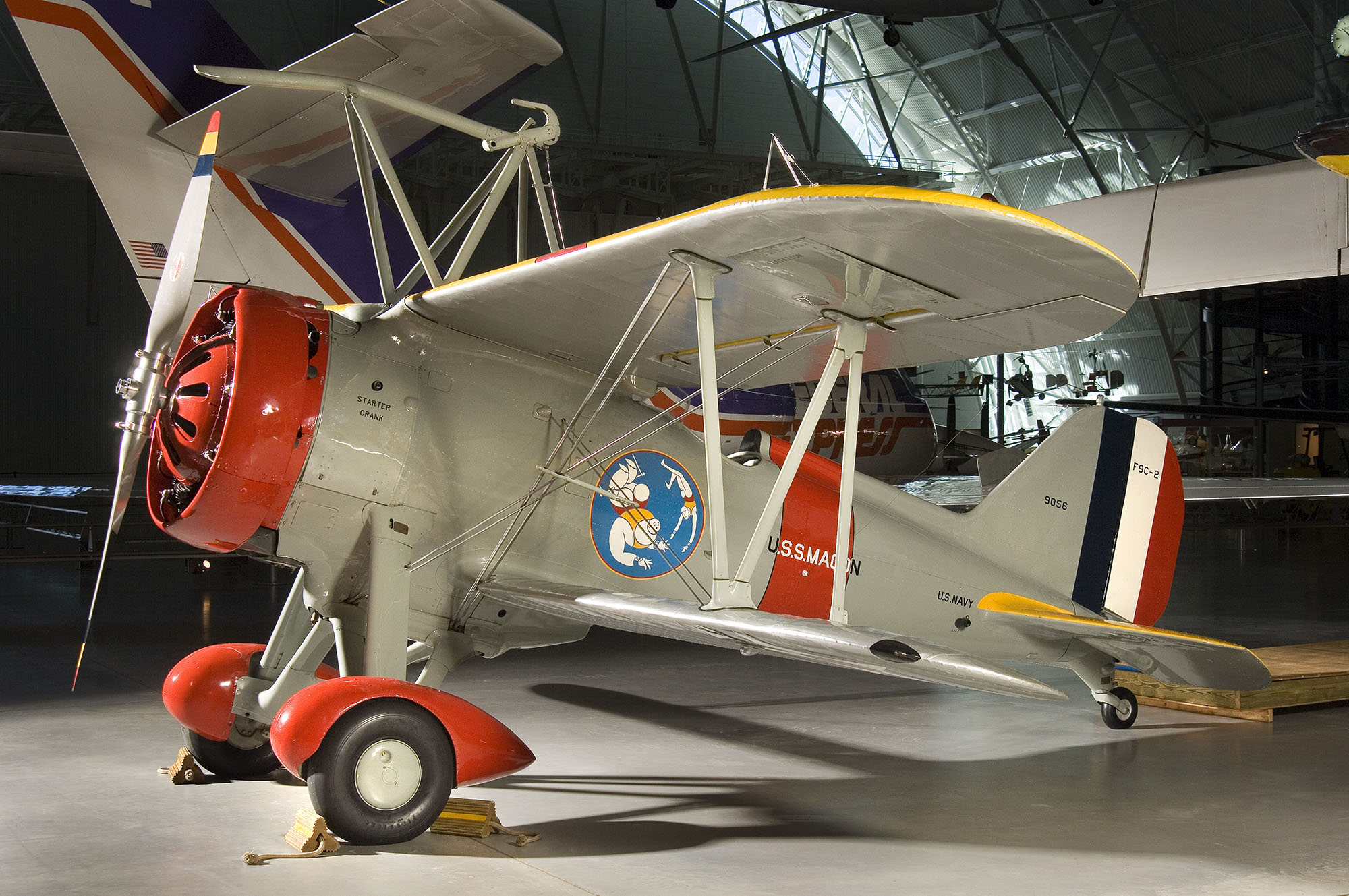
Different configurations competed at the same time. Some designers placed the propeller behind the pilot; others put it at the front. Biplanes used bracing to make light structures sufficiently rigid. Monoplanes reduced some of that external framework but posed their own structural and handling problems. Balloons and dirigibles remained part of the same aviation world, offering capabilities that early airplanes could not simply replace.
The famous firsts matter, but so does the period immediately after them. Flight schools, licensed manufacture, military trials, mechanics, and spare parts carried an invention outward. An aircraft could influence aviation through the pilots trained on it or the designs adapted from it, even after its own performance became outdated. The machines in Washington and Dayton preserve different points along that process. Their differences show how quickly an experimental achievement became an international industry, and how many people had to turn a remarkable flight into a repeatable service.