Air Force Museum
Fatal Flight of Capt. Gray
Captain Hawthorne C. Gray made a series of balloon ascents to investigate the upper atmosphere and pursue altitude records. On November 4, 1927, his balloon climbed above 40,000 feet, but Gray died during the flight after problems involving his oxygen supply.
In depth
Human limits above the atmosphere's safe zone
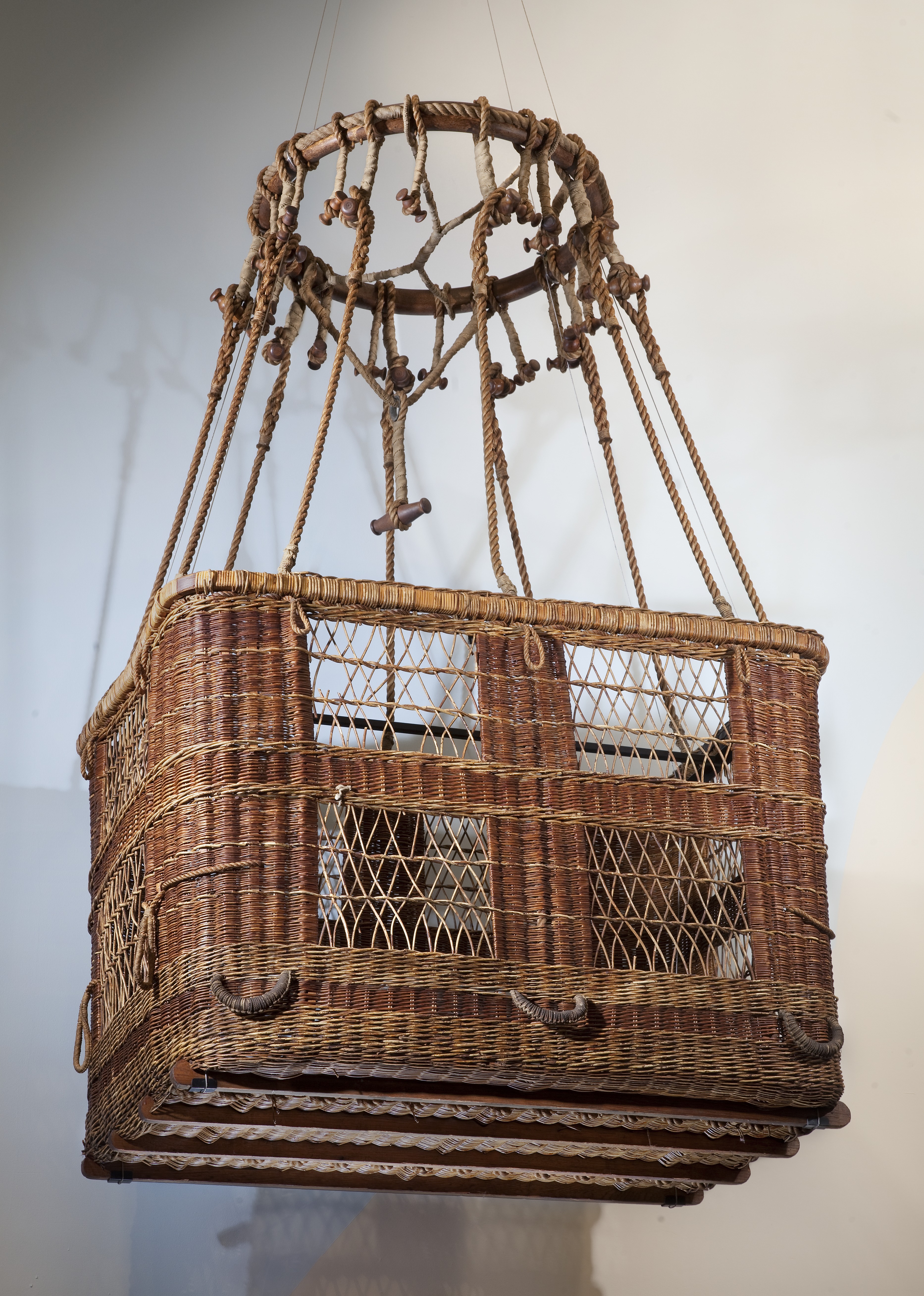
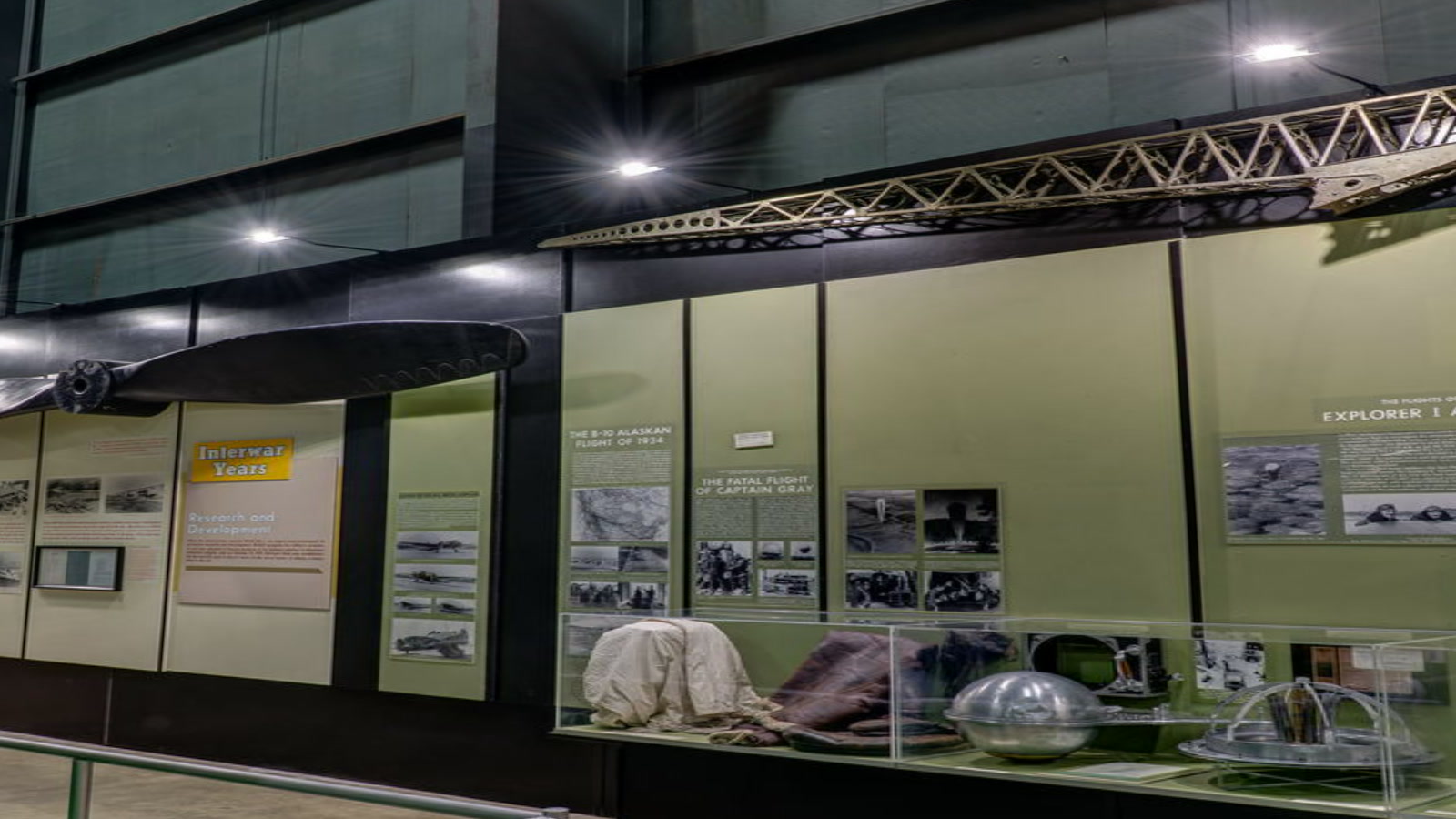
The surviving basket and equipment turn a record attempt into a systems analysis. Oxygen quantity, flow settings, gauges, cold, fatigue, communications, ballast, parachutes, and decision points all matter when a small error at extreme altitude cannot be corrected quickly.
History & service
Capt. Hawthorne C. Gray, one of the Air Corps' leading balloonists following World War I, was selected to make experimental high-altitude research flights in 1927. During his first flight on March 9, he lost consciousness at 27,000 feet because his oxygen equipment froze; he survived because his balloon luckily descended by itself.
On May 4 he made another flight, this time reaching an altitude of 42,740 feet, a world record height. However, when he attempted to descend, the gas valve stuck in the "open" position and the balloon began falling, forcing Gray to parachute to safety.
Gray made his last flight on Nov. 4, taking off from Scott Field, Ill., at 2:23 p.m. At 3:13 p.m. his balloon rose into a heavy overcast and Gray passed from sight. At 5:20 p.m. his balloon was seen on the ground near Sparta, Tenn.; Gray's body was found in the open balloon basket. His last entry in his logbook was made at 40,000 feet; the writing was "shaky" indicating he was experiencing a lack of sufficient oxygen.
His recording barometer indicated he subsequently reached 42,740 feet, the same as on his May 4 flight, before the balloon began descending. For some unknown reason, Gray's oxygen supply depleted, and he died in his basket after beginning his descent. This tragic flight was the last open-basket, high-altitude balloon flight until 1955 when such projects were reinstituted to develop pressure and space suits of a new era.
Details that tell the story
Final flight occurred November 4, 1927 · Balloon exceeded 40,000 feet · Gray carried oxygen and parachutes · He did not survive the descent
A new invention becomes a public world
Before airplanes became routine transport, public demonstrations helped establish what they could do. Exhibition flights, races, and crossings placed fragile machines before crowds, officials, and potential customers. The audience saw courage and spectacle. Behind the spectacle were less visible questions about reliable engines, controllable wings, suitable landing grounds, and how to recover when the weather changed.
Different configurations competed at the same time. Some designers placed the propeller behind the pilot; others put it at the front. Biplanes used bracing to make light structures sufficiently rigid. Monoplanes reduced some of that external framework but posed their own structural and handling problems. Balloons and dirigibles remained part of the same aviation world, offering capabilities that early airplanes could not simply replace.
The famous firsts matter, but so does the period immediately after them. Flight schools, licensed manufacture, military trials, mechanics, and spare parts carried an invention outward. An aircraft could influence aviation through the pilots trained on it or the designs adapted from it, even after its own performance became outdated. The machines in Washington and Dayton preserve different points along that process. Their differences show how quickly an experimental achievement became an international industry, and how many people had to turn a remarkable flight into a repeatable service.