Air Force Museum
Kettering Aerial Torpedo 'Bug'
The Kettering Bug was an early pilotless aircraft designed to fly a predetermined distance and then deliver an explosive payload. It joins navigation, mass production, and automation to a difficult military purpose. The Bug belongs to the history of automatic control and unmanned flight, but its purpose was weapon delivery. Connecting it to later guidance systems requires distinguishing shared technical principles from different political and ethical contexts.
In depth
History & service
In 1917 Charles F. Kettering of Dayton, Ohio, invented the unmanned Kettering Aerial Torpedo, nicknamed the "Bug." Launched from a four-wheeled dolly that ran down a portable track, the Bug's system of internal pre-set pneumatic and electrical controls stabilized and guided it toward a target. After a predetermined length of time, a control closed an electrical circuit, which shut off the engine. Then, the wings were released, causing the Bug to plunge to earth -- where its 180 pounds of explosive detonated on impact.
Details that tell the story
Pilotless World War I weapon project · Used preset controls to fly toward a target · A mechanism counted engine revolutions to estimate distance · The Armistice arrived before combat deployment
A new invention becomes a public world
Before airplanes became routine transport, public demonstrations helped establish what they could do. Exhibition flights, races, and crossings placed fragile machines before crowds, officials, and potential customers. The audience saw courage and spectacle. Behind the spectacle were less visible questions about reliable engines, controllable wings, suitable landing grounds, and how to recover when the weather changed.
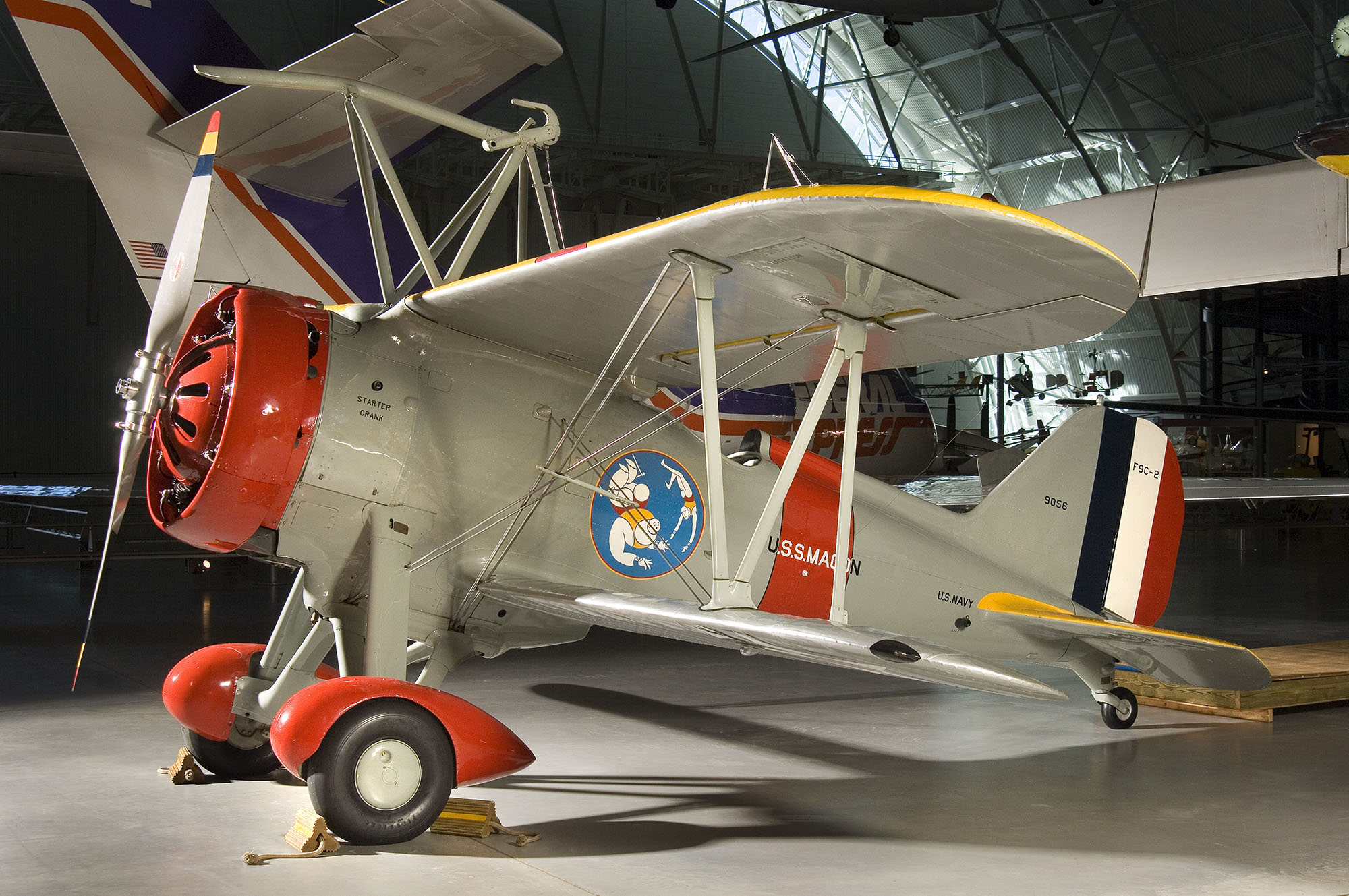
Different configurations competed at the same time. Some designers placed the propeller behind the pilot; others put it at the front. Biplanes used bracing to make light structures sufficiently rigid. Monoplanes reduced some of that external framework but posed their own structural and handling problems. Balloons and dirigibles remained part of the same aviation world, offering capabilities that early airplanes could not simply replace.
The famous firsts matter, but so does the period immediately after them. Flight schools, licensed manufacture, military trials, mechanics, and spare parts carried an invention outward. An aircraft could influence aviation through the pilots trained on it or the designs adapted from it, even after its own performance became outdated. The machines in Washington and Dayton preserve different points along that process. Their differences show how quickly an experimental achievement became an international industry, and how many people had to turn a remarkable flight into a repeatable service.