National Mall
Airplane Propellers
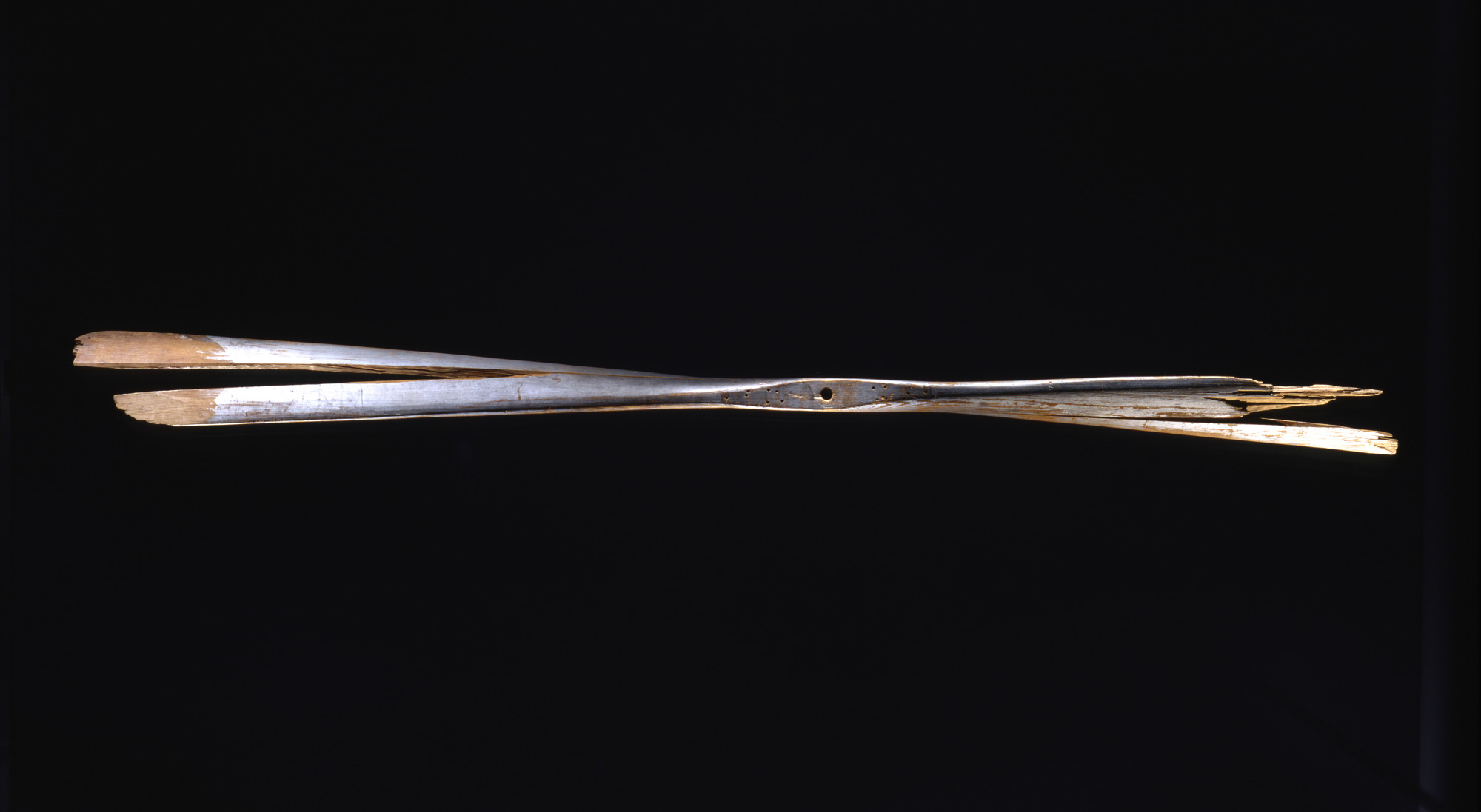
A propeller turns engine power into thrust. During World War I, careful shaping and strong laminated wood helped aircraft climb, maneuver, and carry heavier loads. Each propeller had to match an engine's power and speed while remaining light, balanced, and strong. Laminated wood resisted vibration, but weather and damage still limited durability.

In depth
Propeller design joined engine and airframe
These propellers connect aerodynamic calculation, scarce materials, skilled woodworking, standardization, engine production, and field maintenance. Their different manufacturers show how mass mobilization distributed one technical problem across many firms.
Shaping the air into thrust
A propeller blade is a wing travelling in a circle. Near the hub it moves relatively slowly; near the tip it covers much more distance in each revolution. The blade therefore needs a changing shape and angle along its length. A propeller that merely looks like a flat paddle wastes much of the engine's effort stirring the air instead of producing useful thrust.
For early builders, efficient propellers were an enormous opportunity. Engines were heavy and weak by later standards, so improving the propeller could make the difference between leaving the ground and remaining on it. Wood offered low weight and could be carved into complex curves, but its strength depended on grain, laminations, workmanship, and careful inspection. Damage to a blade could create dangerous imbalance as well as lost thrust.
As aircraft became faster, a single fixed blade angle became a compromise between takeoff and cruise. Variable-pitch and constant-speed systems allowed later aircraft to use engine power more effectively across changing conditions. The same broad problem continues in turboprops: the engine, gearbox, propeller, and airframe must work as one system. Comparing a Wright propeller, an interwar radial engine, and a later airline powerplant turns a row of separate artifacts into a history of extracting more useful flight from each unit of fuel.