Udvar-Hazy
Stits SA-2A Sky Baby
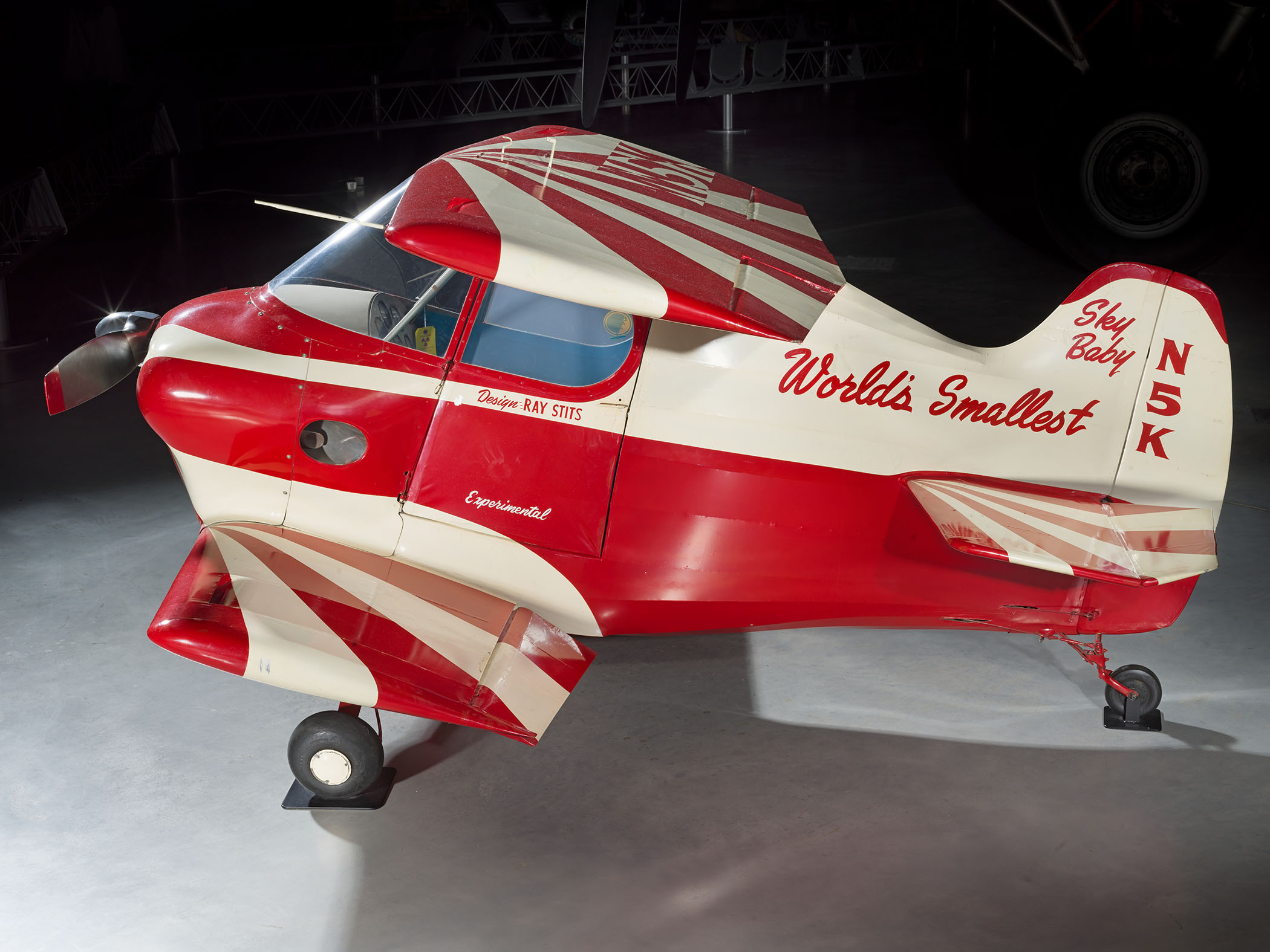
Sky Baby was built to push a very simple-sounding idea: make the smallest airplane that could carry a pilot. Ray Stits designed it, and Robert Starr first flew it in 1952. Its tiny wings did not make it gentle or slow; it required relatively high flying speeds and careful handling. The aircraft is an extraordinary reminder that making something smaller can create just as many engineering problems as making it larger.
In depth
A home project becomes a record attempt
Ray Stits built Sky Baby at his home in Riverside, California, and hired Robert H. Starr to fly it. After its first flight in April 1952, Starr demonstrated the aircraft at air shows before it was retired later that year.
The project had a clear public appeal. An airplane barely large enough to contain its pilot challenged ordinary expectations about what a flying machine should look like. Its miniature proportions made it memorable without requiring spectators to understand the calculations behind them.
Small does not mean slow
Starr reported a top speed around 185 miles per hour and a landing speed around 80 miles per hour. Those figures are striking beside the aircraft’s size. The wings still had to generate enough lift to support the pilot, engine, fuel, and structure.
Reducing wing area does not reduce those loads in the same proportion. Higher wing loading can demand higher speeds, and compact dimensions can leave little room for comfortable handling margins. A record-seeking aircraft can therefore become more demanding even as its outline becomes almost toy-like.
A record with a continuing argument
Sky Baby’s claim to be the smallest piloted airplane remained influential for decades. Later projects, including Starr’s Bumble Bee and Donald Stits’s Baby Bird, continued the competition and separated claims by aircraft category.
The display is best understood as a particular 1952 achievement, rather than a timeless claim that no smaller aircraft could ever exist. Compare Sky Baby with the Cub and Little Stinker. Each is small for a different reason: accessible everyday flying, aerobatic agility, or the pursuit of a minimum-size record. Similar dimensions can conceal very different priorities.