Udvar-Hazy
Spacelab Laboratory Module
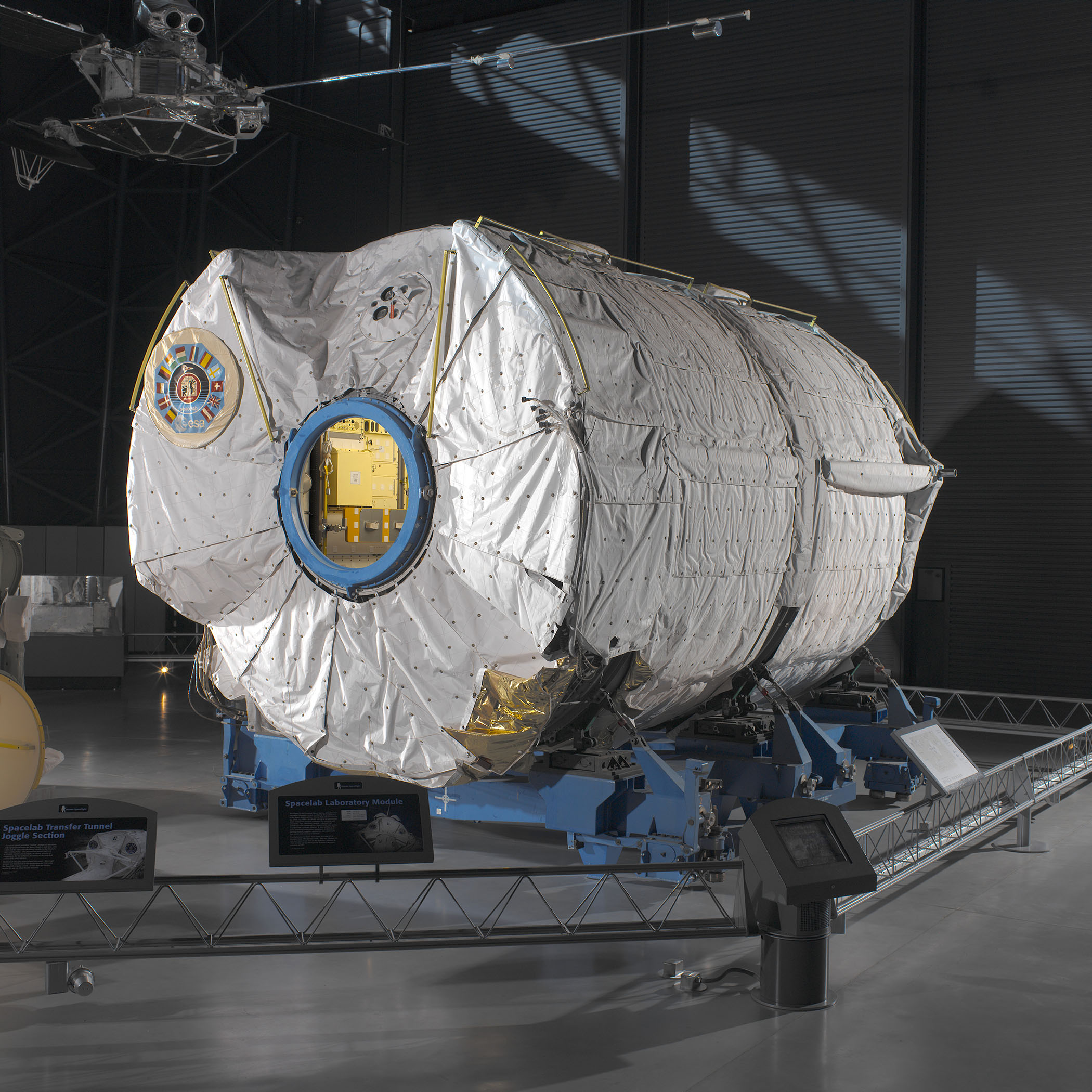
Spacelab put a laboratory inside the space shuttle. Astronauts could travel through a tunnel from the crew cabin into this pressurized module and work without spacesuits. Built through European cooperation with NASA, it carried equipment for many different kinds of research. This module flew nine times. It shows how the shuttle could become a temporary research station, with the laboratory’s contents changed for each mission.
In depth
A room carried inside a spacecraft
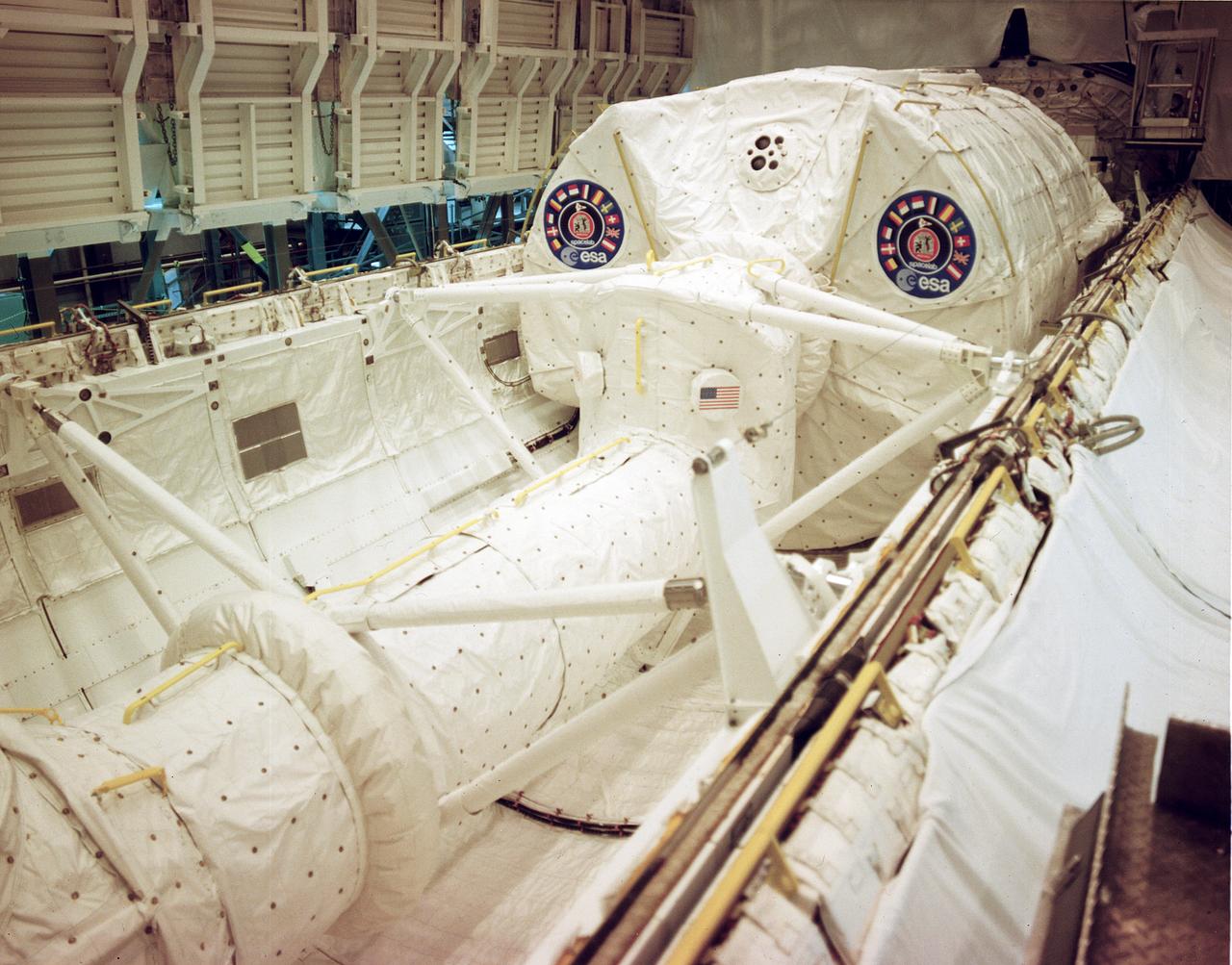
The shuttle’s payload bay offered substantial space, but most of it was exposed to the vacuum outside. Spacelab’s pressurized module created a shirtsleeve working environment connected to the crew cabin by a tunnel. Racks held instruments, supplies, computers, and other equipment.
The modular approach let different missions use different combinations of laboratory equipment and external pallets. A reusable transport could therefore support a changing scientific program without requiring an entirely new spacecraft for every investigation.
Europe joins the shuttle story
Spacelab’s first flight launched aboard Columbia on November 28, 1983. ESA astronaut Ulf Merbold was among the science crew, becoming the first non-American to fly on the shuttle. The mission combined a major European hardware contribution with NASA’s launch and spacecraft systems.
International cooperation was visible in the module, but also present in the less visible work of planning experiments, integrating equipment, training crews, and interpreting results. The laboratory was a place where separate institutions had to make their procedures fit together as closely as their hardware.
Science in a different environment
Orbit offered sustained free fall, changing how fluids, materials, and living systems behaved compared with ordinary laboratory conditions on Earth. It also provided a platform for observations above much of the atmosphere. Researchers could investigate several disciplines within one mission.
Astronauts and payload specialists made that laboratory responsive. They could operate equipment, monitor experiments, and deal with unexpected problems. The human role complemented instruments rather than replacing them.
This module’s nine journeys
The displayed module first flew on Spacelab 1 in 1983 and last served on the Microgravity Science Laboratory missions in 1997. It flew nine times. The broader Spacelab program also used a second pressurized module and unpressurized configurations, so program-wide mission totals should not be confused with the history of this particular room.
The installation photograph shows the access tunnel and the module’s relationship to the payload bay. It turns an isolated cylinder in a hangar back into a place where people worked while orbiting Earth.