Udvar-Hazy
Republic P-47D Thunderbolt
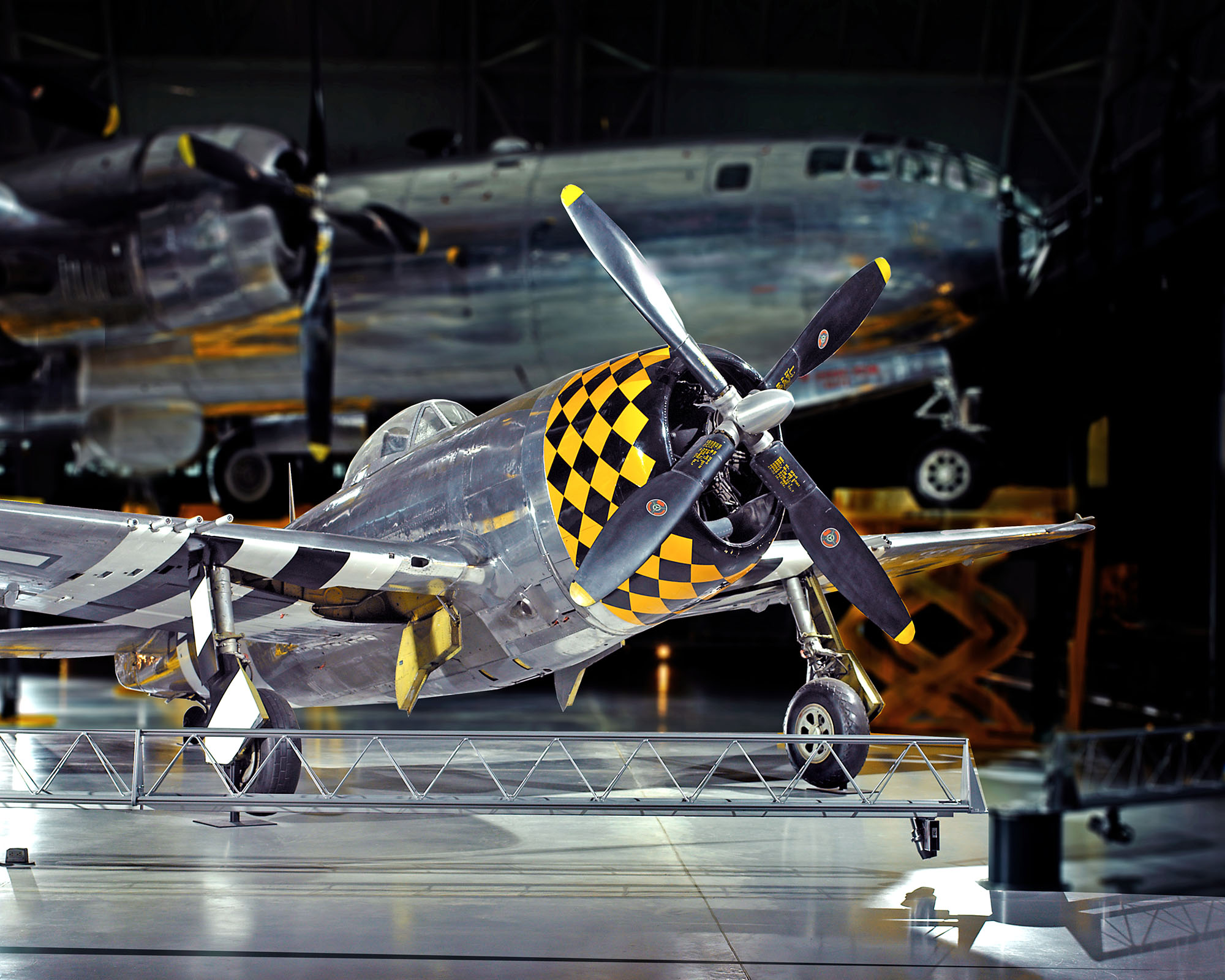
The P-47 was a big fighter with a powerful radial engine and eight heavy machine guns. It escorted bombers and became a formidable ground-attack aircraft during World War II. Its size helped accommodate the machinery and equipment behind that performance. This particular Thunderbolt served as an aerial-gunnery trainer in the United States. It represents both the aircraft’s combat reputation and the essential preparation that happened away from the front.
In depth
Size with a purpose
The Thunderbolt’s broad nose, large fuselage, and substantial wings make it look muscular even at rest. A 2,000-horsepower radial engine and eight .50-caliber machine guns supplied a combination of power and armament that suited several wartime roles.
The aircraft also carried the systems needed to exploit that power over a useful operating range. A fighter’s size is not simply a measure of excess. It reflects the space and structure required for propulsion, fuel, weapons, equipment, and the pilot.
From escort to attack
P-47 units protected bombers and attacked targets on the ground. The two roles placed different demands on pilots and machines. Escort required coordination with other aircraft over distance; ground attack brought the aircraft close to terrain and defensive fire.
The type’s reputation for ruggedness was built through wartime service, but no fighter was invulnerable. Aircraft damage, pilot losses, and the effects of attacks on people below belong within the same history as combat success. Veterans’ accounts can give a more complete picture than an isolated claim about durability.
A trainer with a combat type’s identity
This P-47D-30-RA was delivered to Godman Field, Kentucky, in 1944 and served as a gunnery trainer. Its individual record should be distinguished from the front-line service of the type. Preparing pilots to use a powerful aircraft and its armament was a demanding contribution in its own right.
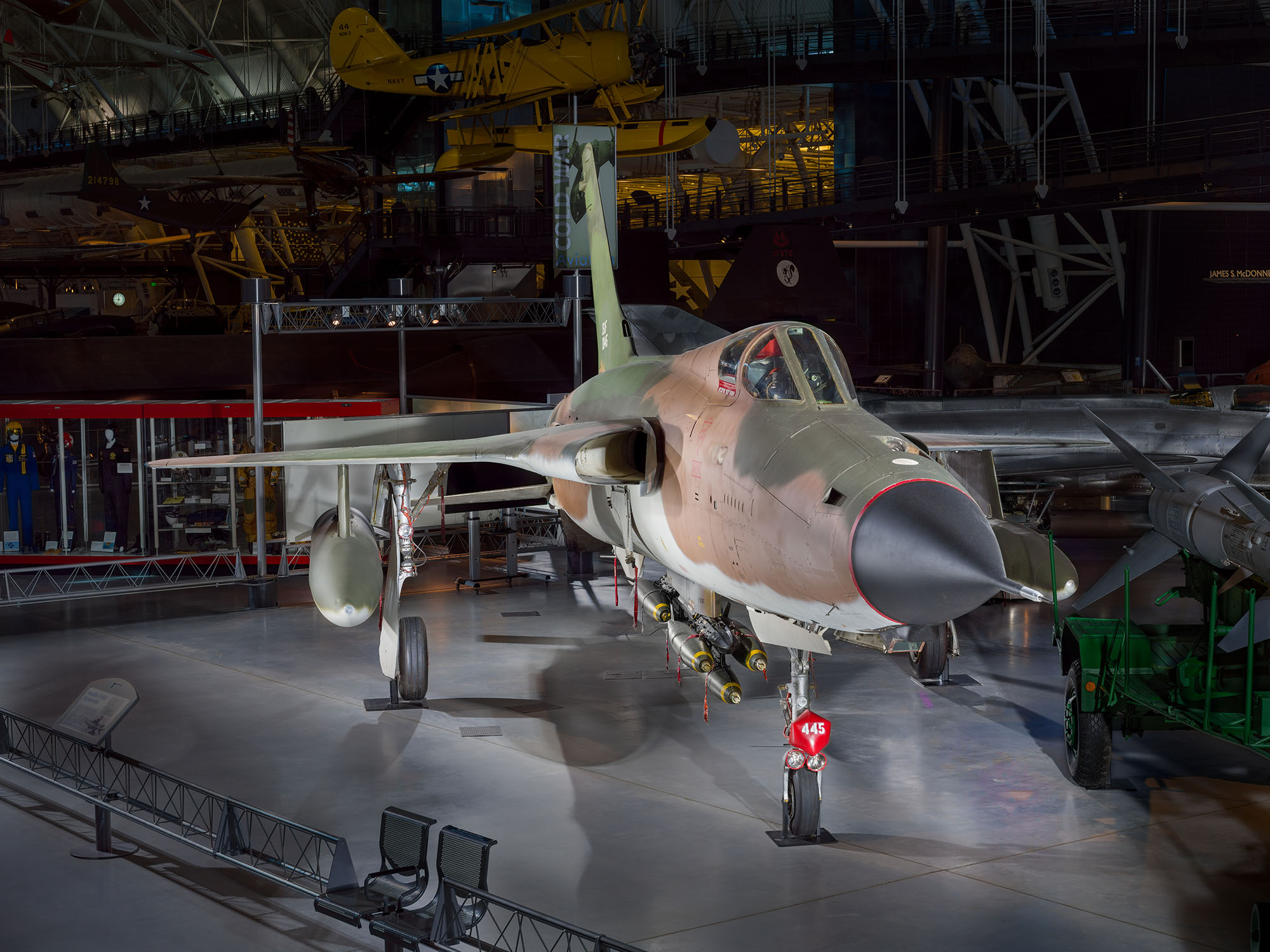
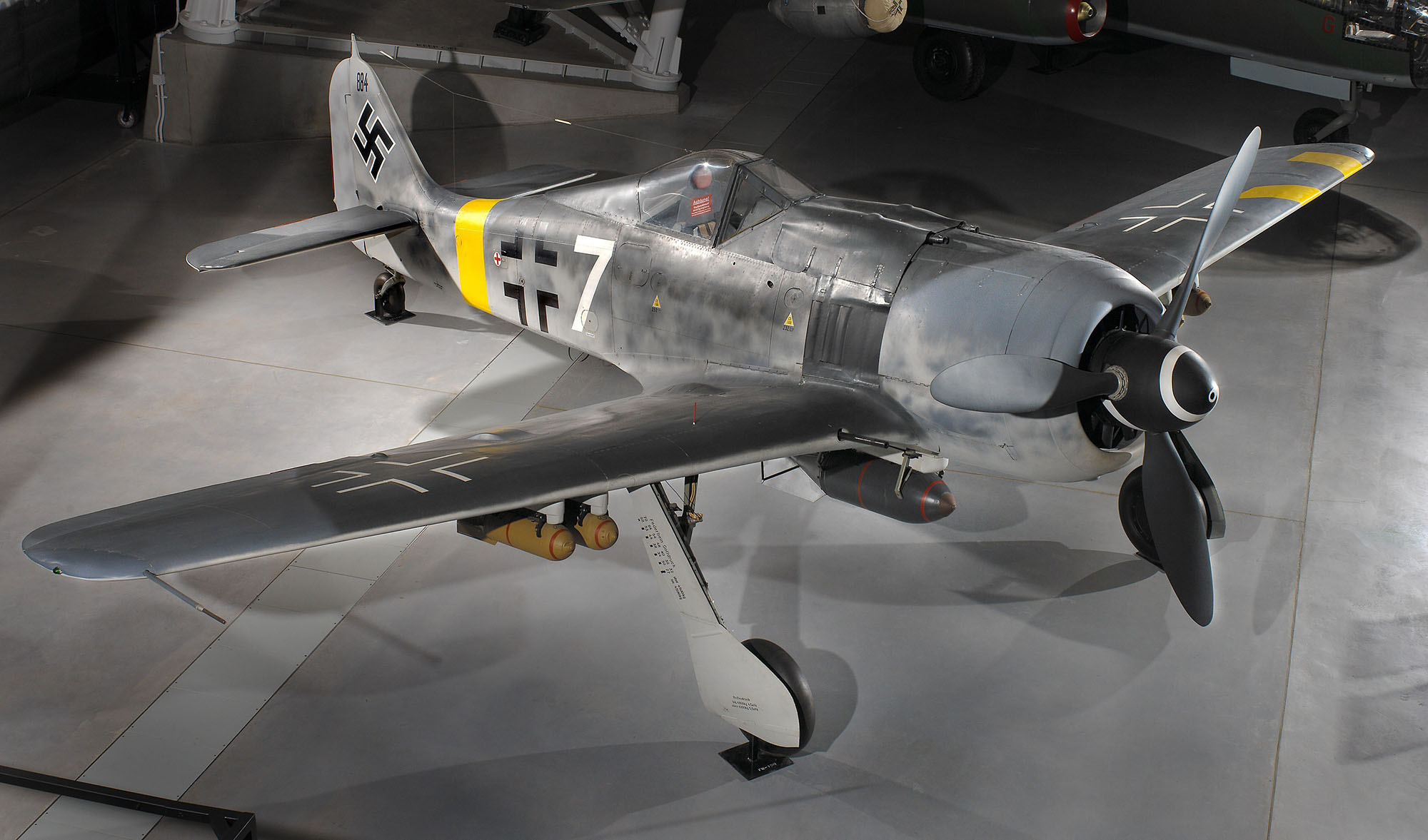
Republic later restored the aircraft for the twentieth anniversary of the P-47’s first flight. Compare it with the Fw 190 and the F-105. The former provides a wartime counterpart in radial-engine fighter development; the latter shows how the same American manufacturer approached strike aviation in the jet age.