Udvar-Hazy
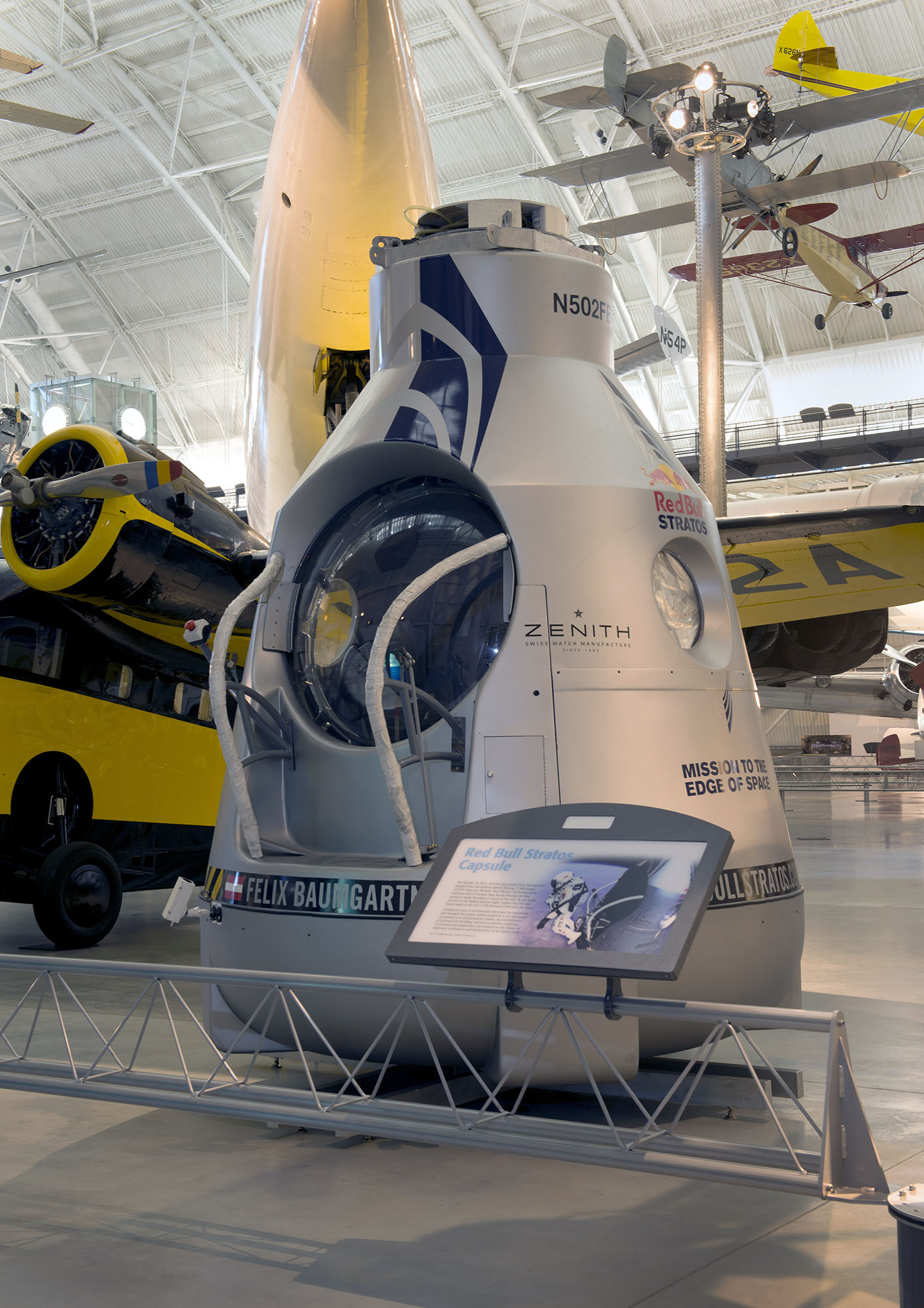
Red Bull Stratos Capsule
In 2012, a balloon lifted this capsule nearly 39 kilometers above Earth. Felix Baumgartner stepped out in a pressure suit and became the first person to exceed the speed of sound in free fall. The capsule protected him during the climb; the suit protected him outside it. The jump was a public spectacle, but it also depended on a large team, carefully developed equipment, and detailed knowledge of an extremely hostile environment.
In depth
The climb was part of the mission
Before the jump, Baumgartner had to reach an altitude where the atmosphere is far thinner than at ordinary aircraft cruising heights. A balloon carried the capsule upward while the enclosed space provided a controlled environment for the ascent and preparations.
On October 14, 2012, he exited at an altitude recorded by the Fédération Aéronautique Internationale as 38,969.4 meters. His maximum vertical speed reached 1,357.6 kilometers per hour. These are the certified figures, rather than the preliminary numbers circulated while the event was unfolding.
Why a person could accelerate so far
Air resistance grows as speed increases, but it also depends on air density. In the very thin upper atmosphere, a falling person can accelerate to speeds impossible in the denser air near the surface. As the descent continues into thicker air, drag increases and the motion changes again.
The pressure suit was essential to surviving the low-pressure environment. The capsule and suit therefore formed complementary parts of the mission. The transition between them was a carefully prepared step, not simply opening a door at the top of a balloon ride.
A team behind the solitary figure
The images focus attention on one person, yet the project depended on engineering, medical expertise, weather forecasting, communications, and recovery planning. Managing the ascent and descent required people working together from different locations with a shared understanding of the sequence.
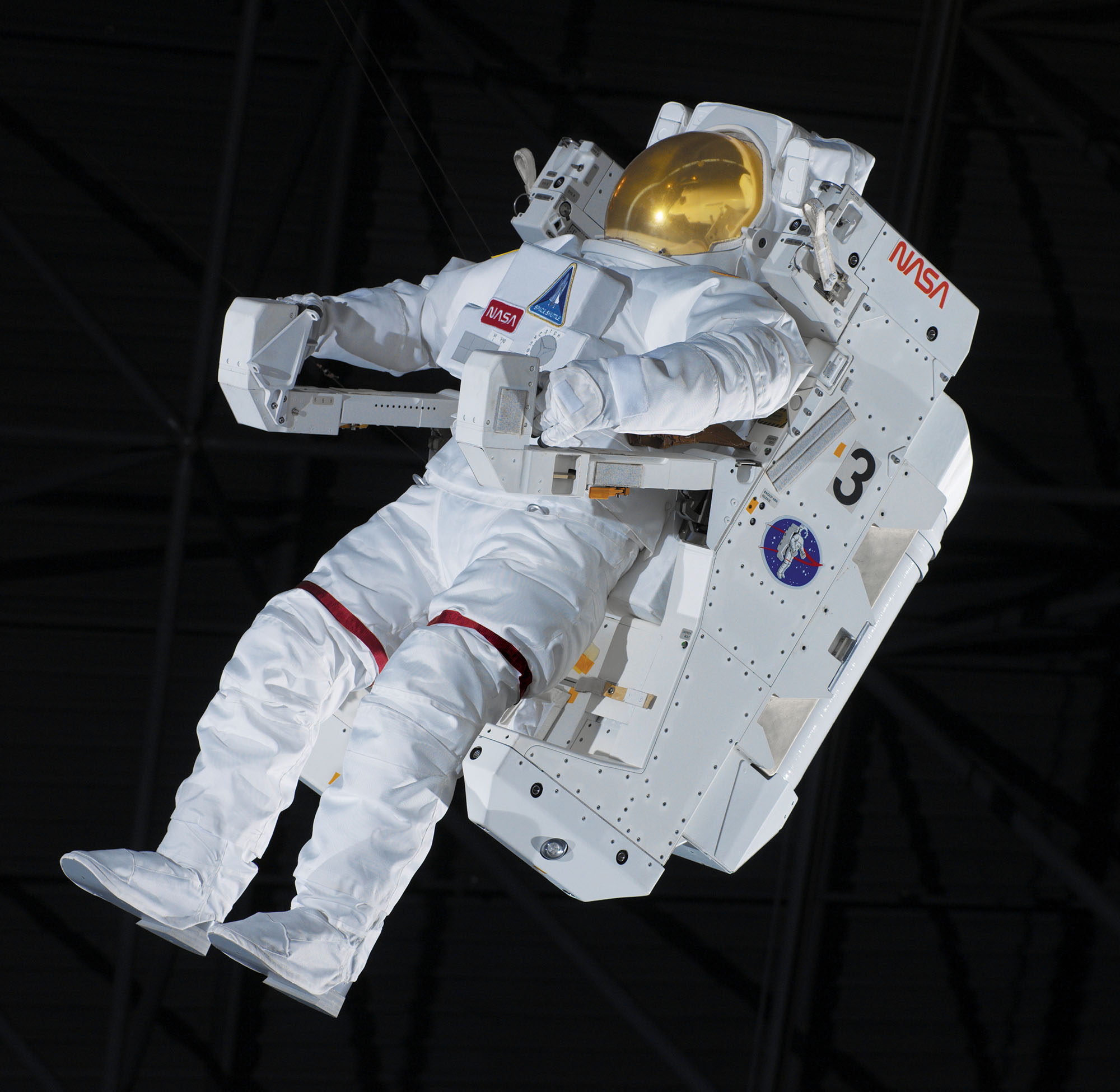
The capsule makes that hidden preparation concrete. Compare it with the SR-71 crew’s pressure-suit environment and with the MMU. All three stories involve a person operating where the surrounding conditions cannot support ordinary human life. Inspiration comes partly from individual resolve, but also from the teams that turned an extraordinary intention into a controlled attempt.