Udvar-Hazy
Manned Maneuvering Unit
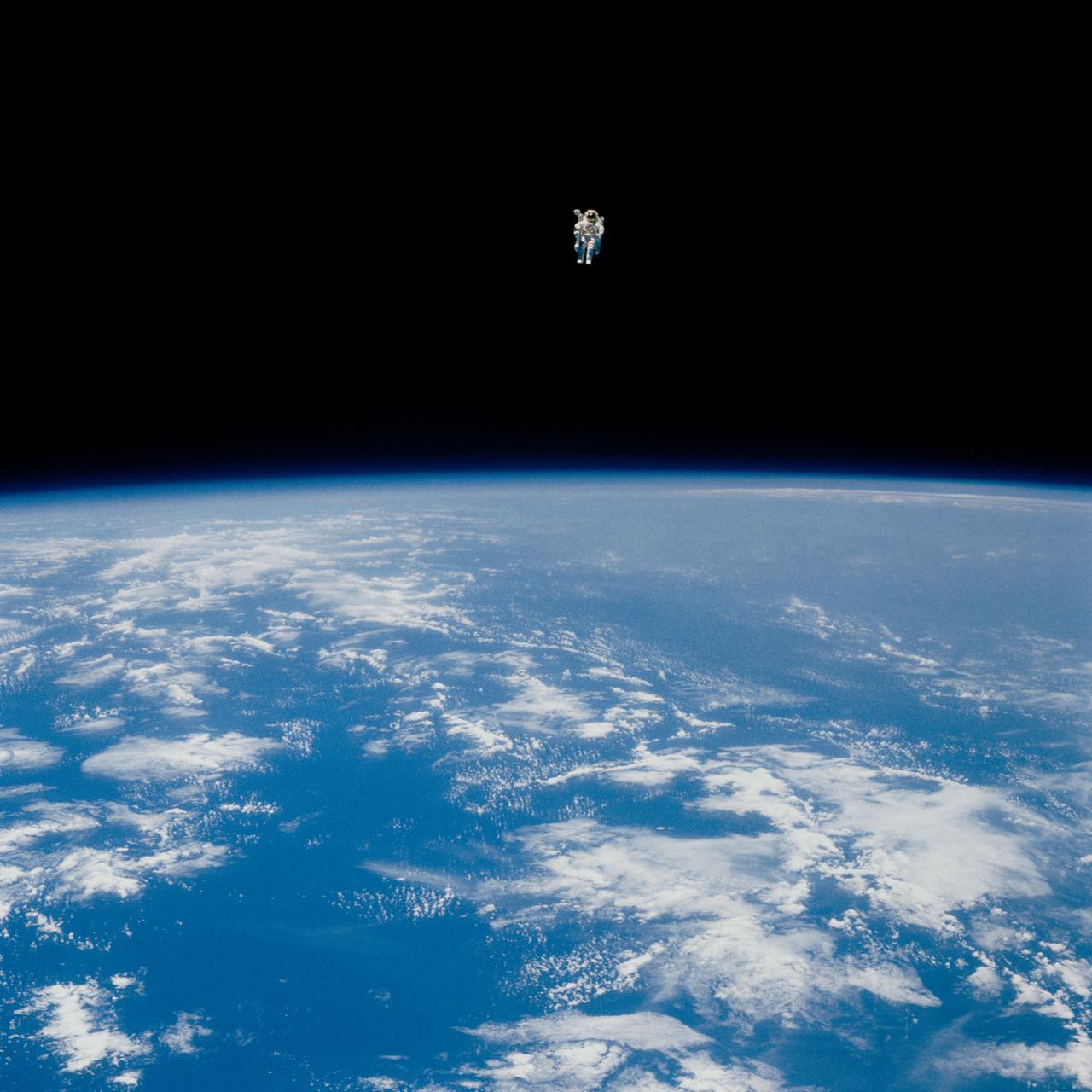
On February 7, 1984, Bruce McCandless flew away from the space shuttle without a tether, using this propulsion backpack. Small nitrogen thrusters let him control his movement while Earth passed below. The famous photograph looks almost impossibly lonely, but the flight followed years of engineering and preparation. This Manned Maneuvering Unit also supported satellite-retrieval work, turning a spacewalker into a small, independently maneuverable spacecraft.
In depth
A person becomes a vehicle
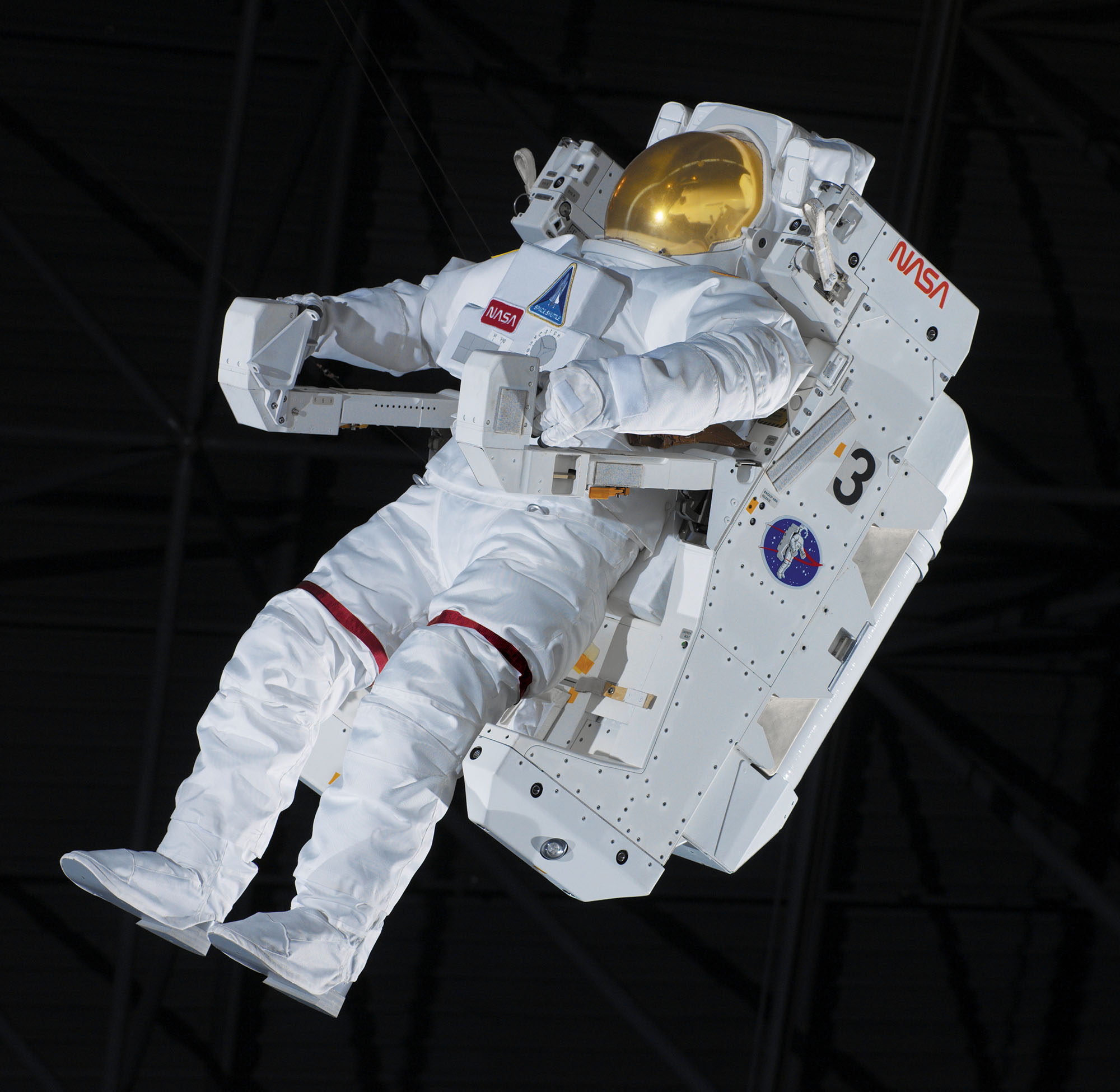
The Manned Maneuvering Unit gave an astronaut control over both position and orientation outside the shuttle. Its 24 small nitrogen thrusters responded to hand controllers on the unit’s arms. The astronaut’s spacesuit supplied life support, while the backpack supplied mobility.
That division is important. The MMU was not a complete substitute for the suit, and it did not make the environment less hostile. It provided a carefully limited ability to move within that environment and return to the spacecraft.
The first untethered flight
McCandless made the first untethered spacewalk during STS-41B aboard Challenger. This unit, MMU number 3, carried him roughly 300 feet from the orbiter. Robert Stewart also tested the system during the mission.
The photographs make the moment appear like a person suspended above Earth. In fact, astronaut and shuttle were both traveling in orbit. The task was to change their motion relative to each other by small, controlled amounts. A modest push has a lasting effect in an environment without ordinary aerodynamic drag, so stopping and returning required deliberate control.
Working rather than wandering
The system’s purpose extended beyond demonstrating freedom of movement. It supported efforts to approach, capture, and recover satellites. This unit flew in connection with the Solar Maximum Mission servicing operation and the Palapa satellite retrieval, as well as its initial tests.
Across three missions in 1984, four astronauts flew this particular MMU for a combined 6 hours and 29 minutes. Its actual operating career was brief compared with the lasting influence of the images it produced.
Confidence built before the camera clicked
McCandless’s flight is inspiring because the apparent isolation rested on a collective achievement. Engineers, suit specialists, flight controllers, trainers, and the rest of the crew helped make it possible. The courage was real, but it was supported by preparation.
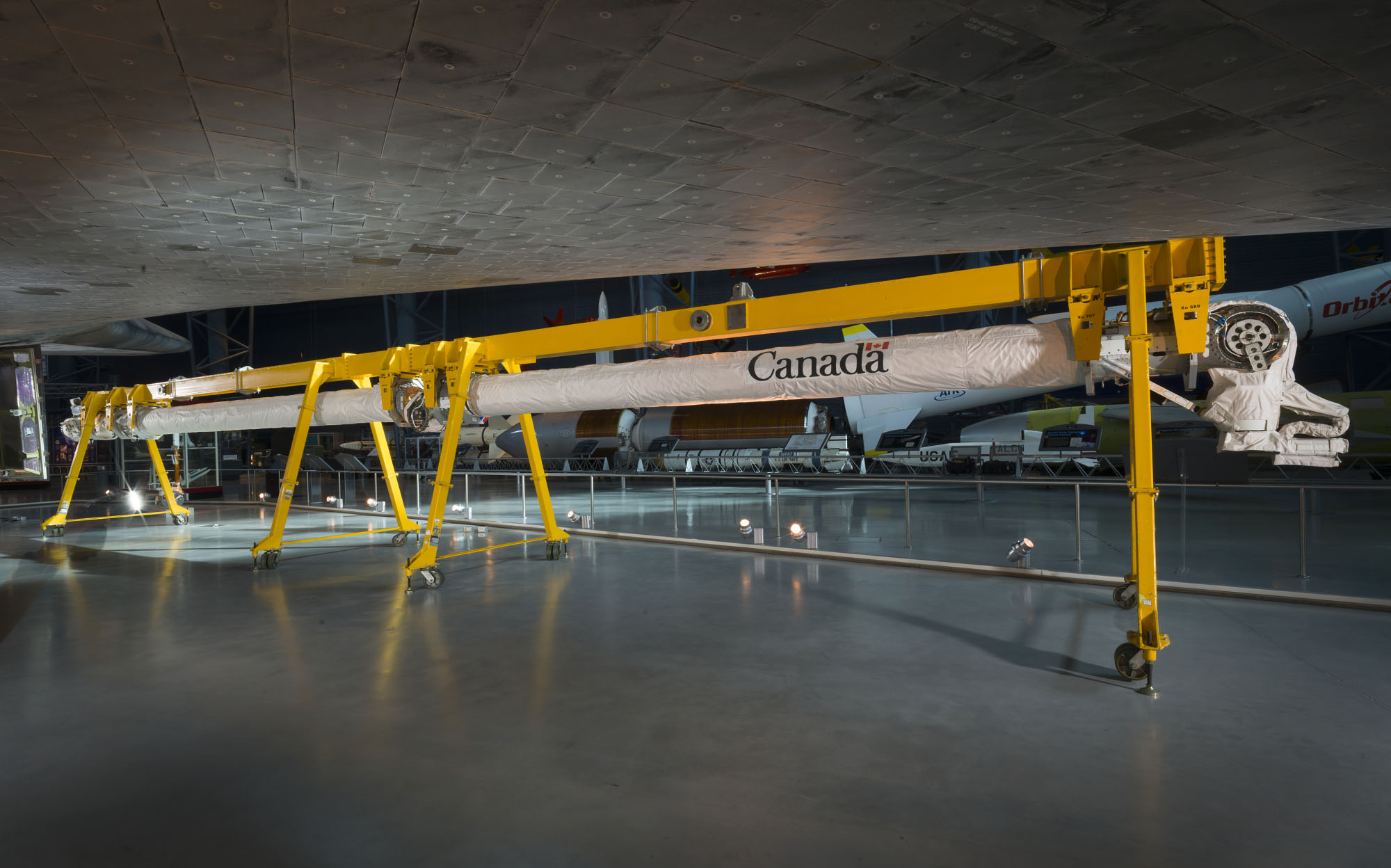
Compare the MMU with Canadarm. One moved an astronaut independently; the other positioned people and hardware through a controlled mechanical connection. Both addressed the same new requirement of the shuttle era: reaching orbit was no longer enough—people needed to work there.