Udvar-Hazy
Lockheed SR-71A Blackbird
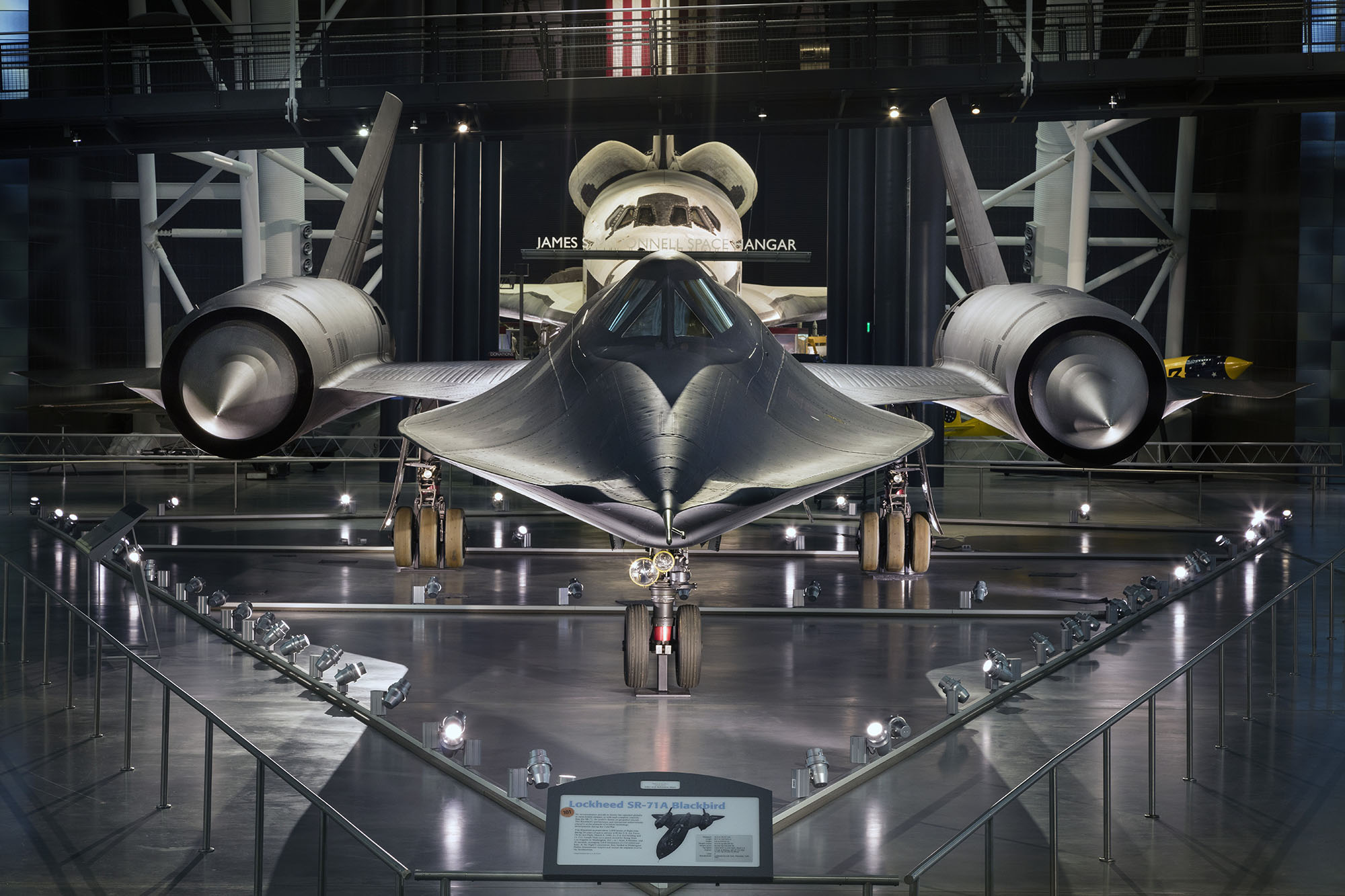
The Blackbird flew faster than three times the speed of sound to gather information from high above the ground. At those speeds, even the air becomes an engineering challenge: it heats the aircraft, compresses inside the engine inlets, and places extraordinary demands on the structure. This SR-71 finished its career with a record-setting flight from Los Angeles to Washington in just over an hour. Its dramatic shape is the visible result of solving those problems together.
In depth
The last mission was a record
On March 6, 1990, Lieutenant Colonel Ed Yeilding and Lieutenant Colonel Joseph Vida flew this SR-71 from the Los Angeles area to Washington, D.C., in 1 hour, 4 minutes, and 20 seconds. Their average speed over the measured route was about 2,124 miles per hour. They then landed at Dulles and delivered the aircraft to the Smithsonian.
The flight provided a spectacular public ending to an airframe that had accumulated roughly 2,800 hours during 24 years of Air Force service. It was also a concise demonstration of what had made the Blackbird useful: the ability to cover enormous distances quickly while carrying reconnaissance equipment.
At Mach 3, the airframe is a thermal system
High-speed flight produces intense aerodynamic heating. The challenge is not confined to one hot component. Structure, seals, wiring, fuel, cockpit equipment, and the people inside all have to operate as temperatures change.
Titanium became central to the Blackbird’s structure because the design needed strength under demanding thermal conditions without prohibitive weight. Materials selection affected manufacturing methods and maintenance as well as flight performance. The aircraft’s distinctive surface treatment and sharply defined shape belong to an integrated effort to manage speed, heat, and survivability.
This is why a Blackbird cannot be understood simply as a conventional airplane with more powerful engines. Its operating environment reaches into nearly every design decision.
The inlet is part of the propulsion system
The pointed spikes ahead of the engines are especially important. At high speed, the inlets manage shock waves and slow the incoming air before it reaches the engine compressor. The spike position and inlet controls help maintain suitable airflow as flight conditions change.
A disturbance known as an inlet unstart could abruptly upset that carefully managed flow. It could produce a sharp change in drag and a demanding situation for the crew. NASA’s later Blackbird-family research investigated inlet behavior, propulsion integration, and the broader problems of sustained high-speed flight.
The J58 engines worked within this larger inlet-and-exhaust system. Describing the aircraft as a jet that simply turned into a ramjet misses the continuing role of the turbine engine and the coordinated operation of the whole installation.
Two people inside a very large support effort
The pilot and reconnaissance systems officer worked in pressure suits because their high-altitude environment left little room for an ordinary loss of cabin pressure. Navigation, sensors, fuel management, and mission timing all required disciplined coordination.
Behind each flight stood specialists preparing the aircraft, maintaining its unique systems, and organizing the mission. The Blackbird’s mystique can obscure that labor. Its extraordinary performance was made repeatable by people whose contribution was less visible than the aircraft itself.
Looking beyond the legend
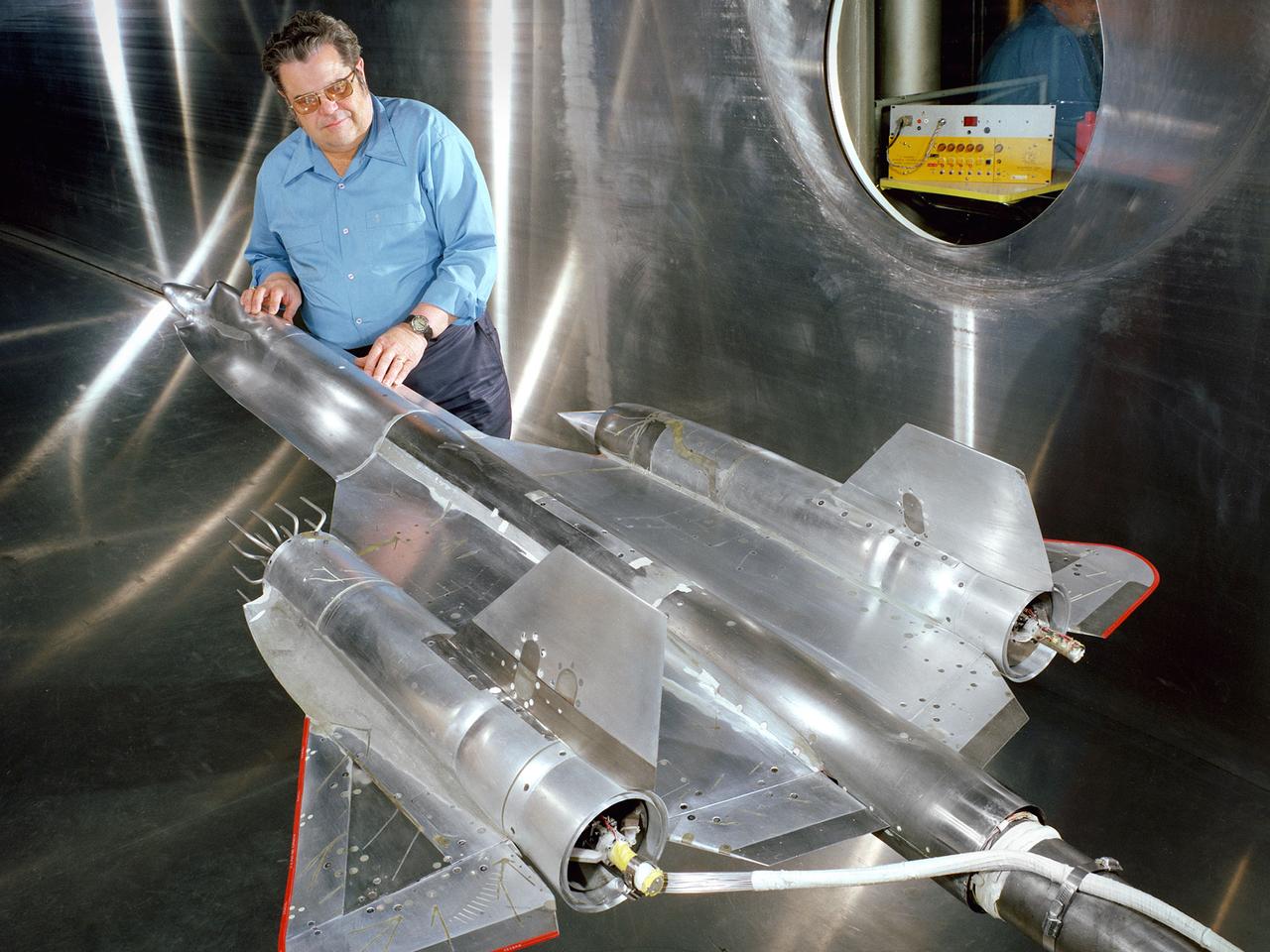
In the panorama, follow the broad chines along the forward fuselage, the enormous engine nacelles, and the closely integrated wing. Their relationship is more revealing than any one part in isolation. The wind-tunnel photograph shows another side of the story: extraordinary shapes were investigated through models, instrumentation, analysis, and repeated tests.
The SR-71 is an inspiring example of American technical ambition, but its strongest story is specific. Engineers, pilots, and maintainers made a difficult combination of speed, altitude, heat, and information gathering work as an operational system. The record flight that brought this aircraft here lets a visitor connect that achievement to the very machine in the hangar.