Udvar-Hazy
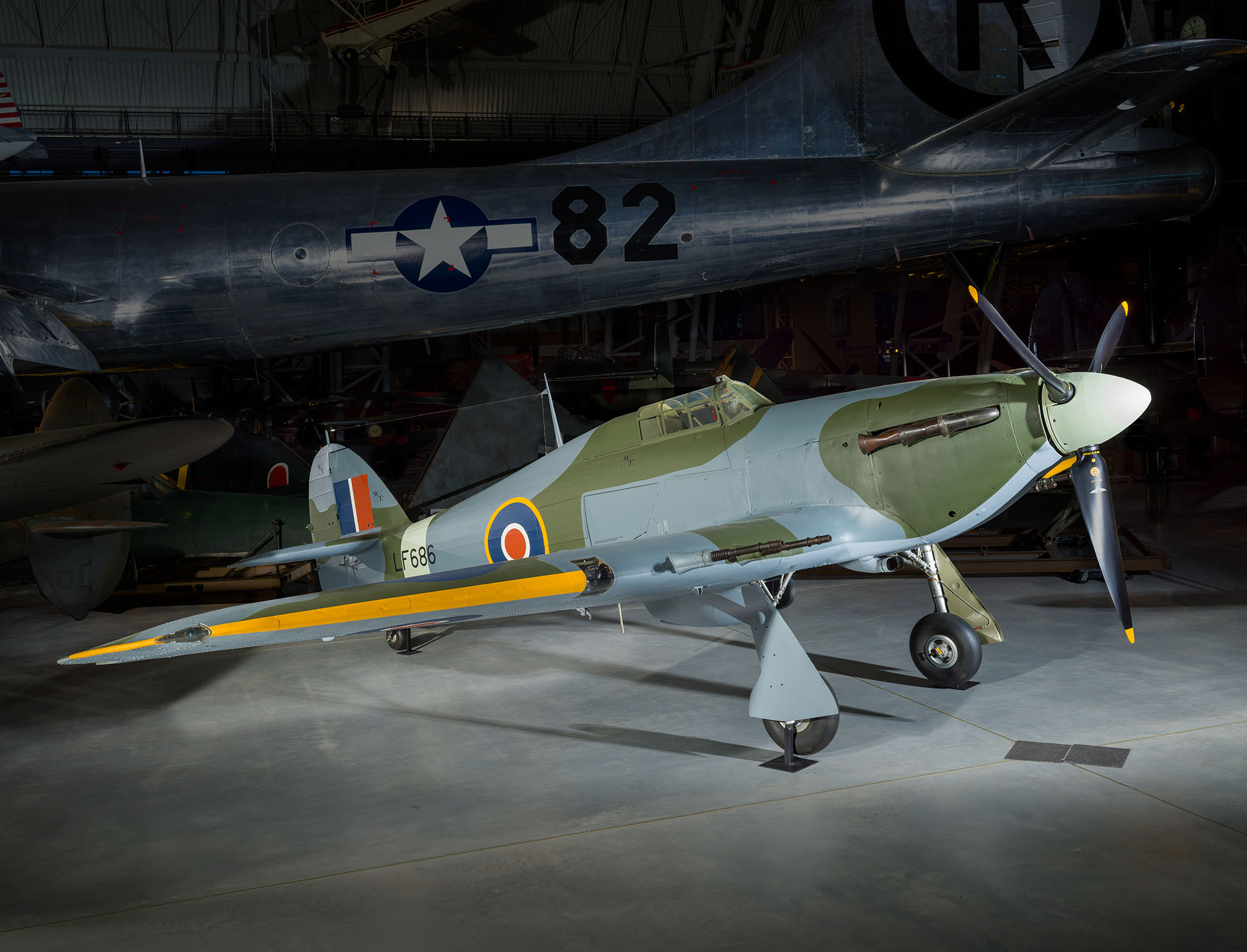
Hawker Hurricane IIC
The Hurricane was a mainstay of Britain’s air defense during World War II. Its pilots helped resist the Luftwaffe during the Battle of Britain, while later versions took on other roles. This Mark IIC was built in 1944 and served as a training aircraft; it did not fight in the 1940 battle. The distinction gives it its own story, connected to the less visible work of preparing pilots for demanding operational service.
In depth
A familiar tradition becomes a modern fighter
Sydney Camm’s Hurricane brought Hawker’s fighter experience into the monoplane era. Its enclosed cockpit and retractable landing gear reflected the changing requirements of high-performance aircraft, while aspects of its structure drew on established construction methods.
That combination helped bridge generations of design. Aviation progress does not always require abandoning every familiar technique. A manufacturer must turn a promising concept into aircraft that can be built, maintained, repaired, and flown by operational units.
The battle and the aircraft are different histories
Hurricane squadrons played a major role in defending Britain in 1940. The type’s reputation is inseparable from that campaign, yet surviving examples have individual service records that may belong to a later period.
This Mark IIC was completed at Hawker’s Langley factory in early 1944 and served with 41 Operational Training Unit. It represents the later, cannon-armed development of the Hurricane and the training system that supported wartime operations. Calling it a Battle of Britain veteran would erase the actual history of the object in front of us.
Training is operational work
An effective air force needs more than front-line aircraft. It needs a continuing flow of pilots able to handle demanding machines, use equipment, and work within units. Training aircraft accumulate the hours in which those capabilities are built.
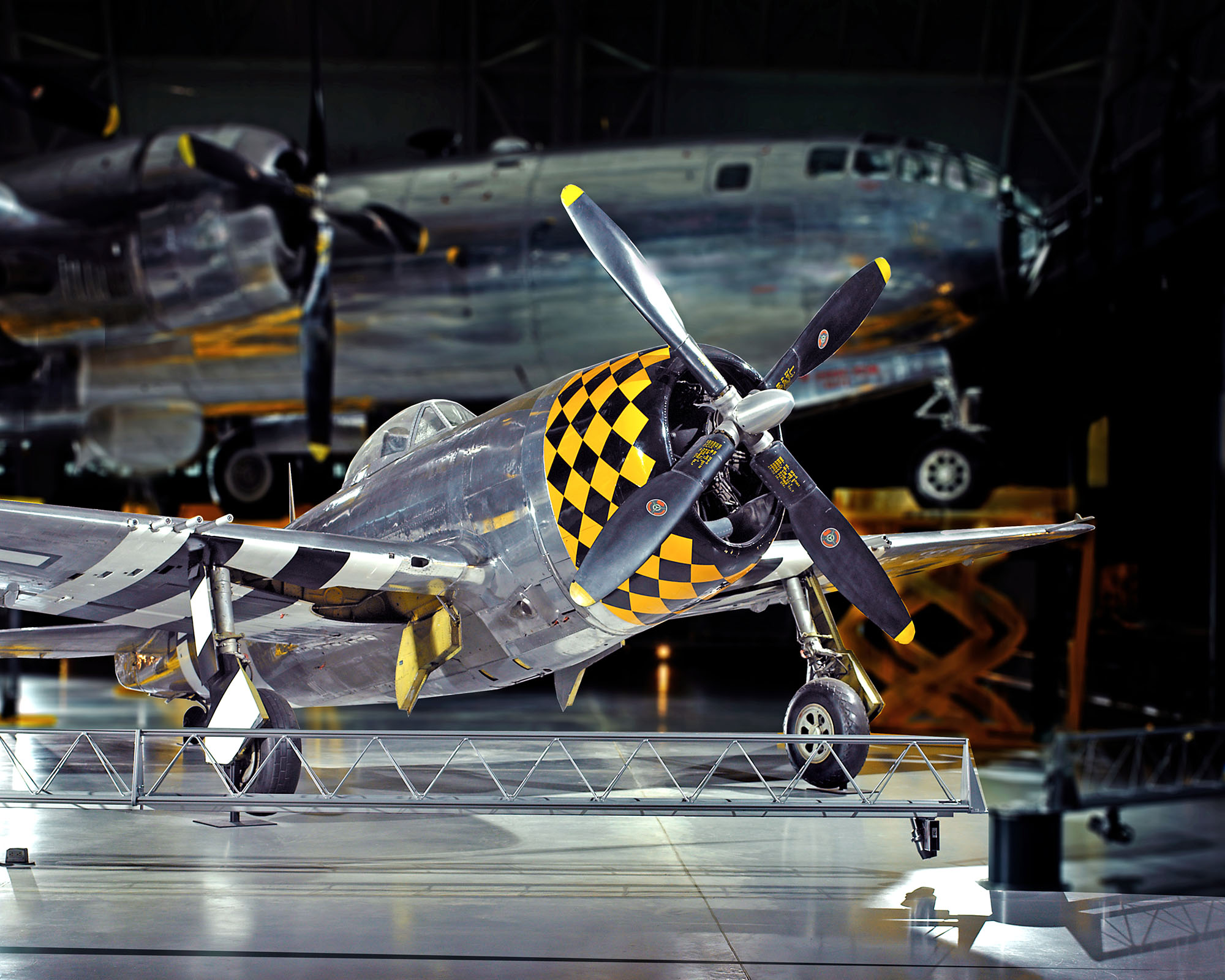
The Hurricane’s story therefore includes both the celebrated pilots of 1940 and the instructors, students, mechanics, and support personnel who sustained aviation afterward. In the panorama, compare its restrained lines with the much larger P-47. Their differences express changing requirements in power, armament, range, and mission as the war developed.