Udvar-Hazy
Grumman G-22 Gulfhawk II
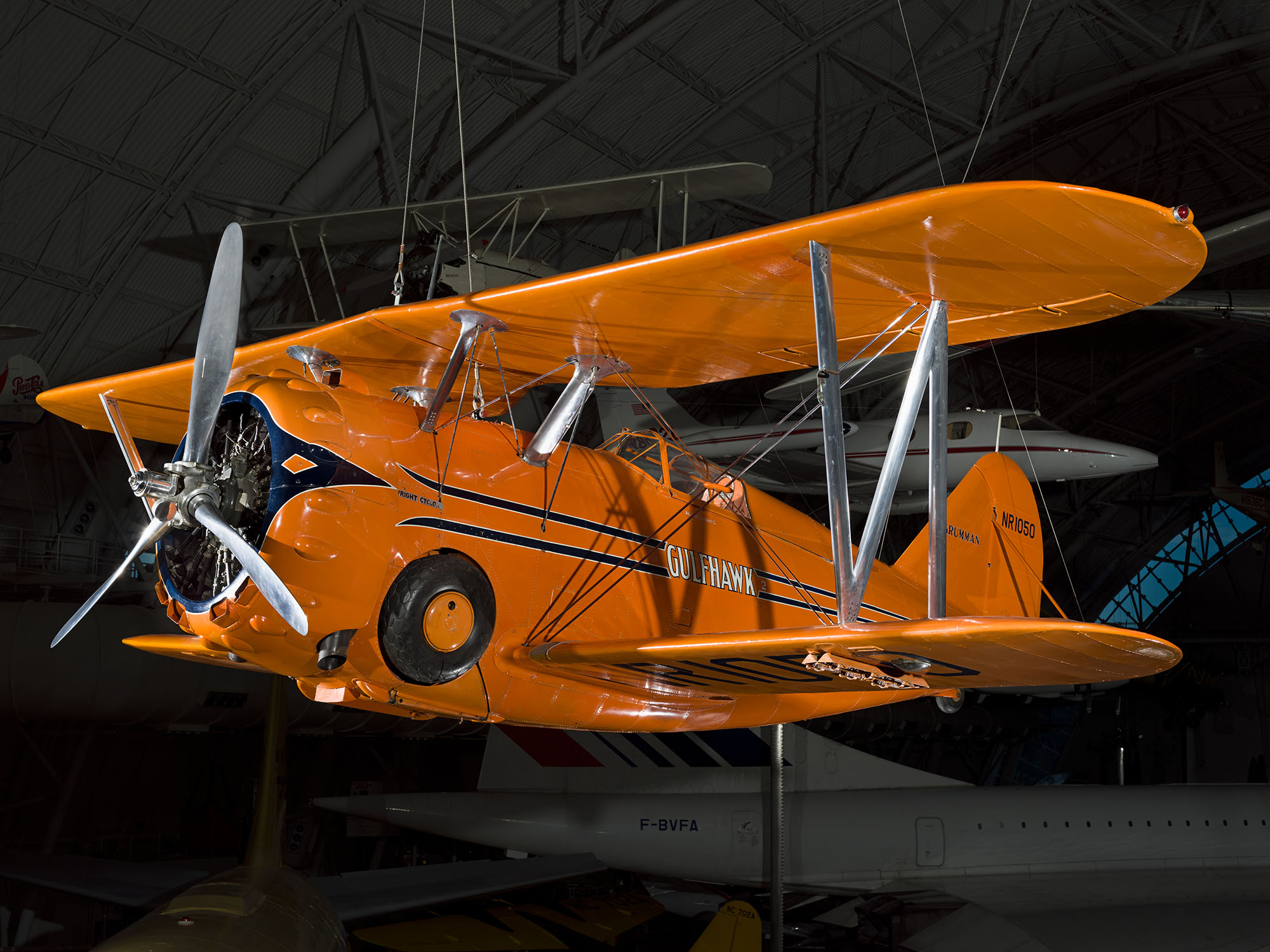
Bright orange Gulfhawk II was a flying ambassador for aviation. Former naval aviator Al Williams used it for precision aerobatics and dramatic demonstrations during the 1930s and 1940s. It closely resembled contemporary Grumman Navy fighters, but carried a civilian identity and a corporate sponsor. The aircraft helped connect military flying skill, industrial engineering, and public enthusiasm at a time when air shows were major events.
In depth
A naval aviator becomes a public performer
Al Williams brought military experience to a civilian stage. As head of Gulf Oil’s aviation department, he demonstrated the aircraft at military and public air shows, using aerobatics and simulated dive-bombing to show what a capable pilot and machine could do.
Those performances served several purposes at once. They entertained spectators, promoted aviation, and associated a corporate name with technical modernity. The orange finish made the Gulfhawk easy to recognize before an audience understood any of its mechanical details.
A fighter’s close relative
Grumman built a strong aluminum fuselage around a powerful Wright Cyclone engine. Gulfhawk II closely matched the contemporary F3F Navy fighter in character, while serving a very different mission. Its compact biplane configuration combined a substantial powerplant with the structural demands of repeated aerobatic work.
The transition from biplane to monoplane fighters was underway, but the older arrangement still offered useful qualities for a performer. An aircraft’s value depends on its task. The configuration most attractive for maximum combat speed need not be the only effective choice for precise public demonstrations.
The last flight was part of the story
Williams personally flew Gulfhawk II to Washington National Airport at the end of its career. That final delivery tied the aircraft’s preservation directly to the pilot who had made it famous.
Compare its powerful, almost barrel-shaped body with the smaller Pitts and Jungmeister. All three could perform aerobatics, but they achieved agility through different combinations of size, power, structure, and control response. Air-show flying was never represented by just one ideal airplane. It developed through distinctive partnerships between individual pilots and the machines they understood exceptionally well.