Udvar-Hazy
Canadarm Remote Manipulator System
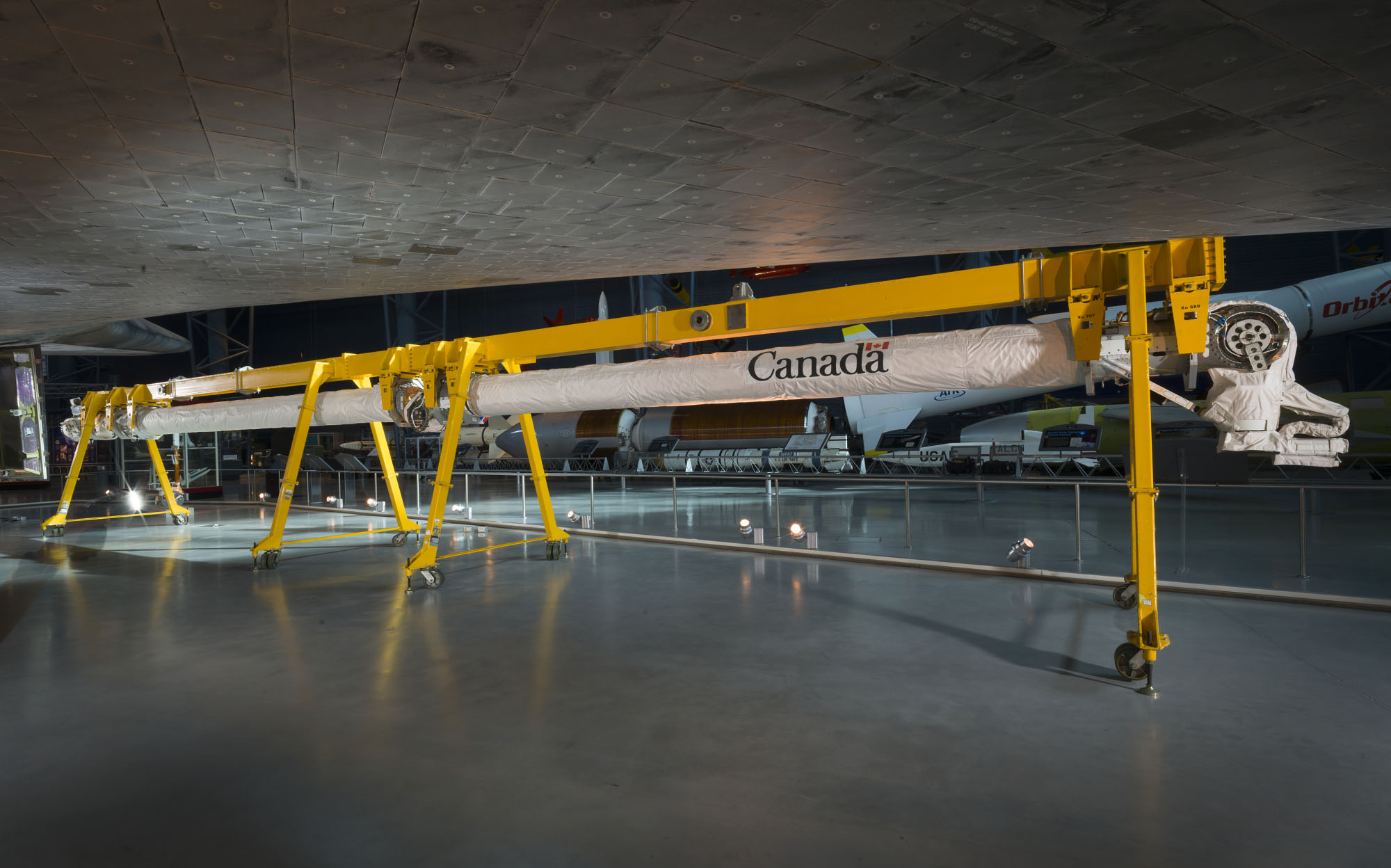
Canadarm turned the space shuttle into a working vehicle. From inside the cabin, an astronaut could use this jointed robotic arm to move equipment, handle satellites, or position a spacewalker. It resembles a giant human arm, complete with shoulder, elbow, wrist, and a gripping end. Heavy objects still resist movement in space, so the arm had to work slowly and precisely. This particular arm flew on 15 missions aboard four different shuttles.
In depth
Building a hand for a spacecraft
The shuttle could carry a large payload, but delivering cargo to orbit was only the beginning. Equipment had to be lifted from the payload bay, placed in position, or captured for return. Canadarm supplied a controlled way to do that work while an operator remained inside the cabin.
Its familiar joint arrangement made the basic idea understandable, but the operating environment was unfamiliar. Cameras helped the astronaut judge position and alignment. The end effector engaged specially prepared attachment points rather than grasping any arbitrary surface like a human hand.
Weightlessness does not remove inertia
An object in orbit does not press down on a support as it would on Earth, yet its mass remains. Starting a large payload moving and stopping it again still require force. Rapid movements could load the arm, disturb the shuttle, or endanger nearby equipment.
That is why orbital handling can look almost ceremonial. Slow, deliberate motion is a response to the physics and the limited room for error. The lightweight arm could manipulate enormous objects in orbit even though it could not support its own full weight under Earth’s gravity.
International cooperation made tangible
The Canadian contribution became one of the most recognizable parts of the shuttle program. This arm flew between 1994 and 2011, including Discovery’s final six missions to the International Space Station. Its career connects a national engineering achievement with a much larger international construction project.
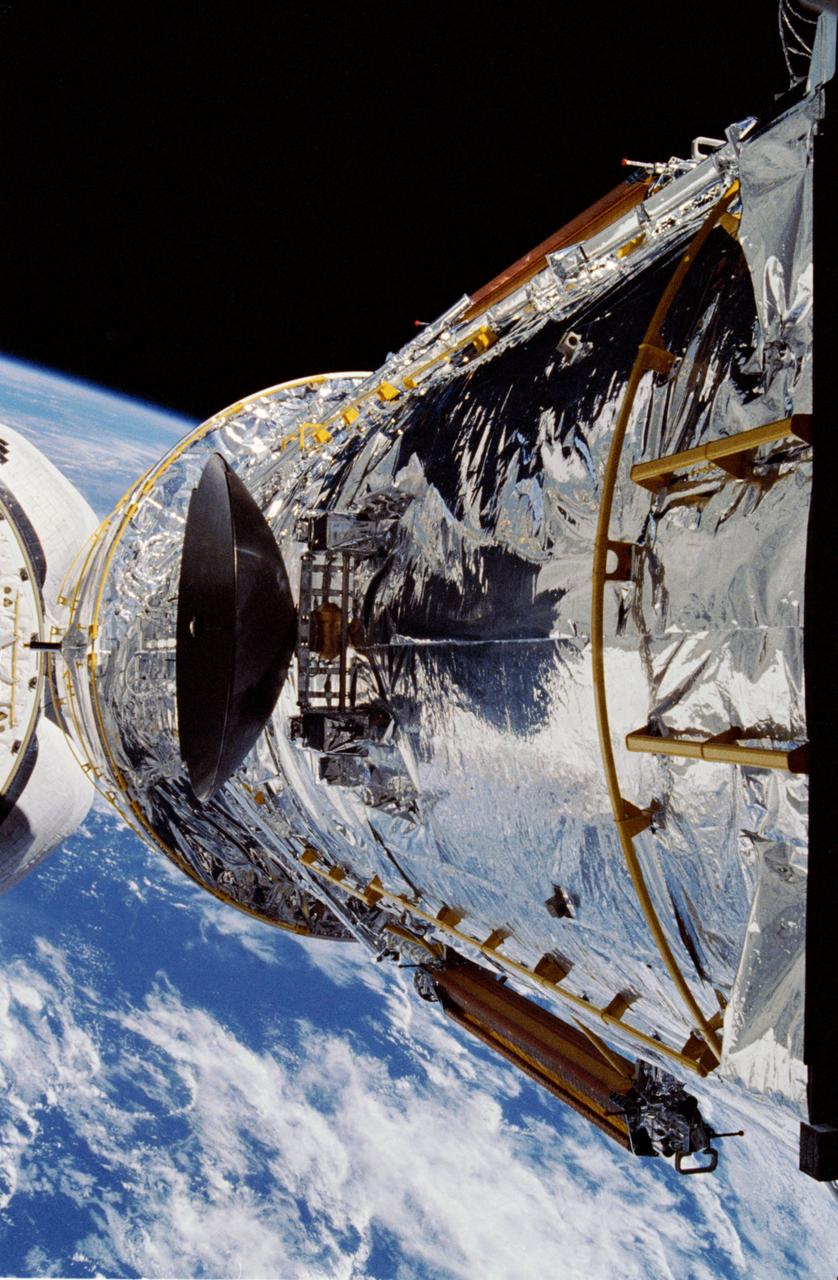
The Hubble deployment photograph shows the same kind of shuttle robotic-arm work on an earlier mission; it does not depict this particular arm. That distinction matters when following an individual artifact’s history. The museum object is a specific piece of hardware within a much wider family of operations and accomplishments.