Udvar-Hazy
Bücker Bü 133 C Jungmeister
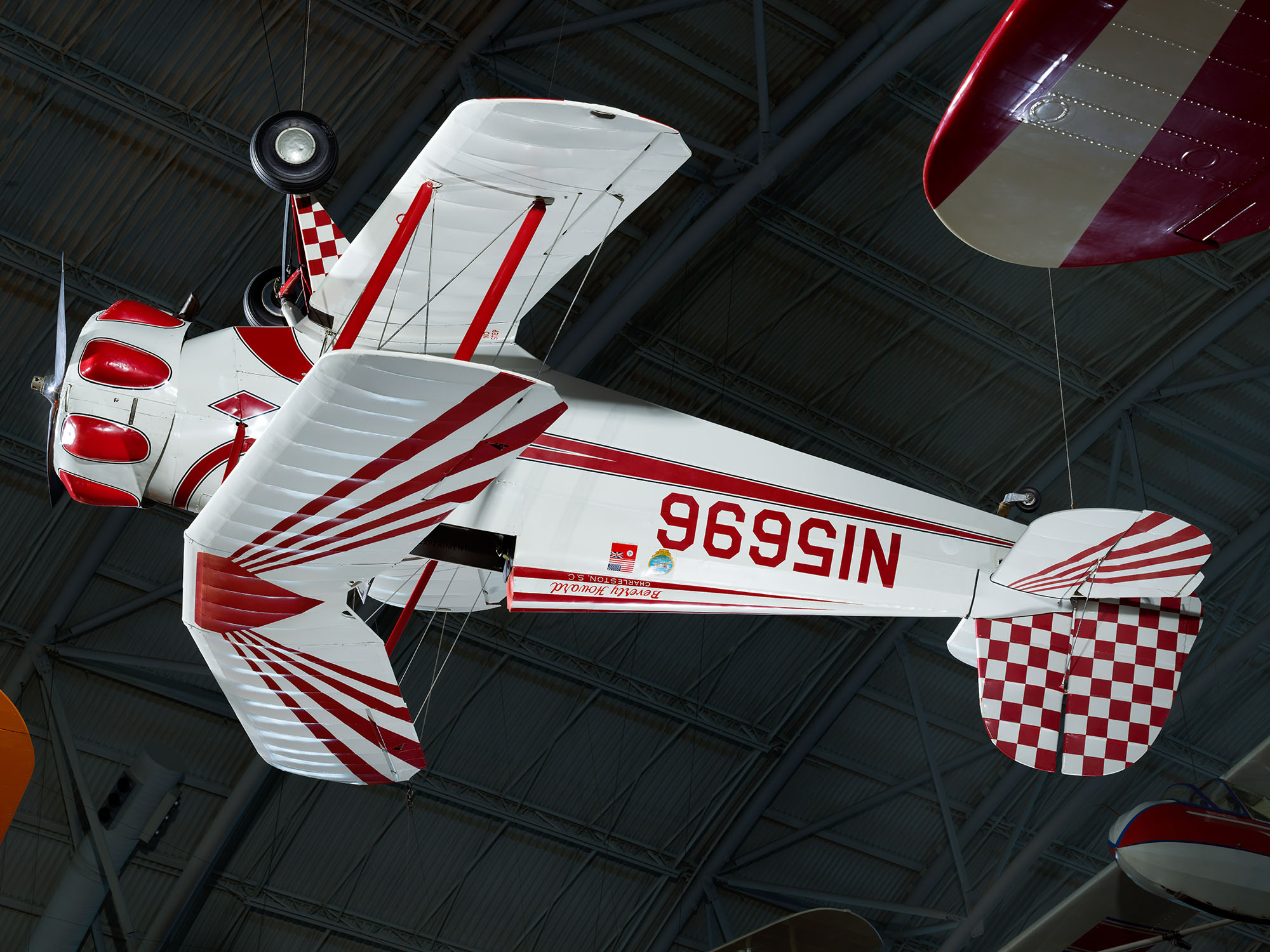
This little biplane crossed the Atlantic aboard the airship Hindenburg before becoming an American aerobatic star. Pilots Alex Papana, Mike Murphy, and Bevo Howard each became part of its story. The Jungmeister’s compact size and responsive controls suited precise loops and rolls, and it helped define air-show flying before modern competition monoplanes. It is an aircraft whose importance comes as much from the people who flew it as from the design itself.
In depth
A European performer arrives in America
The Jungmeister appeared in 1935 as a single-seat relative of Bücker’s two-seat Jungmann trainer. It became popular in aerobatic circles, where pilots valued an aircraft that could respond precisely and withstand demanding maneuvering.
Romanian pilot Alex Papana brought this example to the United States inside the Hindenburg and flew it at the 1937 Cleveland Air Races. Its transport aboard an airship links two very different branches of aviation: the large vehicle built to cross an ocean and the small machine built to draw patterns in the sky.
Three pilots, one continuing story
Mike Murphy subsequently flew the aircraft to American aerobatic championships in 1938 and 1940. Bevo Howard acquired it later and won championships in 1946 and 1947. Their achievements made this individual airframe a witness to the development of American aerobatic competition.
An aerobatic airplane is a partnership between airframe and pilot. Small size can help an aircraft respond rapidly, but a clean performance depends on timing, judgment, and consistent control. The spectator sees a loop or a roll; the pilot manages changing speed, attitude, and loading throughout the maneuver.
A demanding art
Howard died in an accident while flying this aircraft in 1971. His estate restored it and donated it to the museum. That ending belongs within the story alongside the championships: public performances depended on real machines and real margins, even when extraordinary skill made them appear effortless.
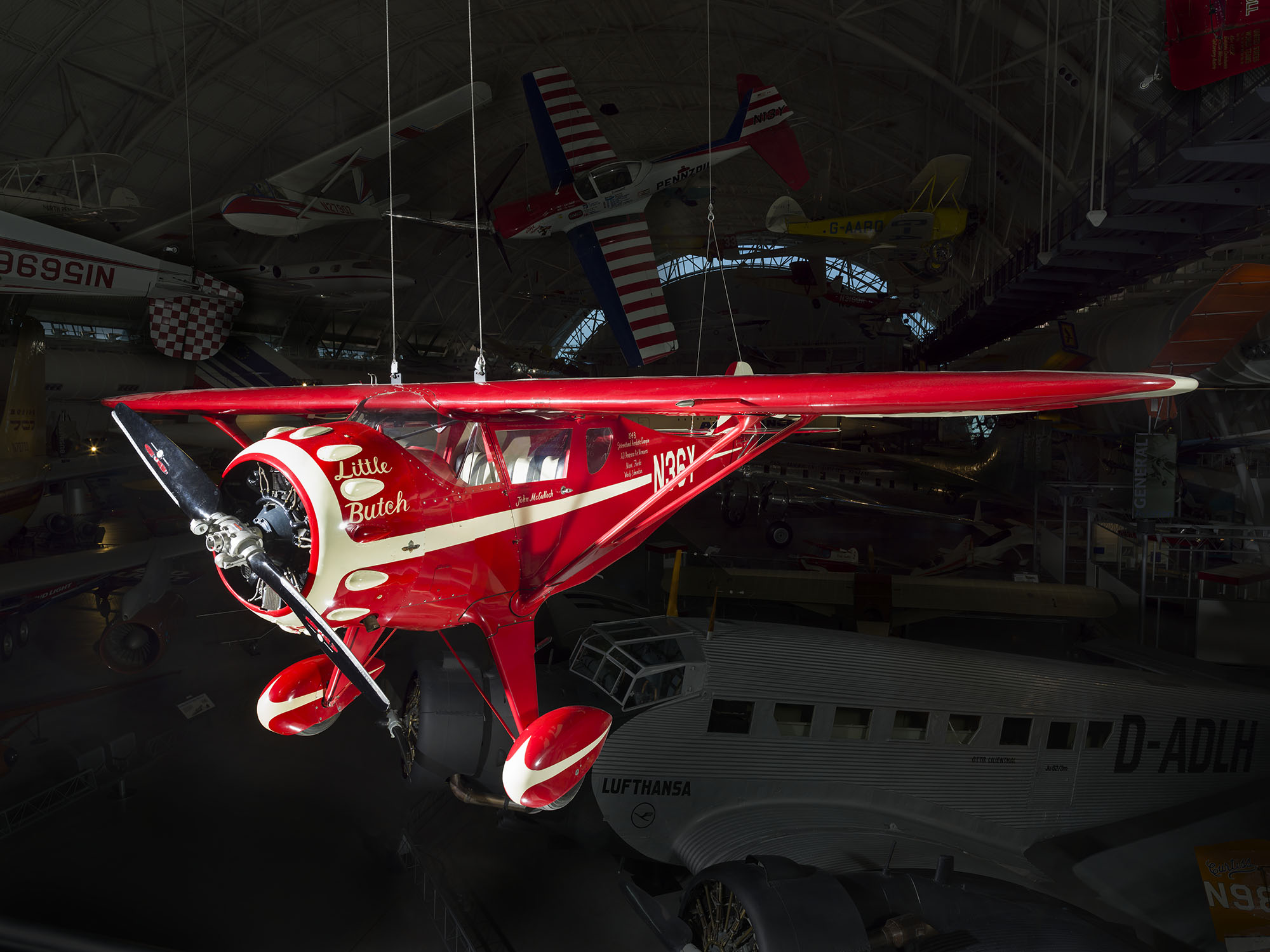
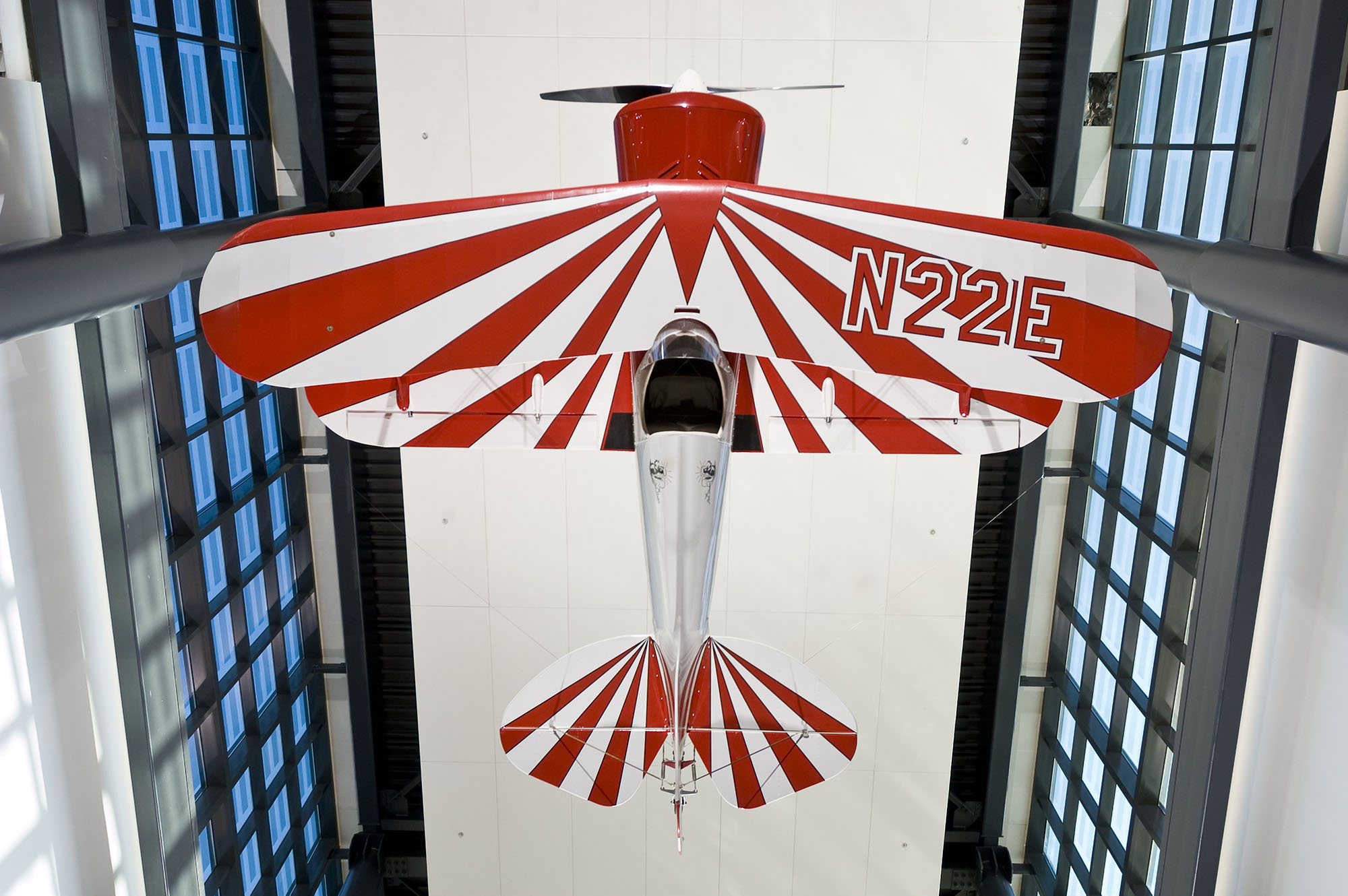
Compare the Jungmeister with Little Butch and Little Stinker. These aircraft were contemporaries in a world where distinctive personalities and recognizable airplanes helped bring aviation to audiences who might never have flown themselves.