Udvar-Hazy
Boeing P-26A Peashooter
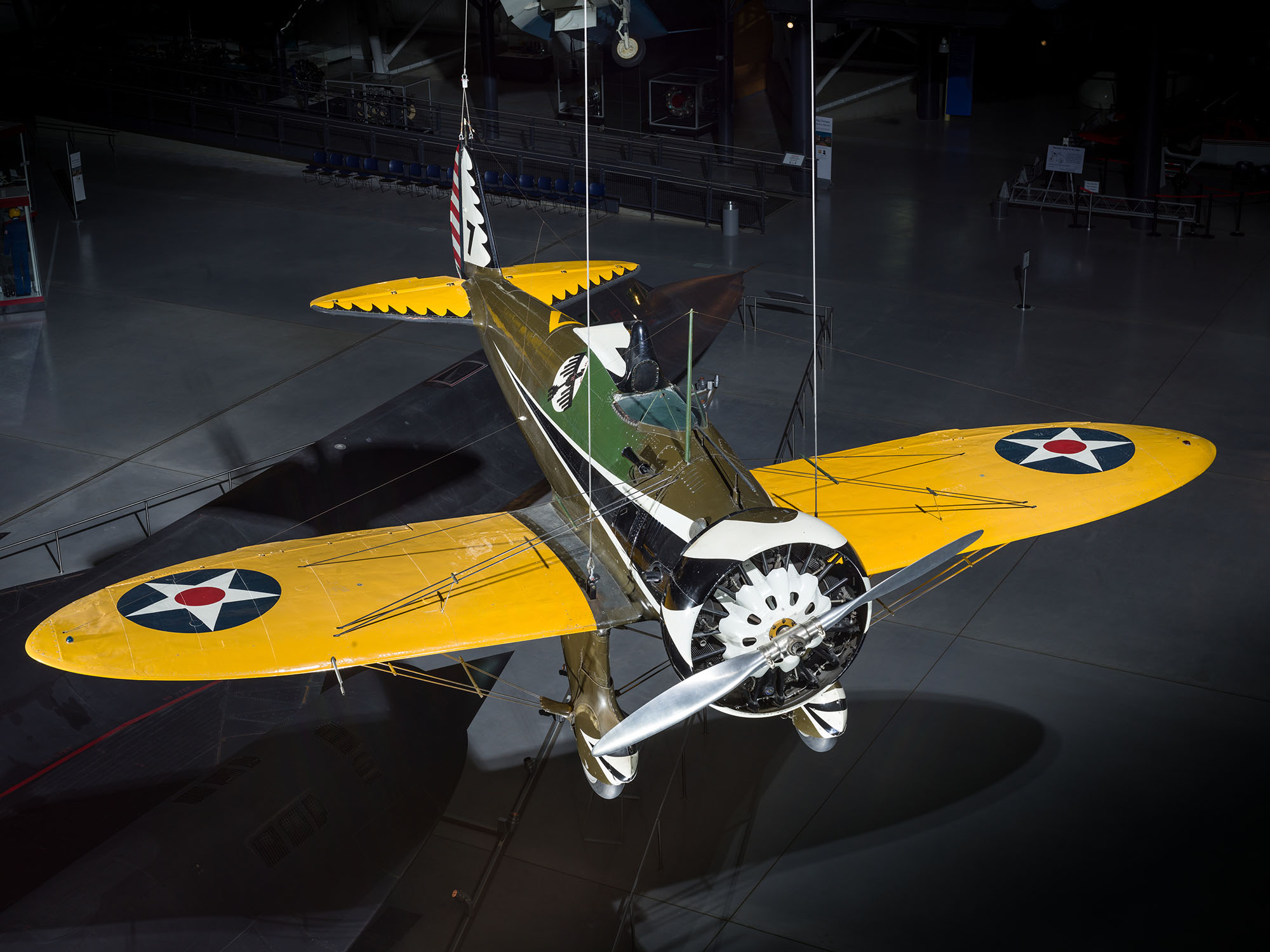
The Peashooter catches fighter design halfway between two eras. It has one main wing and a metal structure, but still keeps an open cockpit, fixed wheels, and external bracing wires. Those mixed features make it especially interesting to examine. This aircraft served the United States, moved to the Panama Canal Zone, and later flew for Guatemala. Its long career outlasted the moment when its design looked cutting-edge.
In depth
Progress rarely changes everything at once
The P-26 brought the all-metal monoplane fighter into U.S. Army Air Corps service while retaining several familiar features. A single main wing reduced some of the drag associated with biplanes. External wires still supported the wing, and the wheels remained exposed rather than retracting into the airframe.
This mixture was a practical stage in development. New technologies introduce cost, complexity, and uncertainty as well as benefits. An aircraft does not need to adopt every available innovation at the same moment to represent meaningful progress.
Read the structure from the outside
The wing bracing is especially revealing in the panorama. The wires help carry loads that a later cantilever wing would handle internally. Fixed landing gear offers mechanical simplicity but continues to create drag after takeoff. The open cockpit leaves the pilot exposed to the slipstream in a way that later enclosed fighters did not.
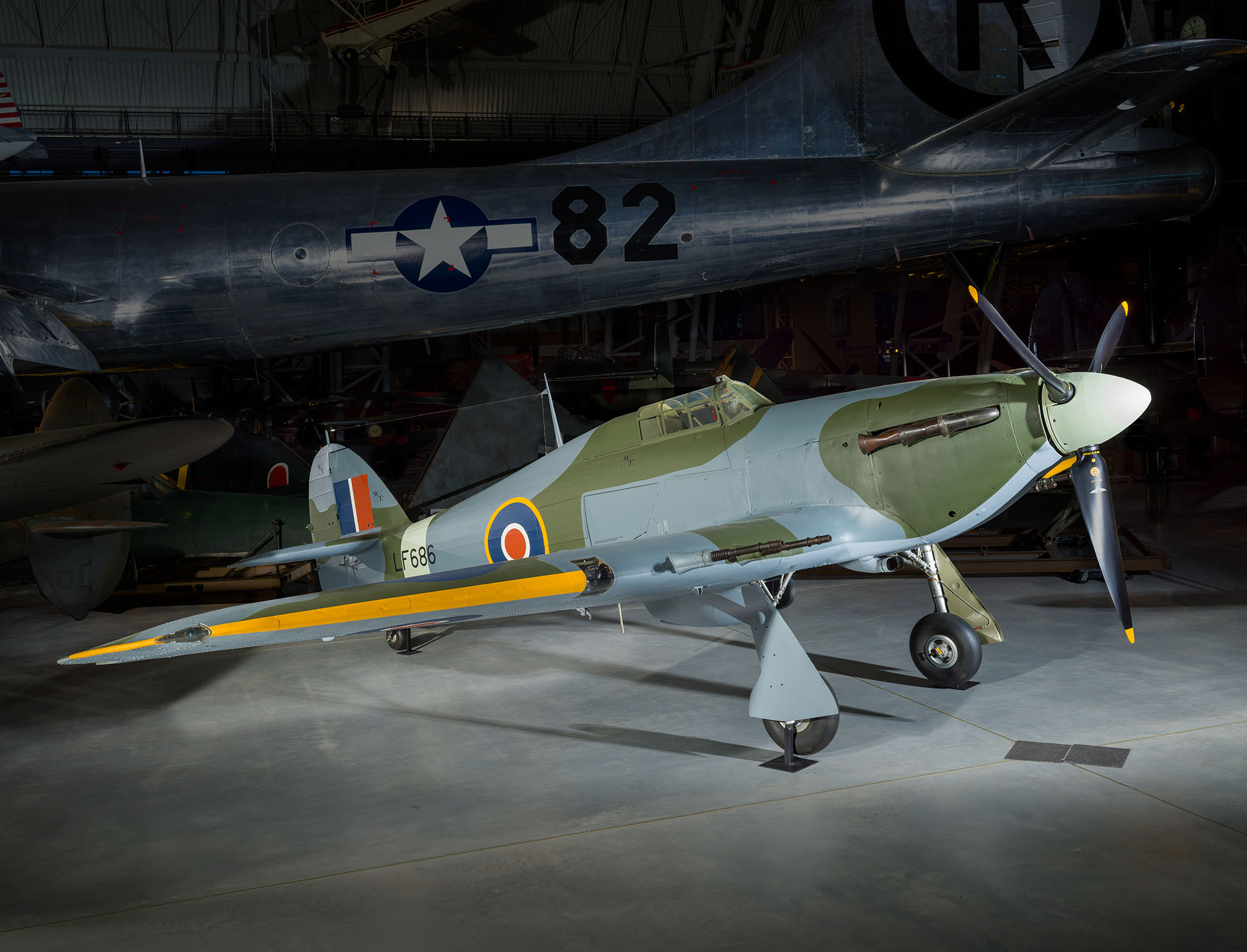
Together, these details make the P-26 a useful companion to the Hurricane and the P-47. Their streamlined shapes conceal much of the supporting structure that remains visible here. The contrast explains why an aircraft can appear old-fashioned after only a few years of rapid development.
A life beyond its first air force
Accepted by the U.S. Army Air Corps in 1934, this example served at Selfridge Field and Fairfield Air Depot before moving to the Canal Zone in 1938. It went to Guatemala in 1942 and continued flying there until 1954. Guatemala donated it to the Smithsonian in 1957.
That history adds another dimension to the idea of obsolescence. A design superseded in one force could remain useful elsewhere, where budgets, missions, infrastructure, and available replacements were different. The Peashooter’s survival reflects an international career as well as an American design milestone.