Udvar-Hazy
Human Spaceflight
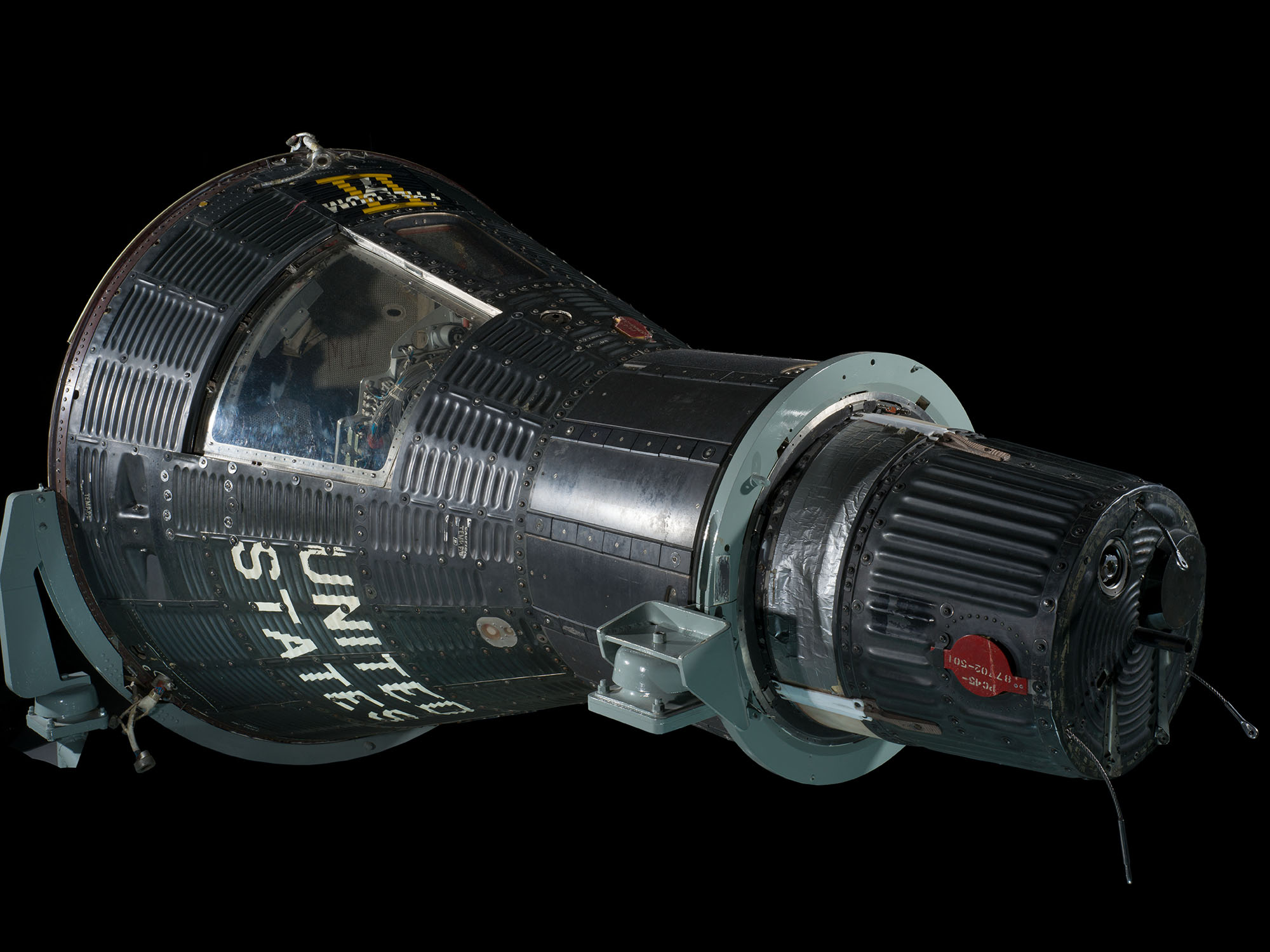
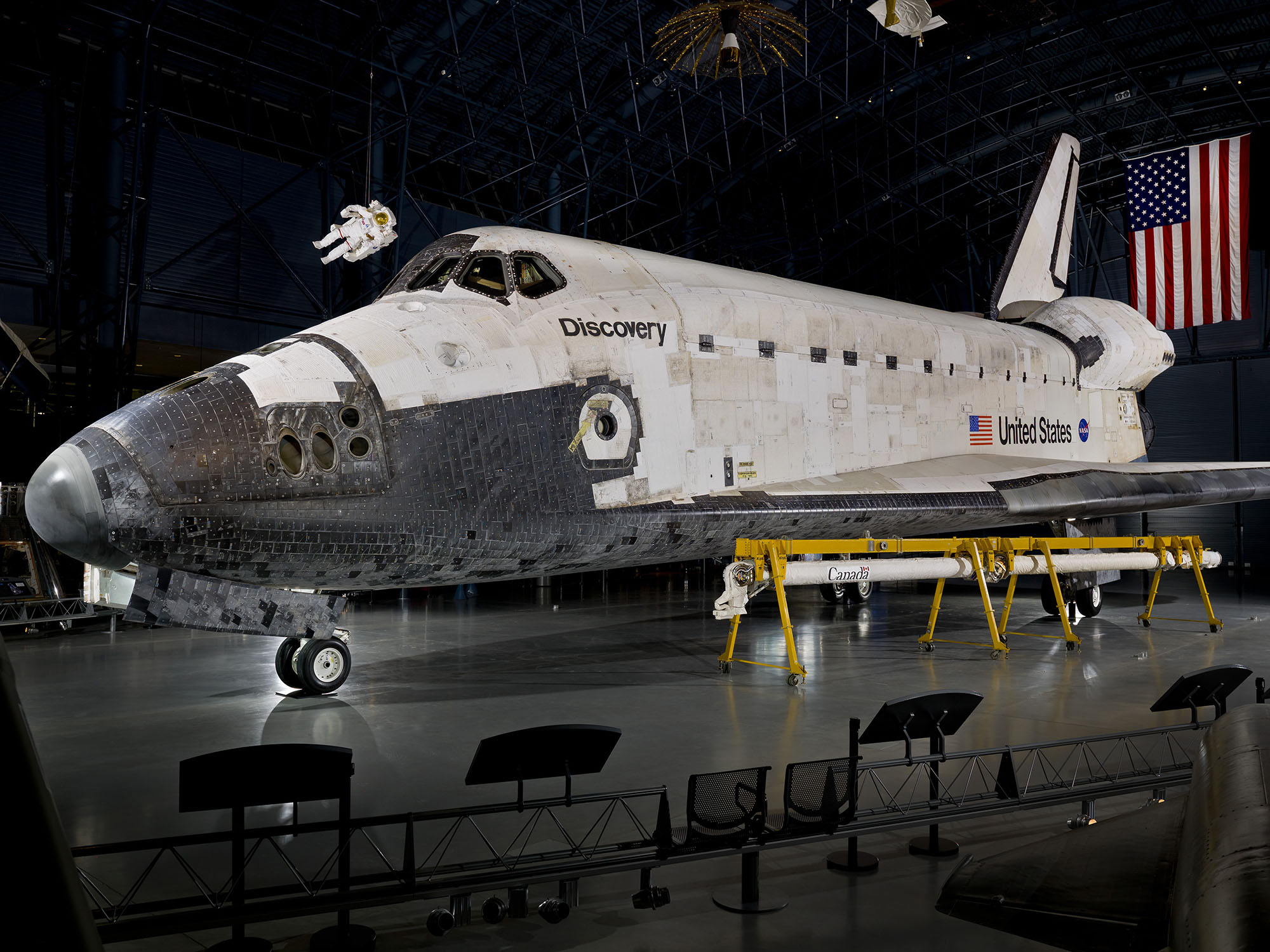
Human spaceflight turns a spacecraft into a place where people can live and work. Air, pressure, temperature, food, communication, and a safe return all have to be provided. Mercury shows the compact beginnings of American crewed spaceflight; Discovery shows a later vehicle carrying people and large equipment together. Nearby tools reveal the next challenge: once people reached orbit, they needed ways to do useful work there.

In depth
A home inside a machine
The Mercury capsule concentrated essential systems around one astronaut. Discovery provided a larger crew environment and a substantial payload bay. Their differences reflect changing missions, but both had to maintain conditions compatible with human life in an environment that could not do so naturally.
The spacecraft also had to return its occupants safely. Reentry, recovery or landing, and postflight support were part of the mission from the beginning.
Reaching orbit becomes working in orbit
Canadarm handled equipment outside the shuttle. The MMU gave spacewalkers independent mobility for particular tasks. Spacelab created a pressurized research room in the payload bay. These systems expanded the kinds of work a crew could perform rather than merely extending the distance it could travel.
They also increased the importance of coordination among astronauts, controllers, engineers, and researchers on Earth.
Individual courage rests on collective preparation
The photograph of McCandless alone above Earth captures an extraordinary personal moment. The quarantine trailer tells a very different story about caring for returning explorers. Both reveal preparation for conditions people had not previously encountered in the same way. The inspiring achievement is shared: individuals accepted demanding roles within systems made possible by thousands of others.