Udvar-Hazy
Business Aviation
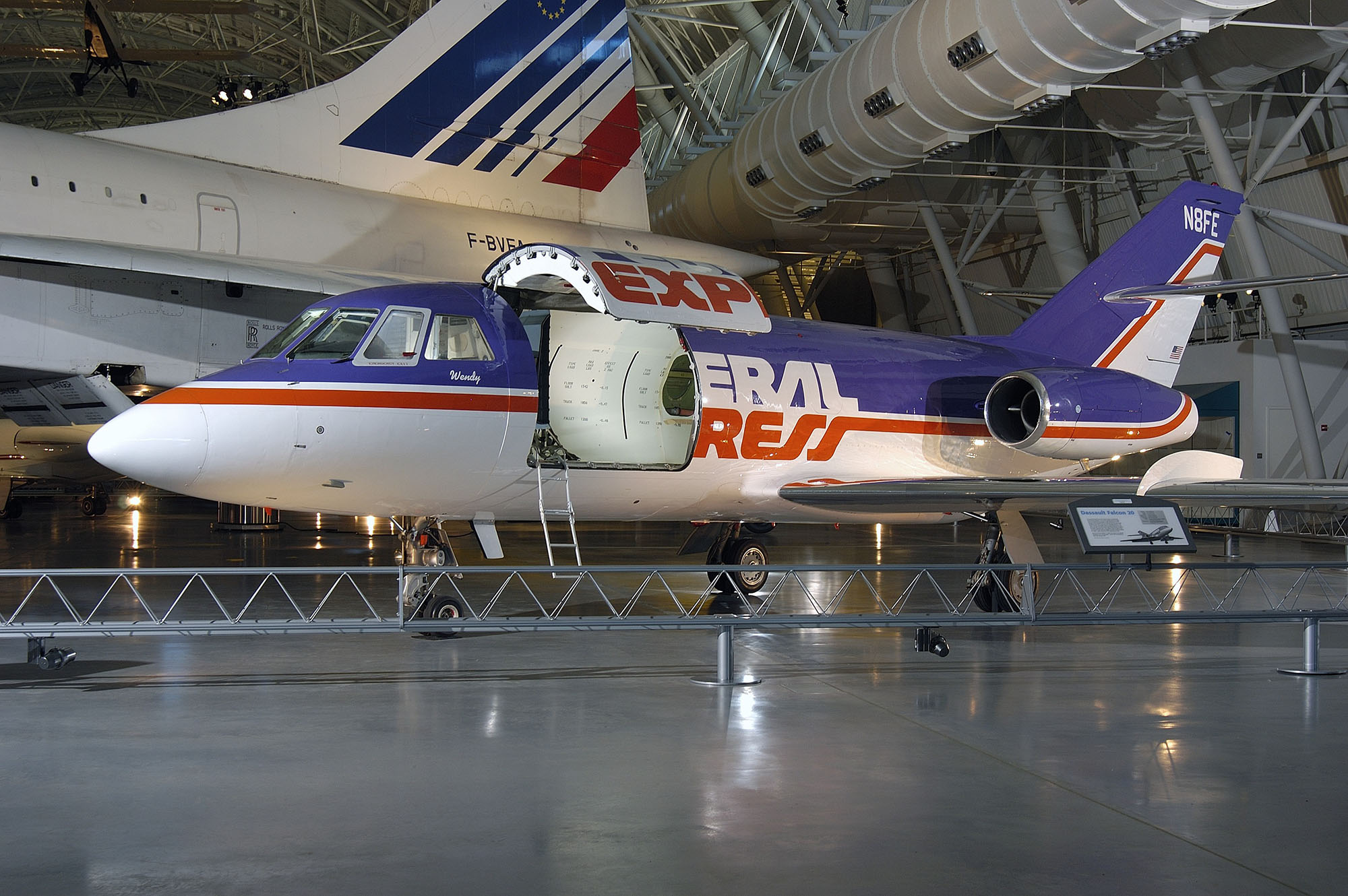
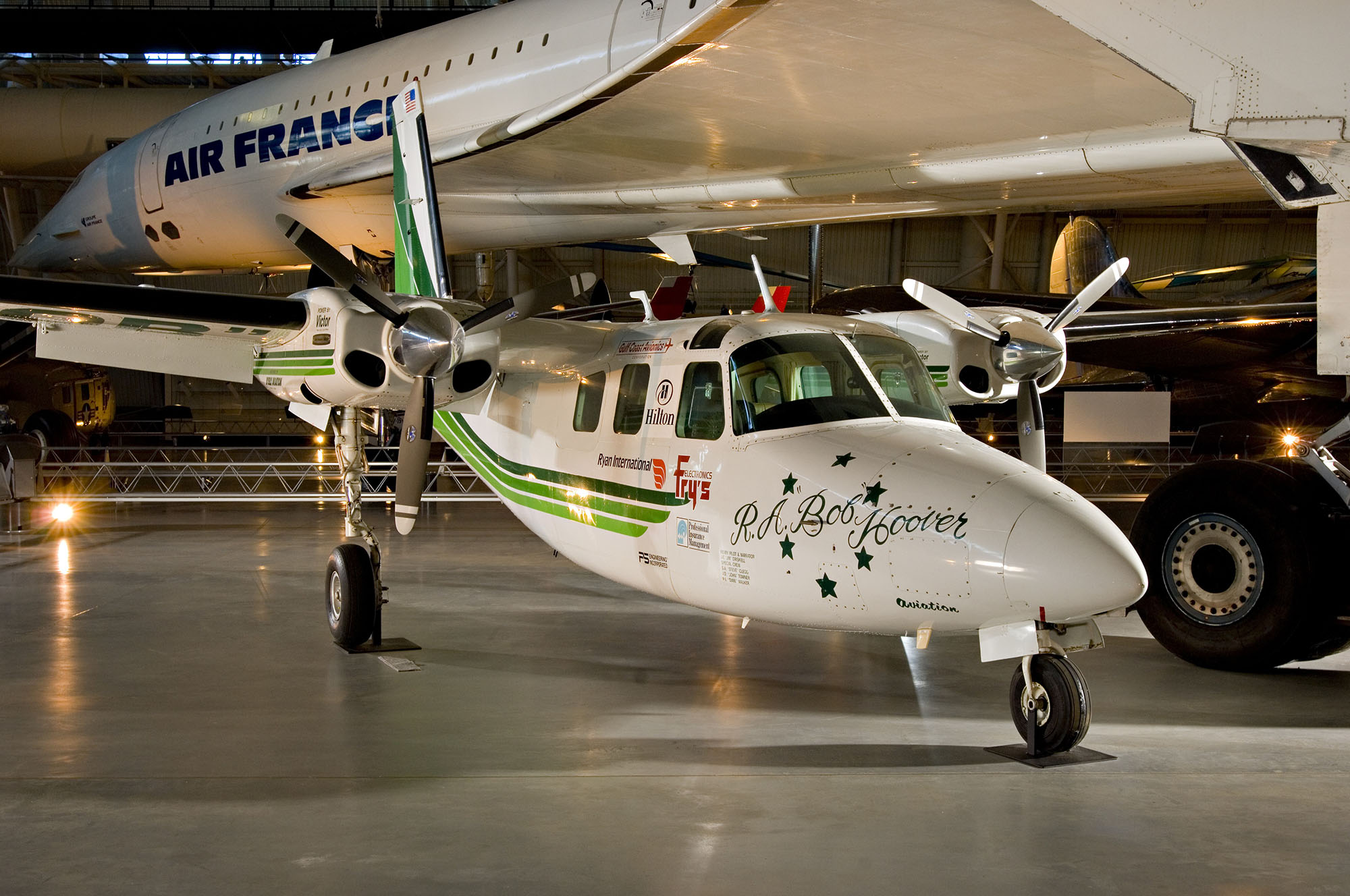
Business aviation uses aircraft to make schedules and destinations more flexible. A small airplane can reach places or connect journeys that an airline timetable does not easily serve. The Falcon 20 and Shrike Commander show how adaptable these machines can be. One helped launch an overnight cargo network; another became famous through Bob Hoover’s air-show flying. Their careers extend well beyond the passenger cabins for which they were designed.

In depth
Designing around the journey
An aircraft’s value to a business can depend on where it lands and when it leaves, rather than only how fast it cruises. Smaller airports and flexible scheduling can change the usefulness of a trip. Cabin layout, payload, range, and ground support all influence the choice of aircraft.
The category includes varied machines and missions, so a sleek jet is only one part of the story. Piston twins and other practical transports have also carried people and equipment on demanding schedules.
A new use can change an industry
Federal Express adapted Falcon 20s for freight with cargo doors and strengthened floors. The aircraft supported a coordinated overnight network centered on Memphis. The innovation required sorting and reliable connections on the ground as much as fast movement in the air.
That relationship shows how aviation can support a new business model without requiring a completely new aircraft design.
A familiar design, an unfamiliar performance
Hoover’s Shrike Commander demonstrates another kind of adaptation. A business aircraft became the platform for exceptionally precise public flying. Its story draws attention to handling qualities and the pilot’s understanding rather than passenger service. Together, the two aircraft show that a design’s original market does not determine every role it may eventually perform.