Udvar-Hazy
Modern Military Aviation
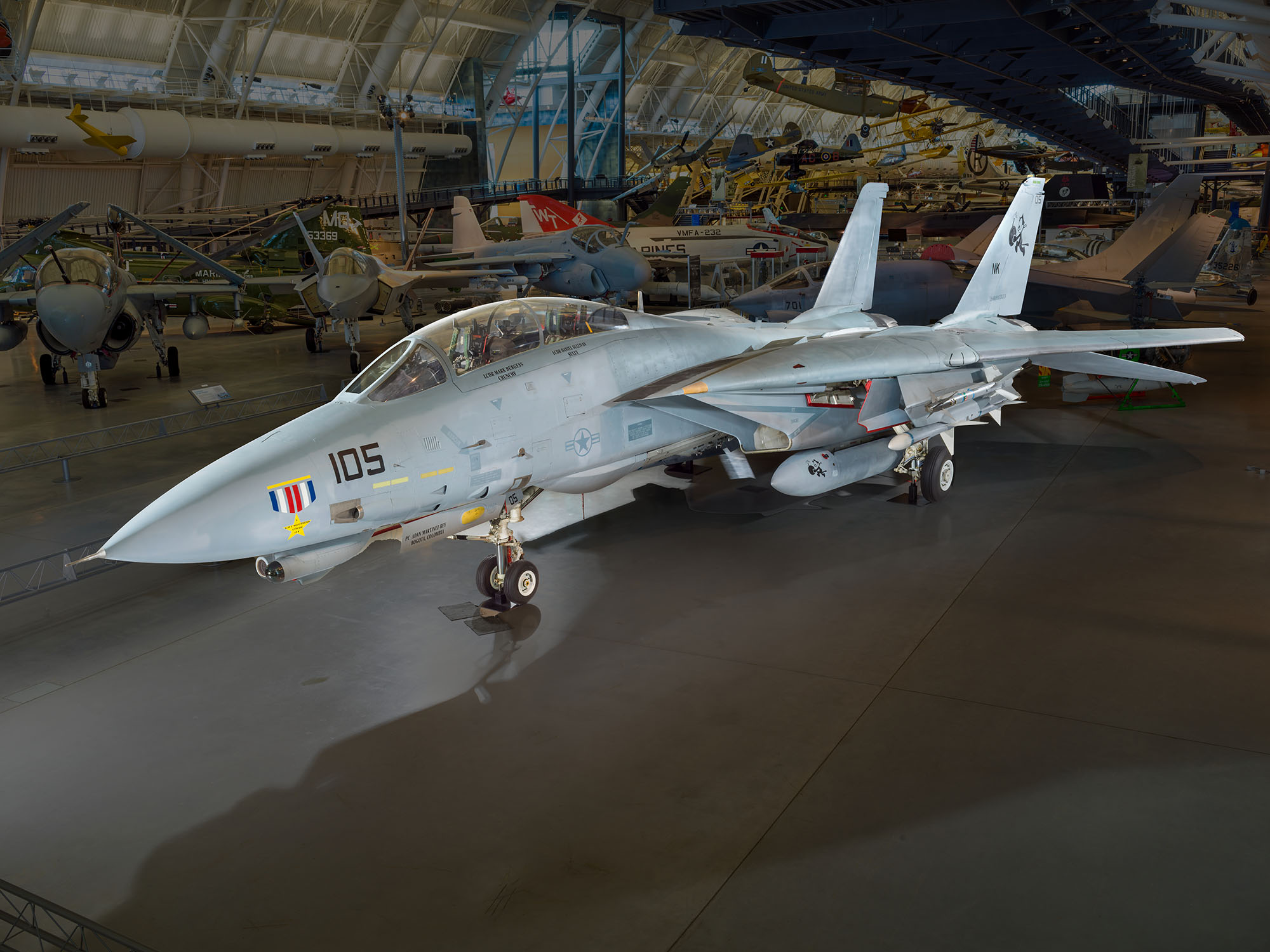
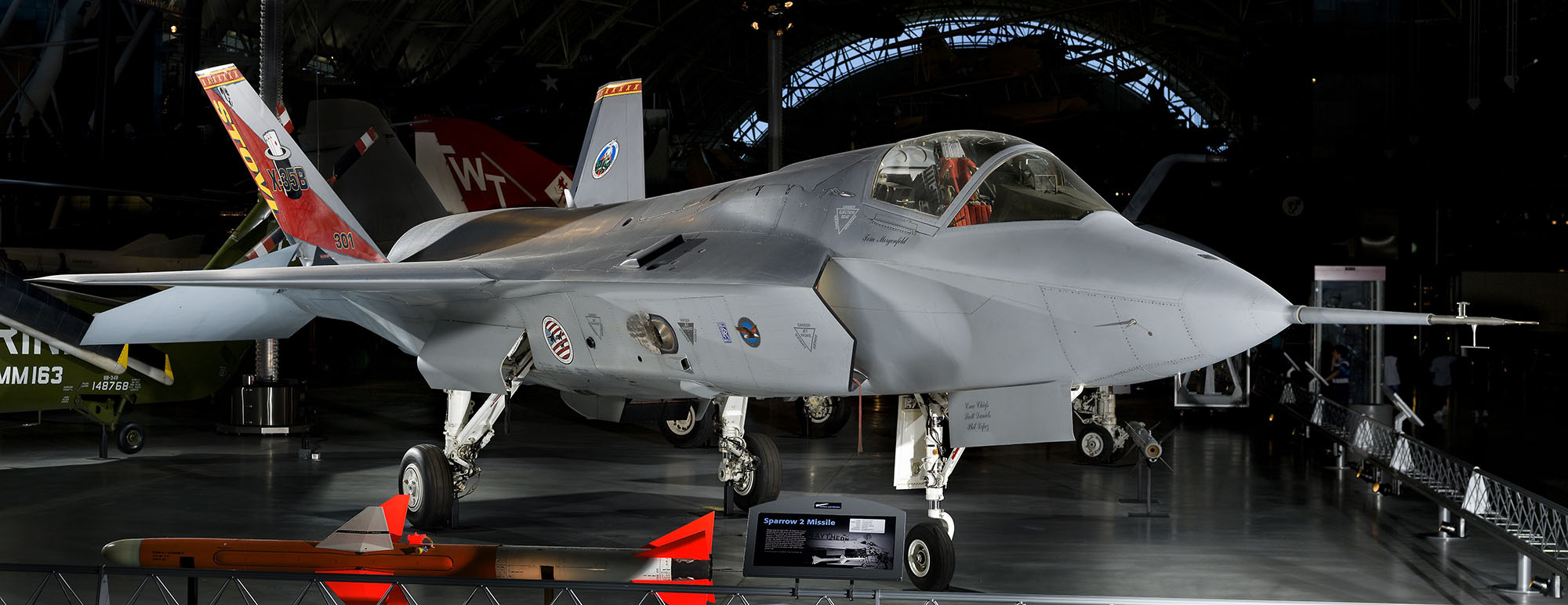
Modern military aircraft combine engines and aerodynamics with sensors, computers, communications, and many kinds of equipment. Their success depends on working with other aircraft, ships, and people on the ground. The Tomcat, Hornet, and X-35B show different approaches to that challenge: defend a fleet, combine missions in one aircraft, or prove that supersonic flight and vertical landing can share a single design.

In depth
Capability is more than speed
A military aircraft must detect, identify, navigate, communicate, and complete a mission under demanding conditions. An improvement in one area may matter little if another system becomes the limiting factor. A useful design balances the whole task.
The F-14’s two-person crew and long-range interception role illustrate the importance of managing information as well as flying. The Hornet’s multirole design reflects the value of flexibility when space and support resources are limited aboard a carrier.
Design choices remain physical
Electronics do not eliminate mechanical compromise. Variable-sweep wings require strong moving structures. Carrier operations impose demanding landing and launch loads. Vertical landing requires lift that does not depend on forward speed.
The X-35B makes those tradeoffs visible through its lift fan and propulsion arrangement. It was a demonstrator built to prove a particular combination of capabilities, rather than a finished production answer to every operational requirement.
People remain inside the system
Highly capable aircraft still depend on maintainers, planners, deck crews, controllers, and trained operators. The Hornet’s later Blue Angels service makes coordinated precision visible to the public. Its earlier combat career reveals a different use of the same basic machine. Following those individual histories produces a richer picture than treating every aircraft as merely the next entry in a performance ranking.