National Mall
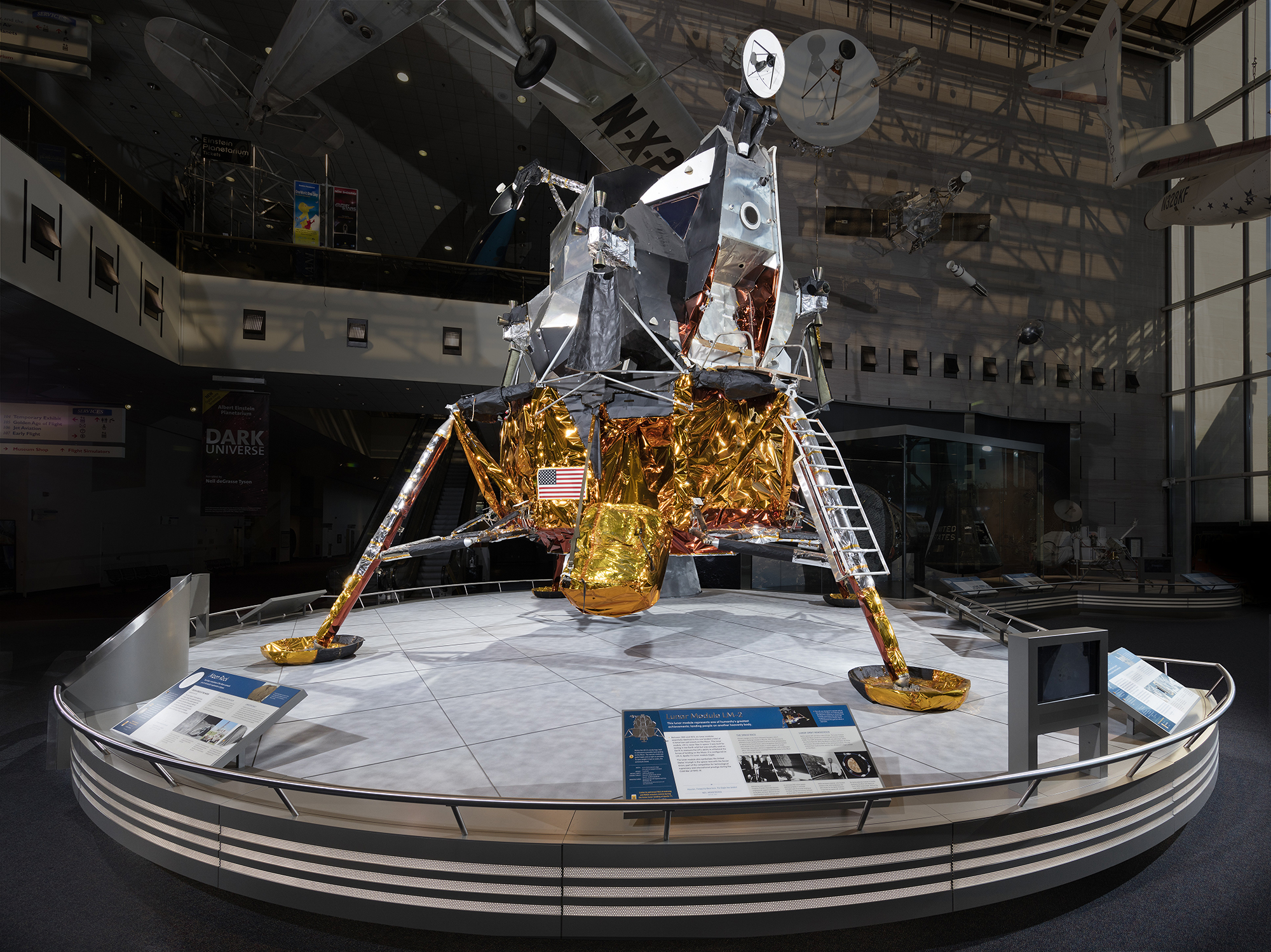
Lunar Module LM-2
The lunar module used a lower stage to descend and land, then an upper stage to carry two astronauts back to lunar orbit. LM-2 never flew but was used for Earth-based testing. Without atmospheric flight, the vehicle needed no wings or streamlined shape. Its landing gear, throttleable engine, navigation, life support, structure, and ascent system instead answered lunar gravity and vacuum.
In depth
The lunar module was optimized for a place with no air
LM-2 was configured to resemble Apollo 11’s Eagle after serving ground tests. Its display joins authentic test hardware, later visual interpretation, the Cold War space race, and the memory of six lunar landings.
The landing was only part of the journey
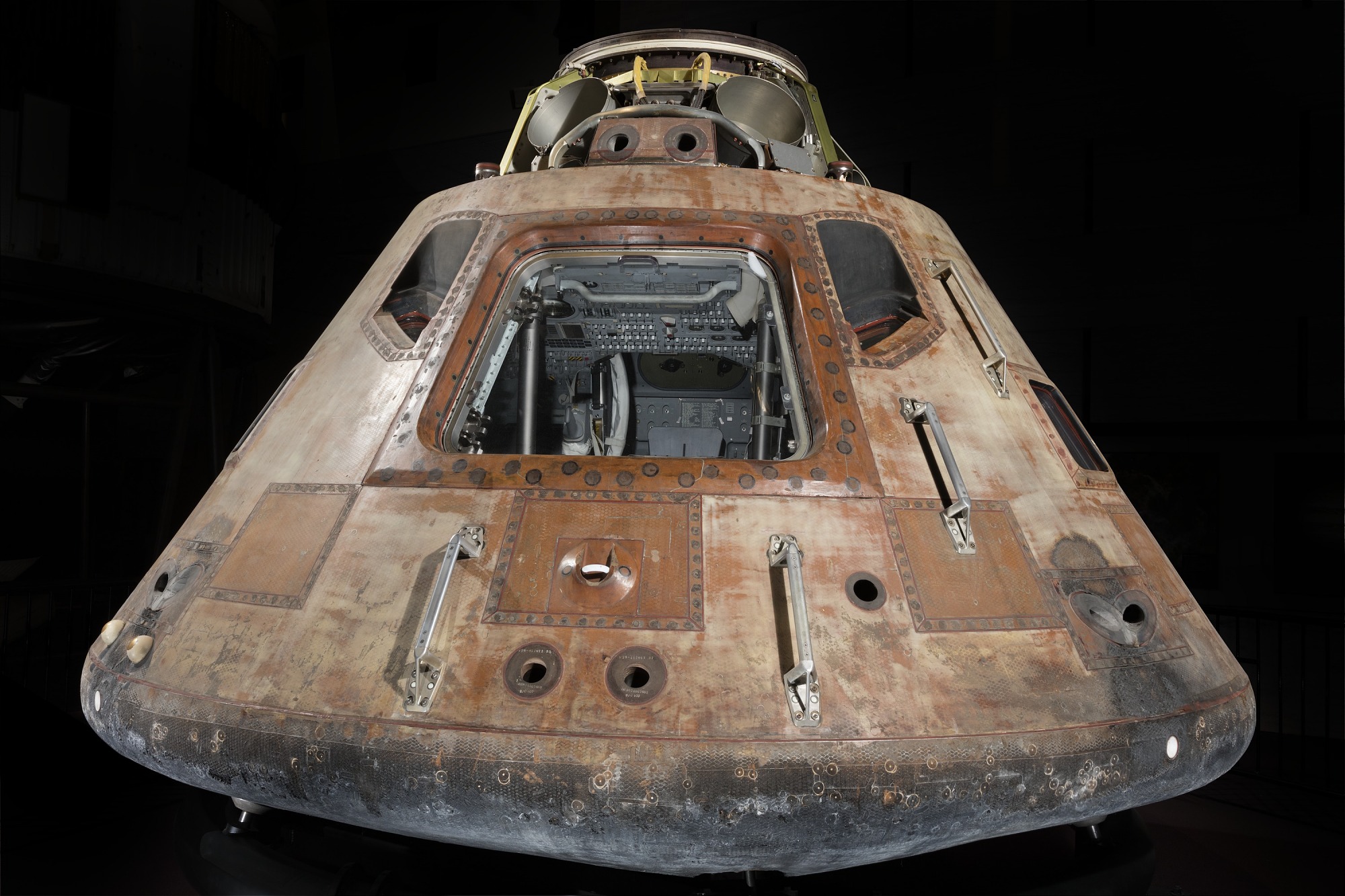
A lunar mission had to solve a chain of different problems: leaving Earth, travelling to the Moon, entering orbit, landing, supporting surface work, launching again, meeting the returning spacecraft, and surviving entry into Earth's atmosphere. The architecture divided those jobs among specialized parts. The lunar module did not need the same structure or heat shield as the command module that would bring the crew home.
The objects in the galleries make the scale of the undertaking unusually concrete. A rocket engine represents the energy needed to begin the journey. A spacesuit provides a working environment on the surface. A sample container protects material that must remain useful to scientists after its return. The spacecraft then becomes a transport for people, records, film, and samples, all of which carry part of the mission's value back to Earth.
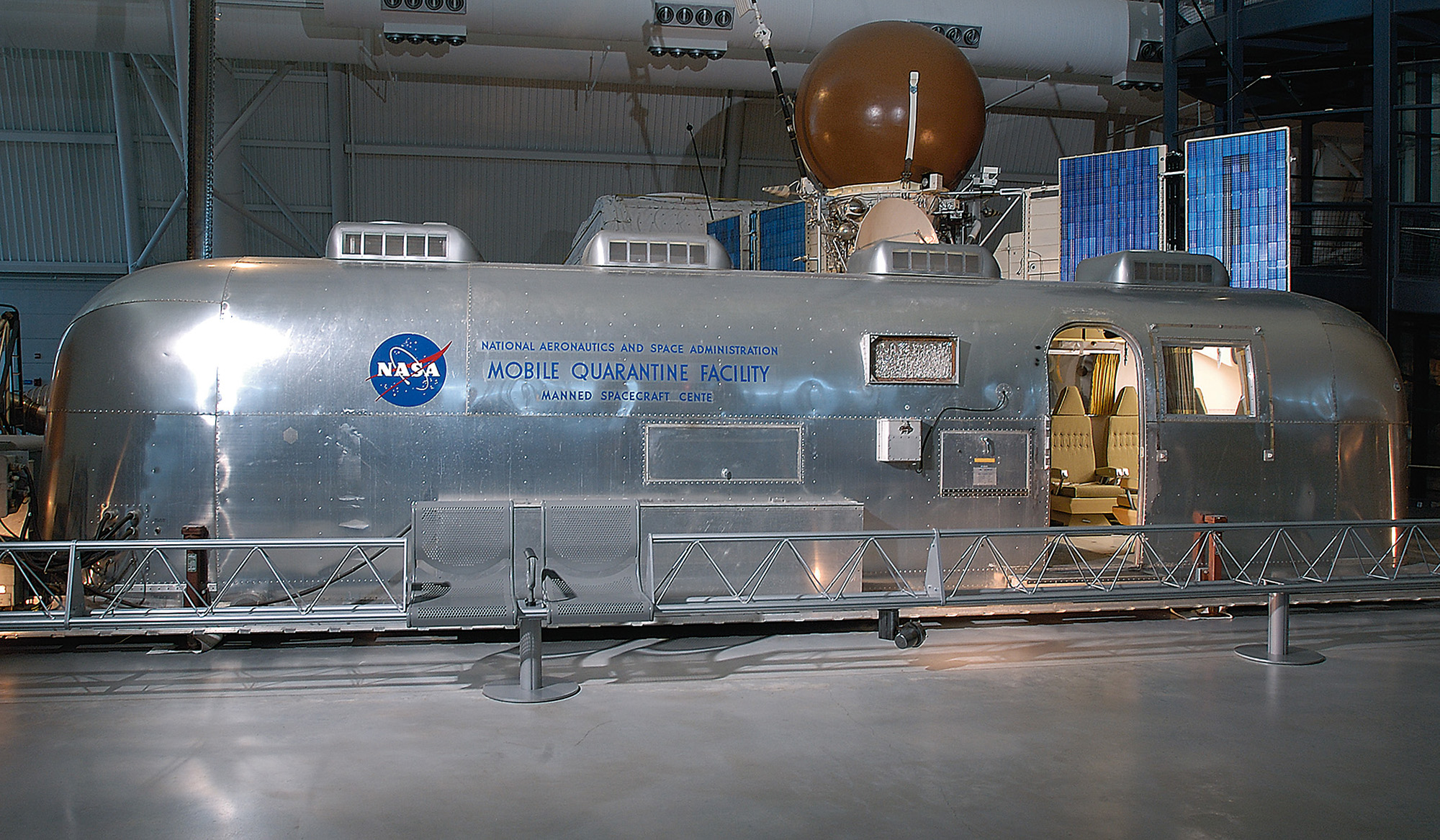
The story continues after splashdown. Recovery ships, aircraft, laboratories, technicians, and scientists turn a completed flight into a body of evidence. Later missions expanded the time, mobility, and scientific work possible on the surface. Cross-links between Washington, Udvar-Hazy, and the Air Force Museum restore parts of this support network that are now displayed separately. They also show how a national achievement depended on coordinated work across many organizations, from the launch vehicle's builders to the people who handled a sealed box of lunar rock.