Air Force Museum
Keeping the Bear at Bay
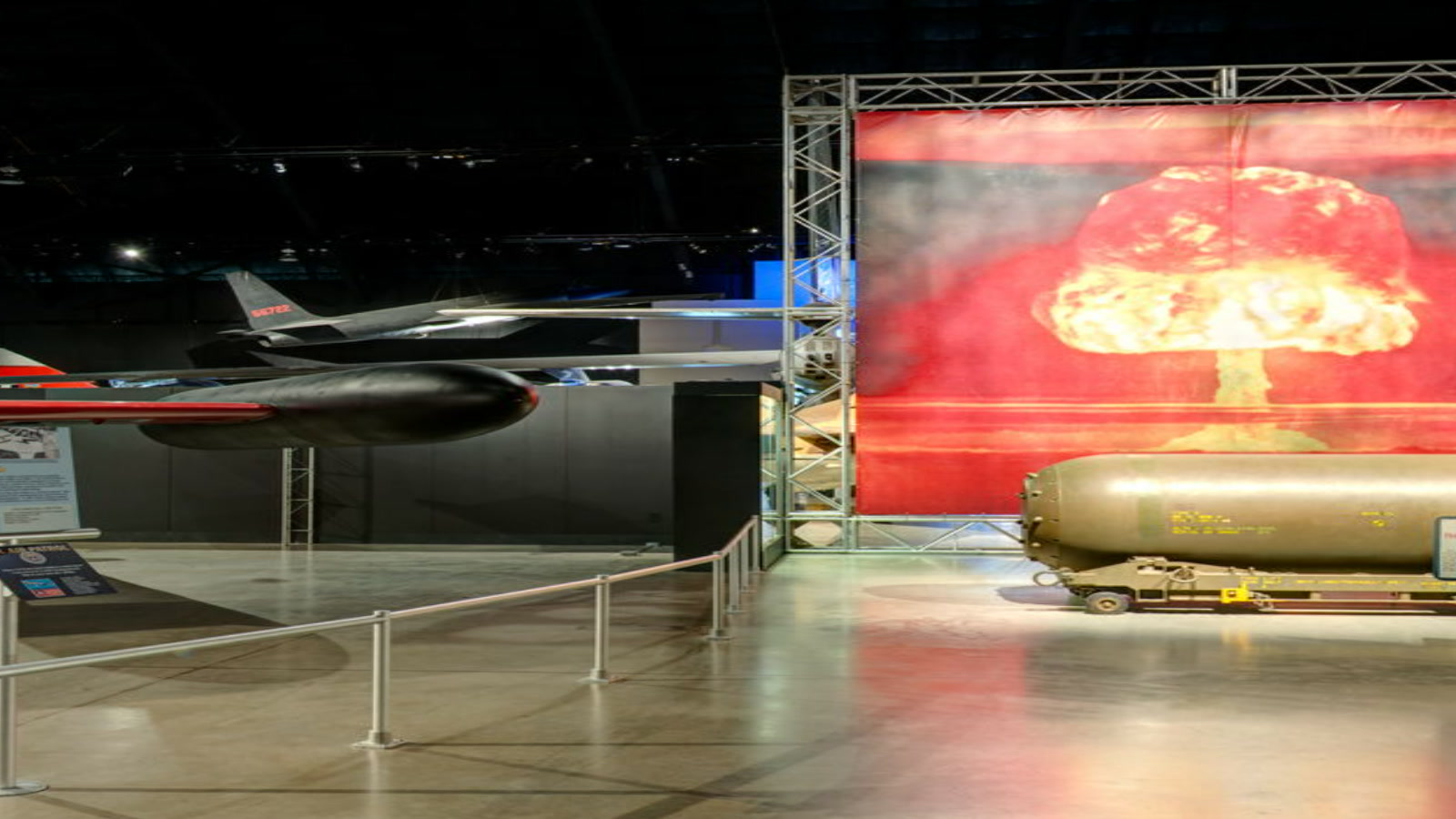
American and allied air forces used warning networks, interceptors, dispersed bases, and nuclear deterrence to reduce the risk of a Soviet attack. The phrase captures both strategy and daily practice. Radar operators watched the approaches, fighters stood alert, bombers and tankers maintained readiness, and political leaders tried to communicate resolve without allowing an incident to become a war.
In depth
History & service
The Convair B-36 Peacemaker served as the U.S. Air Force's primary strategic nuclear bomber in the 1950s. Although the aircraft never dropped a bomb in combat, its range and nuclear weapons capability made it a powerful deterrent to communist aggression.
In 1941 when Britain's survival appeared doubtful, the AAF outline a requirement for an aircraft capable of bombing European targets from the Western Hemisphere. From this evolved the giant Convair B-36. Due to the improving war situation and a lowered priority for the B-36 development program, the XB-36 did not make its first flight until August 1946. Deliveries of B-36s to Strategic Air Command (SAC) began in 1948.
With a range of more than 7,000 miles, the B-36 had a normal crew of 15, although the strategic reconnaissance version carried a crew of 22, plus camera equipment and 14,000 pounds of photo flash bombs for night photography.
Its official nickname of "Peacemaker" was appropriate, for although the B-36 never dropped a bomb in combat, its range and nuclear weapons capability made it a powerful deterrent to a possible third world war.
Details that tell the story
Defense depended on early warning and rapid interception · Deterrence linked military capability to political signaling · Allied bases formed a global network
Readiness became a permanent condition
During the Cold War, aviation was organized around the possibility of a conflict that governments hoped to prevent. Bombers, missiles, interceptors, reconnaissance aircraft, warning networks, and tankers became parts of interdependent systems. Their value was judged not only by what they could do in flight, but by how reliably they could be maintained, alerted, launched, supported, and controlled.
This emphasis produced striking aircraft and difficult tradeoffs. Long range demanded fuel and support. High speed increased heat and mechanical stress. Sophisticated electronics offered new capabilities but created new maintenance requirements. A reconnaissance aircraft needed an effective camera and a workable route as well as altitude or speed. An interceptor depended on warning and guidance before its pilot could make an engagement.
The human experience included long periods of training and routine punctuated by crises. Crews and ground personnel practiced procedures whose purpose was to remain credible without being used in war. At the same time, military aviation carried out reconnaissance, transport, rescue, humanitarian missions, and conventional operations around the world. Linking these aircraft with civil airliners, research machines, and spacecraft reveals a history of shared technologies and different purposes. The machines embody technical accomplishment, but also the enormous resources and sustained human effort required to keep a global force ready.