Air Force Museum
Cold War Gallery Overview
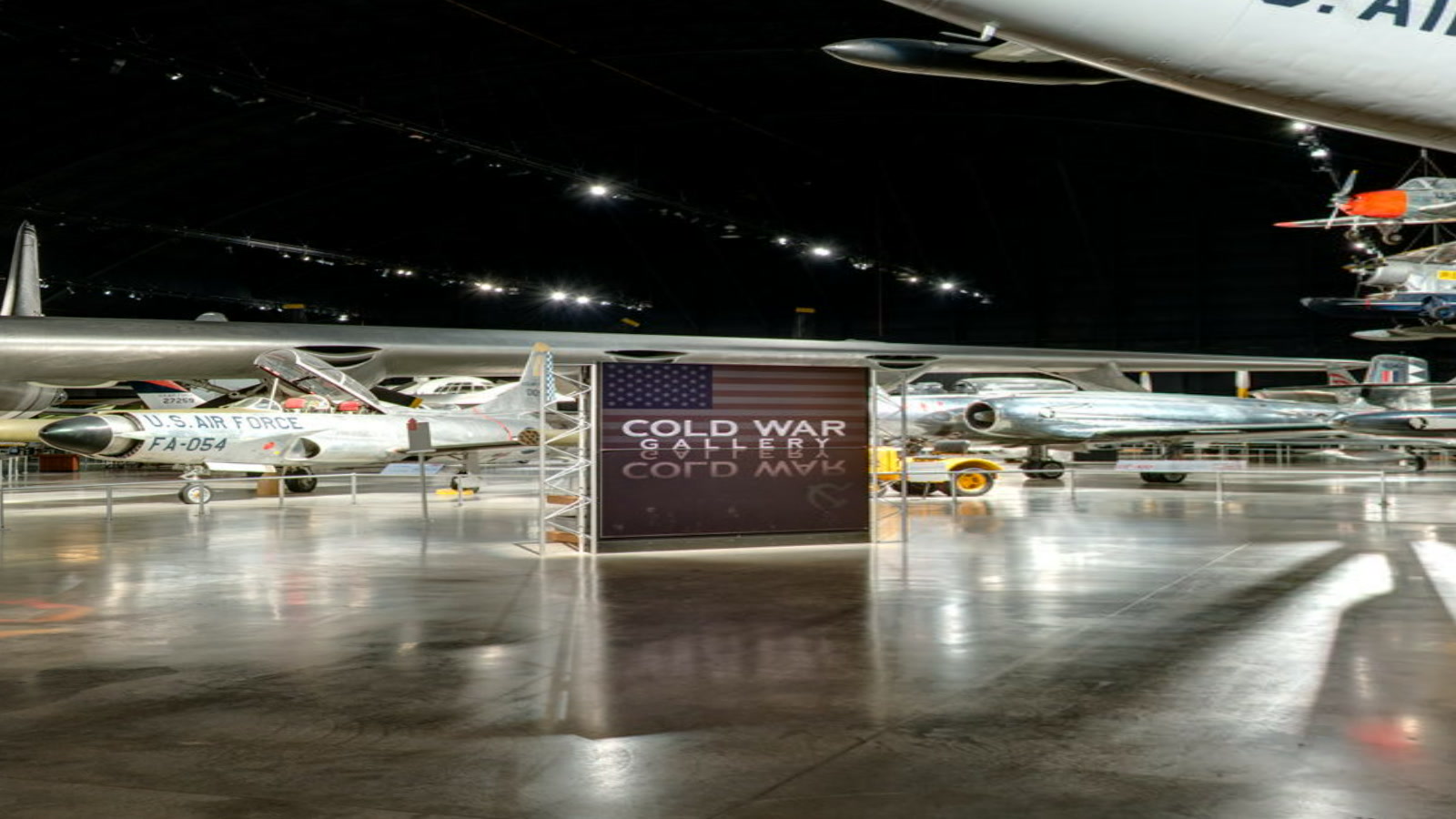
The Cold War transformed the new U.S. Air Force into a global service organized around deterrence, air defense, reconnaissance, mobility, and rapid response. This gallery brings together machines built for missions that often remained invisible: bombers held on alert, interceptors waiting for unidentified aircraft, tankers extending range, and reconnaissance crews collecting information. Their coexistence shows that Cold War air power was a network, not a single weapon.
In depth
History & service
The Cold War dominated the second half of the 20th century. This confrontation grew out of the clash between the ideologies of the Western democracies led by the United States -- and the communist nations led by the Union of Soviet Socialist Republics (USSR). The ever-present threat of nuclear weapons made this period the most dangerous one in world history, but the diligent efforts of the men and women of the U.S. Air Force helped bring this conflict to a peaceful end.
The U.S. Armed Forces measure their level of readiness during military situations by Defense Readiness Condition (DEFCON). Based upon the severity of a crisis, this readiness ranges from DEFCON 5, the normal peacetime level, to DEFCON 1, when an imminent enemy attack is expected. The seriousness of the Cuban Missile Crisis in October 1962 was demonstrated when the U.S. Armed Forces went to DEFCON 2 -- the second highest level.
Throughout the Cold War, people and governments feared going to DEFCON 1 because it meant nuclear war, but that level was never reached -- in large part because of the deterrence to aggression provided by the U.S. Air Force.
Details that tell the story
The U.S. Air Force became an independent service in 1947 · Strategic, tactical, air-defense, and transport commands divided major missions · Technology and readiness were intended to prevent a direct superpower war
Readiness became a permanent condition
During the Cold War, aviation was organized around the possibility of a conflict that governments hoped to prevent. Bombers, missiles, interceptors, reconnaissance aircraft, warning networks, and tankers became parts of interdependent systems. Their value was judged not only by what they could do in flight, but by how reliably they could be maintained, alerted, launched, supported, and controlled.
This emphasis produced striking aircraft and difficult tradeoffs. Long range demanded fuel and support. High speed increased heat and mechanical stress. Sophisticated electronics offered new capabilities but created new maintenance requirements. A reconnaissance aircraft needed an effective camera and a workable route as well as altitude or speed. An interceptor depended on warning and guidance before its pilot could make an engagement.
The human experience included long periods of training and routine punctuated by crises. Crews and ground personnel practiced procedures whose purpose was to remain credible without being used in war. At the same time, military aviation carried out reconnaissance, transport, rescue, humanitarian missions, and conventional operations around the world. Linking these aircraft with civil airliners, research machines, and spacecraft reveals a history of shared technologies and different purposes. The machines embody technical accomplishment, but also the enormous resources and sustained human effort required to keep a global force ready.