Air Force Museum
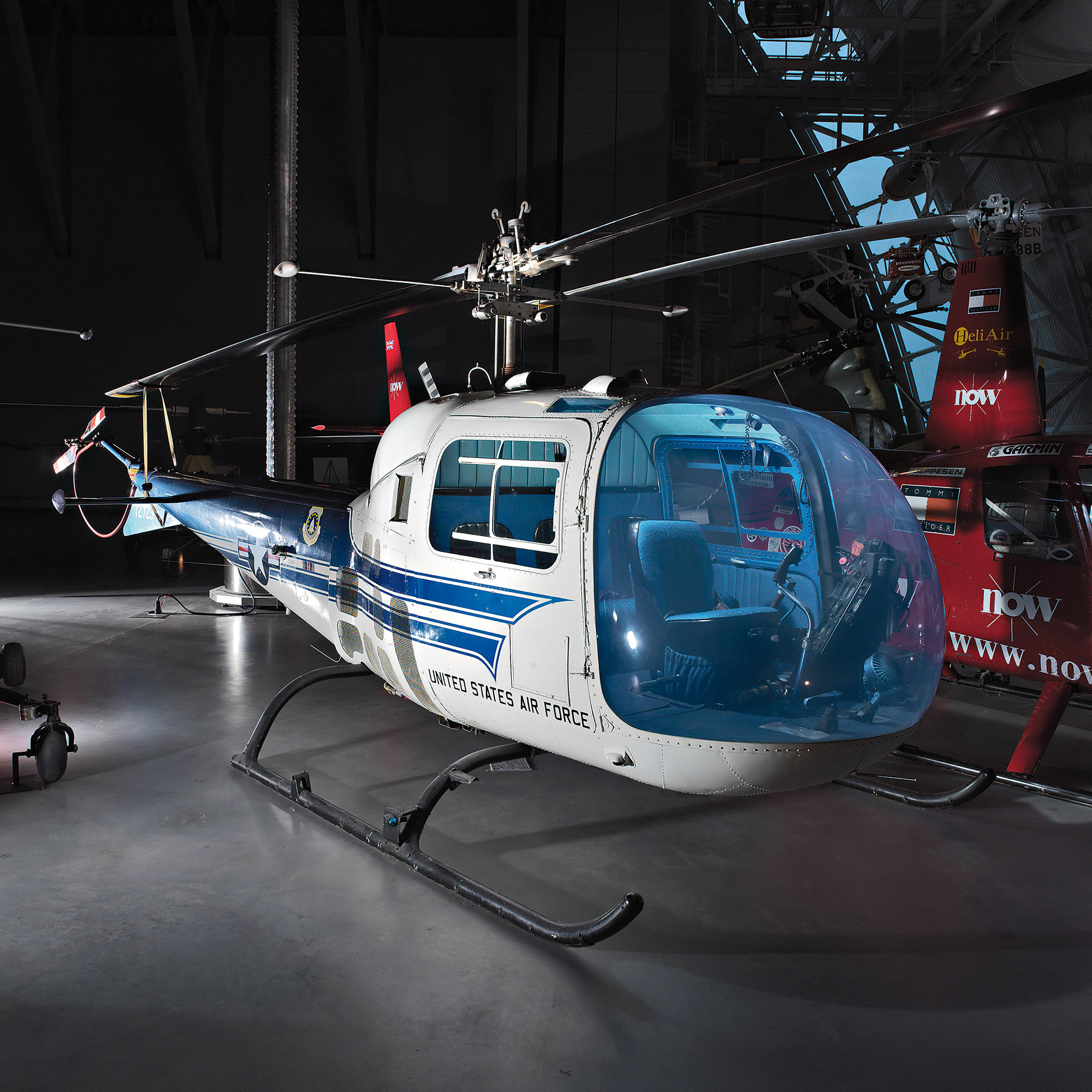
UH-19B Chickasaw
The UH-19 helped establish the helicopter as a practical tool for rescue, evacuation, and transport. Helicopters could reach small landing areas unavailable to conventional aircraft. In Korea they recovered downed airmen, evacuated casualties, carried people and supplies, and demonstrated how vertical flight could change military mobility.
In depth
The story behind the display
Range, payload, weather, and mechanical reliability limited early helicopters, but their ability to reach isolated people gave them an importance far beyond their size.
History & service
The UH-19B is a U.S. Air Force version of the Sikorsky S-55, an aircraft used by all U.S. military services in the 1950s and 1960s. After the first helicopter flew in November 1949, the USAF ordered production 50 H-19As in 1951. The USAF later acquired 270 H-19Bs with increased engine power, and in 1962 designated it the UH-19.
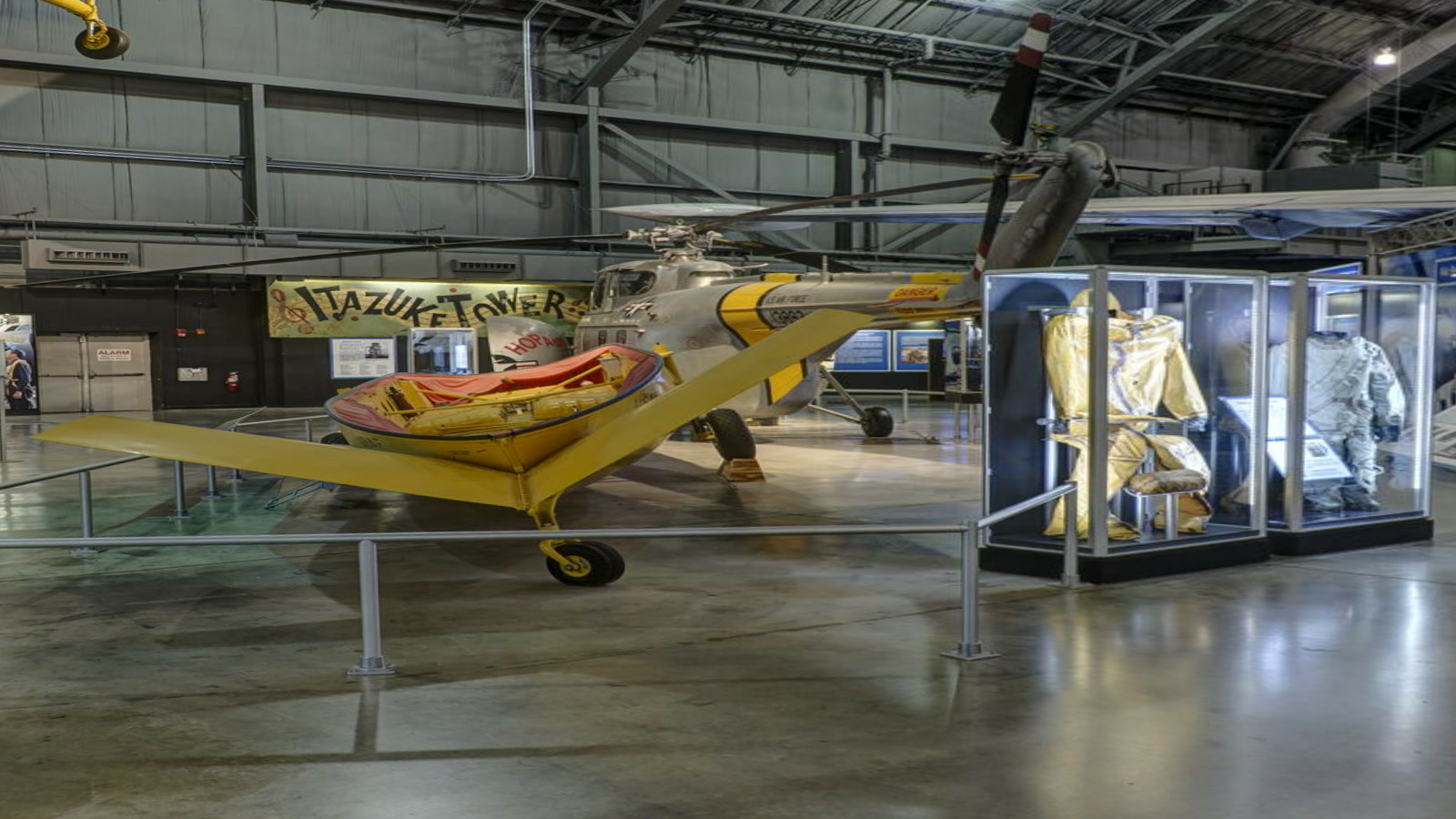
Many H-19s were assigned to Air Rescue squadrons as SH-19s (later redesignated HH-19s). For rescue service, the SH-19 carried a 400-pound capacity hoist was mounted above the door, and it also could carry an external sling capable of holding 2,000 pounds. During the Korean War, SH-19s became the primary USAF rescue and medical evacuation helicopter.
The UH-19B on display is painted and marked as an H-19A known as Hopalong, one of two H-19s to make the first transatlantic helicopter flight, traveling during the summer of 1952 from Westover Air Force Base, Mass., to Scotland in five stages.
Details that tell the story
Early transport and rescue helicopter · Used for casualty evacuation and aircrew recovery · Could operate from confined landing areas · Helped establish later helicopter doctrine
The aircraft in figures
Engine: Wright R-1300 of 700 hp · Maximum speed: 112 mph · Range: 330 miles · Rotor diameter: 53 ft. · Fuselage length: 42 ft. 4 in. · Height: 15 ft. 4 in. · Weight: 8,400 lbs. maximum · Serial number: 52-7587
When a runway is the wrong answer
A helicopter exchanges some of an airplane's speed and efficiency for the ability to hover and land in confined places. Its rotating blades must provide lift and control while moving through changing airflow. The advancing and retreating sides of the rotor experience different conditions, and the pilot manages several controls together. Hovering is an active, demanding state rather than a pause in flight.
That capability changed the possibilities for rescue, medical evacuation, observation, and transport. A casualty no longer always had to reach a conventional airfield before being flown to care. Crews could approach places where roads were slow, damaged, or absent. Yet power, weather, visibility, terrain, and rotor clearance sharply limited what was possible. A successful rescue required judgment as well as a suitable machine.
Early helicopters in these collections show how manufacturers gradually made the idea practical. Their exposed structures and compact cabins make weight and payload compromises easy to see. Later machines carried more people and equipment, but the underlying tradeoff remained: the ability to operate close to the ground could place the crew close to danger. Following the connection from a small civil helicopter to a military rescue aircraft reveals a shared history of handling skill, mechanical development, and people using flight to reach someone who needed help.