Air Force Museum
Glider Pilot Casualties
Glider pilots suffered heavy combat losses as did the pilots of tow planes and the airborne troops which the gliders carried. They were towed in flimsy, noisy, unarmed, fabric-covered gliders at about 130 mph at the end of a 300-foot, 1-inch nylon rope in air made turbulent by the tow planes. They sometimes crash-landed at night in small fields behind enemy lines, carrying troops and/or cargo including jeeps and artillery.
In depth
History & service
Glider pilots received training in infantry combat tactics since after landing they sometimes fought as infantry.
The breakthrough was control
Putting an engine on a wing was only part of the problem. A practical airplane had to recover from disturbances and turn deliberately. The Wrights treated the pilot as an active part of the machine: shifting the wing shape changed roll, the forward elevator changed pitch, and the rudder helped coordinate yaw. Those movements interacted. More lift on one wing also brought more drag, so a command intended to bank the aircraft could pull its nose in the wrong direction.
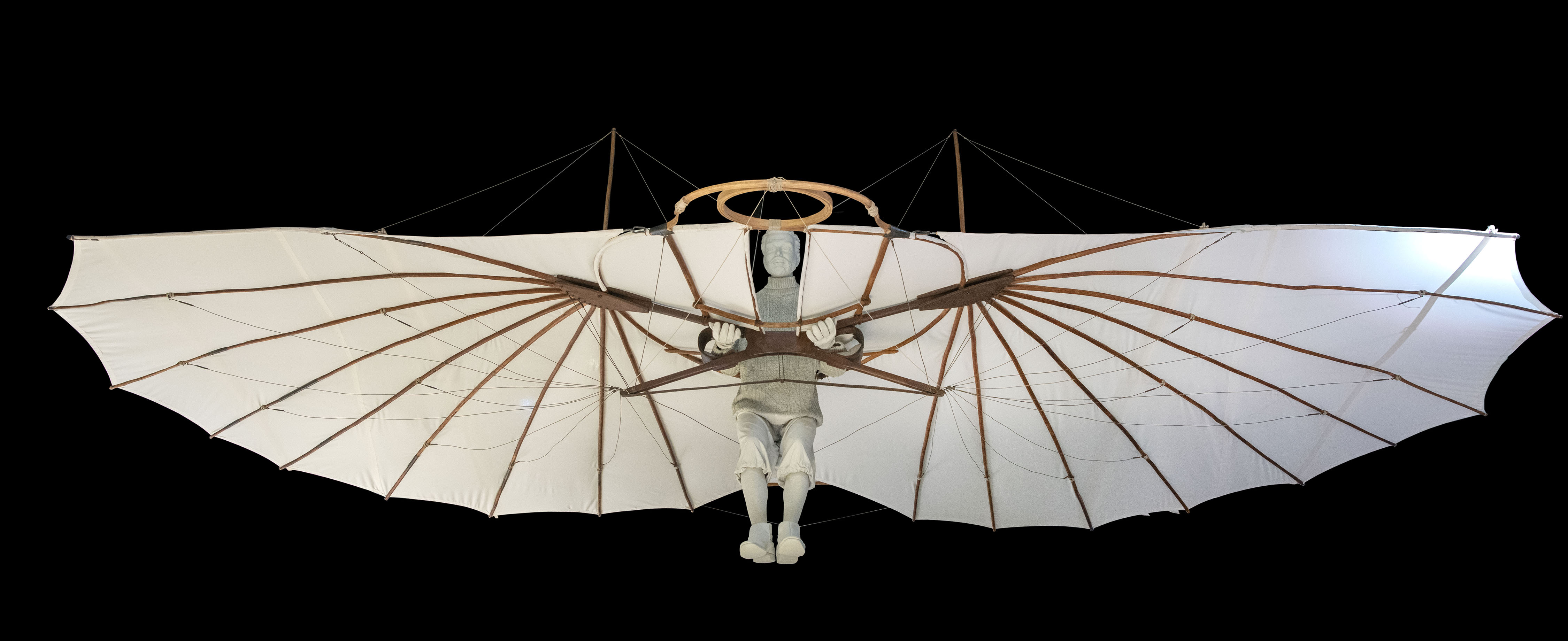
Their progress depended on repeated trials, careful records, and a willingness to challenge trusted numbers. When the gliders performed poorly, the brothers built a wind tunnel and measured their own wing models. By 1902, a movable rudder linked to wing warping helped them make controlled turns. Powered flight followed a season of practical experience with that control system.
The connection across these galleries is unusually tangible. The Wright bicycle belongs to the working shop that financed experimentation. The kite and gliders isolate successive problems. The Flyer combines those solutions with an engine and propellers. The later Military Flyer adds another challenge: a machine now had to satisfy a customer, carry an observer, and support training. The story moves from an experiment that could fly to an aircraft that other people could learn to operate.